

Key Takeaways
What Makes Photography a Visual Art
For much of the nineteenth century, critics debated whether photography could legitimately be called art. A camera, after all, records what is already there - or so the argument went. That debate has long been settled. What photography actually involves is a cascade of intentional decisions: where to stand, when to press the shutter, what to exclude from the frame, how to handle light. The machine captures; the photographer chooses.
That distinction matters because it shifts how we understand images. A photograph is not a transparent window onto reality - it is a shaped perspective. The same street corner photographed by two people at the same moment will yield two fundamentally different images depending on lens choice, framing, and timing. Understanding this is the entry point into treating photography as a creative discipline rather than a recording tool.
Just as you might learn to read a painting for line, light, and mood, photographs reward a similar kind of attentive looking. The vocabulary is shared; the medium is distinct.
Light: The Fundamental Element
Photography's name comes from the Greek for "writing with light," and that etymology is still the best description of the craft. Light is not simply the thing that makes an image visible - it is the primary carrier of mood, drama, and information in a photograph.
Direction matters enormously. Light arriving from the side (known as side lighting or Rembrandt lighting, after the painter who used it extensively) carves texture and shadow into a face or landscape. Flat frontal light flattens and clarifies. Backlight creates silhouettes and atmosphere. The quality of light - whether it is hard and direct, producing sharp shadows, or soft and diffused, producing gentle gradations - shapes the entire emotional register of an image. These lighting principles underpin both studio photography and natural-light work in the field.
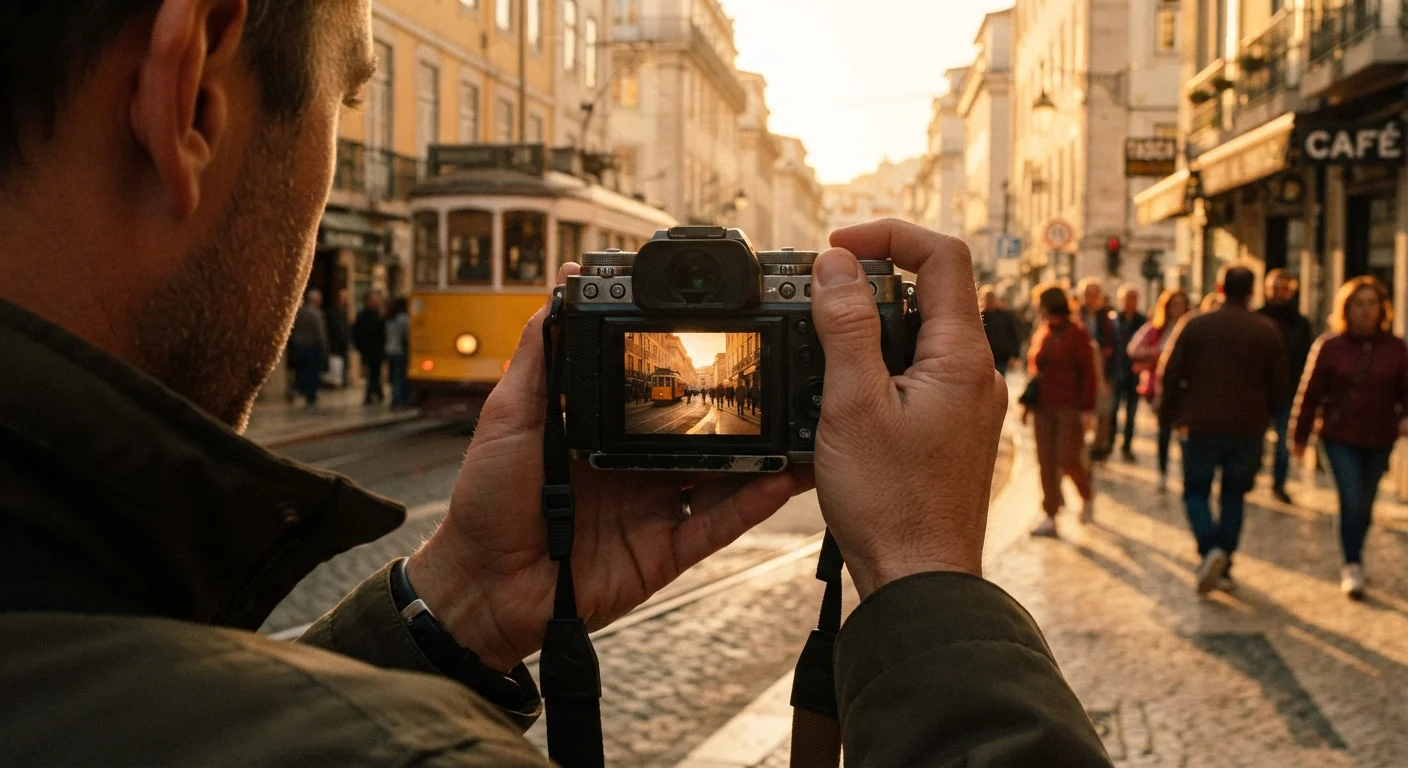
Color temperature adds another layer. The warm amber of late afternoon light feels different from the cool blue of an overcast midday - and photographers choose their moments or their artificial lights accordingly. Understanding light is also inseparable from understanding color: color theory principles explain why certain palettes feel harmonious or jarring within a frame.
When shooting in natural light, arrive at a location an hour before you intend to photograph and simply watch how the light moves across surfaces before raising your camera.
Experienced photographers consistently note that understanding a location's light behavior before shooting leads to more intentional and less reactive image-making.
To sharpen your compositional eye, study images you find compelling and identify exactly which element creates the tension or harmony - then consciously apply or subvert that in your own work.
Analyzing other photographers' choices is one of the most effective ways to build an intentional visual vocabulary, much as writers study prose style by close reading.
Framing and Composition
Where the edges of a photograph fall is one of the most powerful decisions a photographer makes. Framing determines what exists inside the image and - just as importantly - what is left out. A photograph of a protest that includes bystanders tells a different story than a tightly cropped image of a single marcher's face. Neither is necessarily more truthful; both are editorial choices.
The compositional principles that apply to painting apply equally here. The rule of thirds (placing subjects off-center), the use of leading lines to draw the eye through the frame, negative space as breathing room around a subject - these are not rigid rules but flexible tools. A working vocabulary of composition terms makes it easier to articulate what you notice and why it works.
Camera angle and perspective shift meaning dramatically. A low angle can make a subject feel imposing; shooting from above can make it feel small or vulnerable. These choices are made in fractions of a second in the field, and they accumulate into a photographer's recognizable visual voice.
Photographic Genres and What They Ask of the Viewer
Photography is not a single practice - it encompasses a wide range of genres, each with its own conventions and demands. Documentary and photojournalism ask viewers to trust that what they see reflects something real; street photography occupies a looser territory, capturing candid public life without staging. Portrait photography negotiates a relationship between photographer and subject that determines whether an image feels revealing or exploitative. Landscape photography grapples with the difference between a place as it exists and as it is idealized.
Fine art photography makes no claim to document anything - it uses the camera as a painterly tool, manipulating light, scale, staging, and post-processing to create images that function more like conceptual objects than records. This is where photography's conversation with other visual arts becomes most explicit: photographers like Cindy Sherman or Andreas Gursky construct images that require the same interpretive attention as contemporary painting.
1.8 trillion
Photos estimated to be taken globally per year
Industry analysts have estimated that over 1.8 trillion photographs are taken annually worldwide, reflecting photography's role as the dominant form of everyday visual communication.
1839
Year photography was publicly announced
The daguerreotype process was publicly announced by the French Academy of Sciences in 1839, marking the beginning of photography as a widely accessible medium.
Each genre asks something different of its audience. Recognizing which tradition an image is working in helps viewers calibrate their expectations and ask better questions about what they are looking at.
Editing, Ethics, and the Truth Question
Post-processing - adjusting exposure, contrast, color, and sharpness after the shutter clicks - is as old as the darkroom. Ansel Adams was a master printer who spent as much time in the darkroom as in the field, and he considered printing inseparable from the creative act. Digital editing tools have made these adjustments more accessible and more extreme, which has sharpened debates about where enhancement ends and manipulation begins.
For documentary and journalistic work, a set of widely accepted norms governs this line: adjustments that accurately represent what the camera recorded (exposure correction, converting to black and white) are generally accepted; adding, removing, or substantially altering elements of a scene is not. The reason is straightforward - photojournalism carries an implicit promise to the viewer that what they are seeing reflects a real moment.
In fine art or commercial photography, those constraints loosen considerably. A fashion image or an art print makes no documentary claim, so composite images or heavy stylization carry no inherent ethical violation. The key is transparency about what kind of image you are looking at - and understanding how the medium itself shapes the image is part of that literacy.
How to Read a Photograph
Looking at a photograph closely - rather than simply recognizing what it depicts - is a learnable skill. Start with the obvious: what is the subject, and where does your eye land first? Then ask what keeps your eye moving through the frame. What is in sharp focus, and what is not? What is in the light, and what is in shadow? What has been cropped out, and how do you know?
From there, move toward interpretation. What mood does the image project, and which specific visual choices create it? Does the framing feel intimate or distant? Does the light feel natural or constructed? Is there tension between the stated subject and the surrounding context?
Finally, consider what the image is asking you to feel or believe. Photography is never purely neutral - every image reflects the point of view of the person who made it. Bringing that awareness to your looking does not make photographs less powerful; it makes them more interesting, because you begin to see both the world they show and the intelligence behind the frame.