

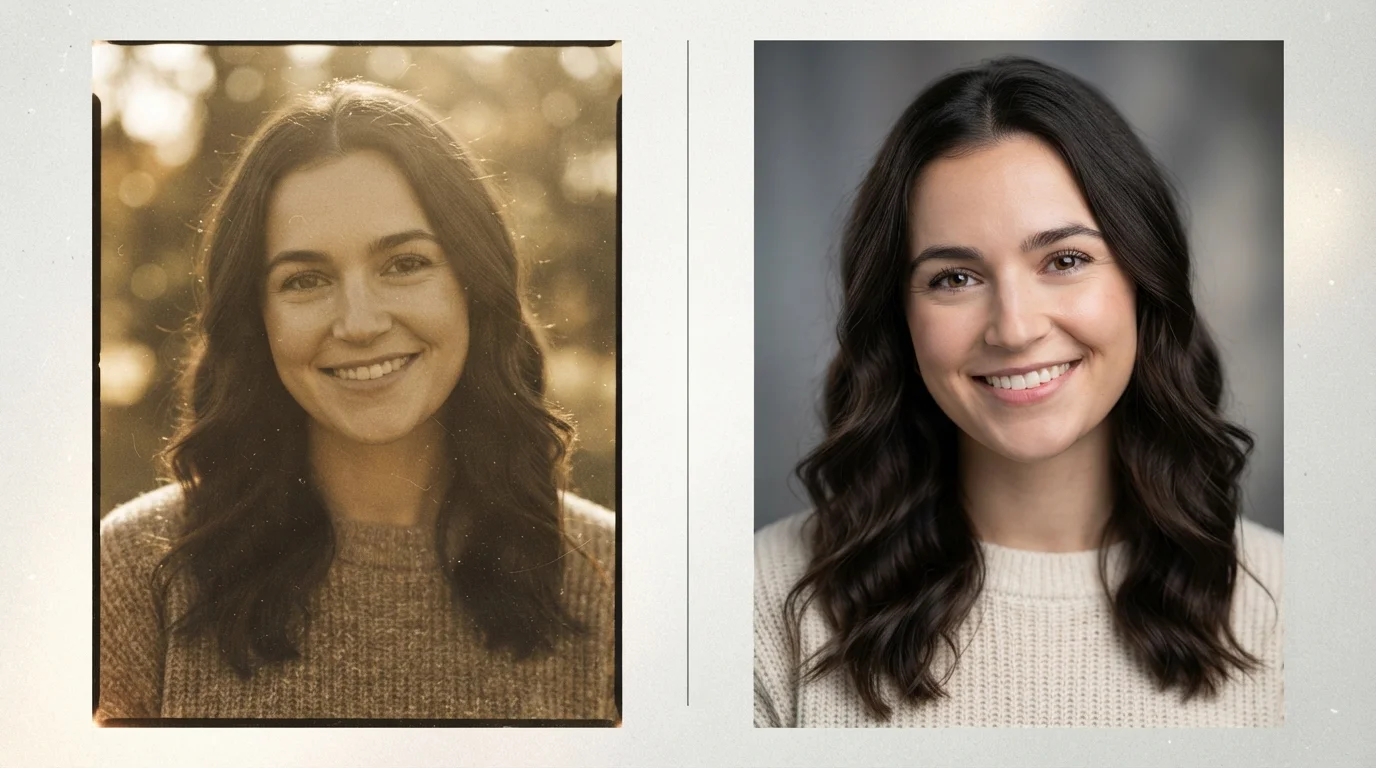
Key Takeaways
Option A
Film Photography
The analog original - chemical, tactile, and irreversibly expressive.
Best for: Photographers who prioritize a distinctive tonal character, deliberate shooting habits, and the physical permanence of a negative.
Option B
Digital Photography
The versatile modern standard - precise, flexible, and immediately reviewable.
Best for: Photographers who need volume, adaptability, and post-production control across a wide range of conditions.
If you want maximum creative control in post-production
Digital Photography
Digital RAW files offer extensive latitude for exposure correction, color grading, and detail recovery in editing software without degrading the base image.
If you want a built-in aesthetic character with minimal editing
Film Photography
Different film stocks carry their own color palettes, grain structures, and tonal curves that define the image at the point of capture, not after.
If you're documenting fast-moving events or working in variable light
Digital Photography
Instant review, adjustable ISO, and high frame rates make digital far better suited to unpredictable, high-volume shooting situations.
If you're learning to slow down and develop a more intentional photographic eye
Film Photography
The physical cost and finite number of exposures per roll naturally encourages careful composition and deliberate light reading before pressing the shutter.
If you're shooting cinematic or fine-art work intended for large prints
Film Photography
Large and medium format film can resolve extraordinary detail with a tonal quality that many photographers and artists find difficult to replicate digitally.
How Each Format Actually Captures an Image
Photography has always been about capturing light - but how that light is recorded is where film and digital diverge at a fundamental level. Film works through a photochemical process: light strikes a layer of silver halide crystals suspended in gelatin on the film surface, triggering a chemical reaction that forms a latent image, later revealed through development. Digital sensors, by contrast, convert incoming photons into electrical signals using millions of tiny photodetectors called pixels, which are then processed by the camera's internal computer into an image file.
This isn't a trivial distinction. The chemical reaction in film is continuous and analog - it responds to light in a way that has no discrete steps or grid. A digital sensor is inherently grid-based, which affects how fine detail, curved edges, and gradual tonal transitions are rendered. For everyday viewers, the difference may be subtle, but for practiced eyes - and especially in large prints - the structural difference in how information is recorded shapes everything else about the image.
To understand how these choices connect to the broader discipline of visual storytelling, explore photography as a visual art - from light and framing to the meaning embedded in a single frame.
| Criterion | Film Photography | Digital Photography |
|---|---|---|
| Image capture method | Chemical reaction on silver halide | Electronic sensor converts photons to data |
| Texture character | Organic, random grain | Electronic noise; grid-based artifacts |
| Highlight rolloff | Gradual, gentle fade | Can clip abruptly, especially in JPEG |
| Frame cost | Material cost per frame | Effectively unlimited; cost is in storage |
| Immediate review | Not possible until developed | Available instantly on LCD screen |
| ISO flexibility | Fixed per roll | Adjustable shot-by-shot |
| Post-production latitude | Limited; locked in at development | Extensive with RAW format |
| Built-in aesthetic | Strong; varies by film stock | Neutral by default; styled in post |
Grain, Noise, and the Texture of the Image
One of the most immediately recognizable differences between film and digital is texture. Film grain - the visible clustering of those silver halide crystals - is organic and random. It varies in size and distribution across the frame, and different film stocks produce dramatically different grain characters. Fine-grained films like Kodak Ektar 100 render smooth, almost painterly textures; high-speed films like Kodak Tri-X 400 pushed in development produce bold, chunky grain that many photographers deliberately seek out for its gritty energy.
Digital noise, which appears in low-light or high-ISO images, is a different beast. It tends to appear as blocky, color-flecked interference patterns - particularly noticeable in shadow areas - because it results from electronic interference in the sensor circuit rather than a physical chemical structure. Camera manufacturers have invested enormously in noise reduction algorithms, and modern sensors perform impressively at high ISO settings. But even the best digital noise doesn't quite resemble film grain, and most photographers who prefer the latter will tell you the difference is immediate.
36
Frames per standard 35mm roll
A single roll of 35mm film limits photographers to 36 exposures, fundamentally shaping shooting pace and deliberation compared to digital's effectively unlimited capacity.
~14 stops
Dynamic range in modern full-frame digital sensors
Leading full-frame digital sensors measure approximately 14 stops of dynamic range in controlled tests, comparable to - and in some cases exceeding - color negative film under ideal conditions.
100+
Film stocks commercially available at peak analog era
Before digital's rise, major manufacturers including Kodak, Fujifilm, and Ilford offered well over 100 distinct film stocks, each with unique grain, color response, and tonal properties.
The cultural weight of grain matters here too. Grain has become visually associated with authenticity, memory, and a pre-digital world - which is part of why so many digital photographers apply grain filters in post-production. The aesthetic carries meaning beyond its technical origin.
Dynamic Range and How Highlights Die
Dynamic range - the spectrum from the darkest shadow to the brightest highlight a format can record - is another area where film and digital behave in structurally different ways. Both modern film and high-end digital sensors can capture a broad range of tones. But how they handle the edges of that range differs in ways that matter aesthetically.
Film tends to roll off highlights gradually. As a scene's brightness pushes past what the film can hold, detail doesn't vanish abruptly - it fades into a gentle, creamy overexposure that many photographers find visually pleasing. Digital sensors, particularly when shooting JPEG rather than RAW, can clip highlights suddenly, turning bright areas into flat, featureless white with no gradation. Shooting in RAW format recovers significant latitude, but the underlying behavior of the sensor remains more abrupt than film's organic rolloff.
This has real consequences when shooting in challenging light. Photographers working with lighting principles used by professionals will recognize that understanding your format's highlight behavior is inseparable from knowing how to position your subject relative to the light source.
How the Format Changes the Photographer
Perhaps the most underappreciated difference between film and digital isn't in the image at all - it's in the person holding the camera. A standard 35mm roll holds 36 exposures. Each frame has a measurable cost: the film itself, the development, the scanning or printing. That cost produces a particular kind of attention. Film photographers tend to read light more carefully, compose more deliberately, and commit more fully before pressing the shutter. The camera becomes a tool of considered choice rather than rapid iteration.
Digital photography, by contrast, enables a different workflow - one that many professionals rely on heavily. The ability to shoot hundreds of frames, review immediately, adjust exposure in real time, and bracket widely gives digital photographers a practical safety net. This isn't laziness; it's a legitimate creative and professional strategy. But it does alter the relationship between photographer and image. Some photographers deliberately shoot digital as if it were film - limiting their frame count, resisting chimping (the habit of reviewing every shot on the LCD screen) - to recapture that deliberative quality.
Neither approach produces better photographers by default. But awareness of how your format shapes your behavior is itself a form of artistic literacy - one that connects to the broader question of how visual artists make meaning, explored in depth in our complete guide to photography as a visual art.
The Hybrid Workflow Is Real
Many working photographers today use film and digital together rather than treating them as competing choices. A common approach is shooting medium or large format film for fine-art or portrait work while using a digital camera for commercial assignments, events, or documentation. Some labs also offer hybrid services that scan negatives to high-resolution digital files, combining film's tonal character with digital's workflow convenience. The boundary between formats has become more permeable than the either/or framing often suggests.