

Key Takeaways
Start here
What's Actually on a US Ballot?
Next
Federal, State, and Local Races Explained
Then
Ballot Measures, Propositions, and Referendums
When you're ready
How to Read and Mark Your Ballot
Final step
Where to Find Your Sample Ballot Before Election Day
What's Actually on a US Ballot?
Opening a ballot for the first time can feel overwhelming. The page may be dense with names, offices, and legal-sounding questions - but the structure follows a consistent logic once you know what to look for.
Most US ballots are divided into two broad categories: candidate races and ballot measures. Candidate races ask you to choose a person for a specific government office. Ballot measures ask you to vote yes or no on a proposed law, constitutional amendment, or policy question.
The order typically runs from the highest federal office down to the most local. In a presidential election year, the President and Vice President appear first. In a midterm year, US Senate and House races lead the ballot. State and local offices follow, and ballot measures usually appear at the end.
Ballot measure
A policy question placed directly on the ballot for voters to approve or reject, rather than decided solely by elected officials.
Candidate race
A contest in which voters choose one person from a list of candidates to fill a specific government office.
Nonpartisan race
An election in which candidates are listed without party labels, common for local offices like school board or judgeship.
Undervote
When a voter skips a particular race or measure on their ballot; the rest of their selections still count normally.
Voter information pamphlet
An official government-published guide explaining ballot measures in plain language, often including fiscal analysis and arguments from both sides.
Write-in candidate
A candidate not printed on the ballot whose name a voter writes in manually; rules about whether these votes are counted vary by state.
For a broader grounding in how the US political system works, see our guide to key American political terms, which covers vocabulary you'll encounter throughout the ballot.
Federal, State, and Local Races Explained
Federal races appear on every ballot across the country in relevant election cycles. The US Senate has 100 seats - two per state - with roughly one-third up for election every two years. The US House of Representatives has 435 seats, each representing a congressional district, and all seats are contested every two years.
State races vary by state but commonly include Governor, Lieutenant Governor, Attorney General, state legislators, and sometimes state supreme court justices. These offices shape state law, budgets, and policies that directly affect residents.
Local races sit at the bottom of the ballot but carry outsized day-to-day importance. School board members set education policy. County commissioners oversee local budgets. Judges and prosecutors make decisions about how laws are enforced in your community. Turnout in local races is frequently very low, meaning each individual vote has greater weight.
To understand how midterm elections - which shift the balance of federal power - differ from presidential cycles, our article on midterm elections and why they reshape the political landscape provides useful context.
Ballot Measures, Propositions, and Referendums
Ballot measures go by several names - propositions, initiatives, referendums, or amendments - depending on the state and how they got onto the ballot. The core idea is the same: voters decide a policy question directly rather than leaving it to elected officials.
Read the Official Voter Guide First
Before Election Day, look up your state's official voter information pamphlet - most are available as a free PDF from your Secretary of State's website. It breaks down every ballot measure in plain language and includes independent fiscal analyses. This is especially useful for complex propositions that involve tax policy or constitutional changes.
Citizen initiatives are placed on the ballot through a petition process in which a set number of registered voters sign to trigger a public vote. Legislative referrals occur when a state legislature votes to send a question to voters, often because a constitutional change requires public approval. Popular referendums allow citizens to challenge a law already passed by the legislature.
Ballot measure language is often written in legal or technical terms. Many states publish official voter guides - sometimes called a voter information pamphlet - that include plain-language summaries, fiscal analyses, and arguments from supporters and opponents. Reading this guide before Election Day is one of the most practical things a first-time voter can do.
How to Read and Mark Your Ballot
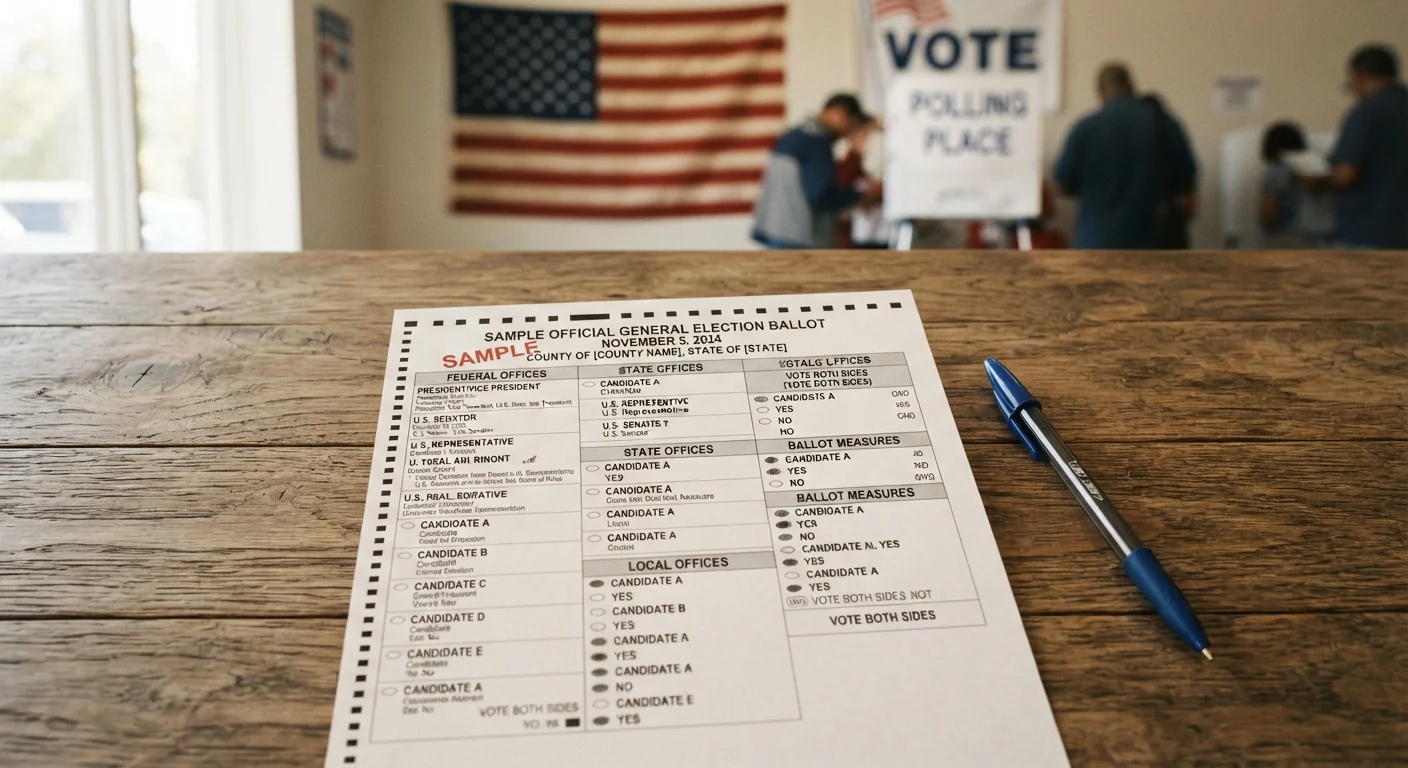
Paper ballots are still the most common format in the US. You typically fill in an oval or connect an arrow next to your chosen candidate or answer. Optical scanners read these marks, so using the correct pen (usually provided at the polling place) and marking clearly within the designated area matters.
Some jurisdictions use touchscreen voting machines. These walk you through each race sequentially and display a summary screen before you finalize your vote - treat that screen as a chance to review every selection carefully.
Mail Ballot Errors Can Disqualify Your Vote
Mail-in and absentee ballots are rejected most often because of missing or mismatched signatures, not using the required inner secrecy envelope, or returning the ballot after the deadline. Always read the return instructions in full, sign where indicated, and mail or drop off your ballot well before the deadline your state specifies.
A few practical rules apply regardless of format: vote for only as many candidates as instructed (some races say 'vote for up to three,' for example), mark your choices clearly and completely, and review the full ballot before submitting. If you are voting by mail, follow the envelope and signature instructions precisely - an improperly sealed or unsigned mail ballot may not be counted under your state's rules.
Where to Find Your Sample Ballot Before Election Day
Most county election offices and state election authority websites publish sample ballots weeks before an election. Entering your registered address into your state's official voter portal will typically generate the exact ballot you'll see at the polls.
Nonpartisan voter information resources such as your state's official Secretary of State website, Vote.gov, and many county clerk websites also offer tools to look up your polling place, confirm your registration, and review candidates. These are publicly funded, official sources - distinct from campaign or advocacy websites, which present information with a persuasive purpose.
Taking 15 to 20 minutes to review a sample ballot at home transforms Election Day from a stressful exercise into a straightforward task. You arrive knowing every race, every measure, and every candidate you intend to support - and you can focus on the simple act of making your choices official.