

Key Takeaways
Live Performance Variability
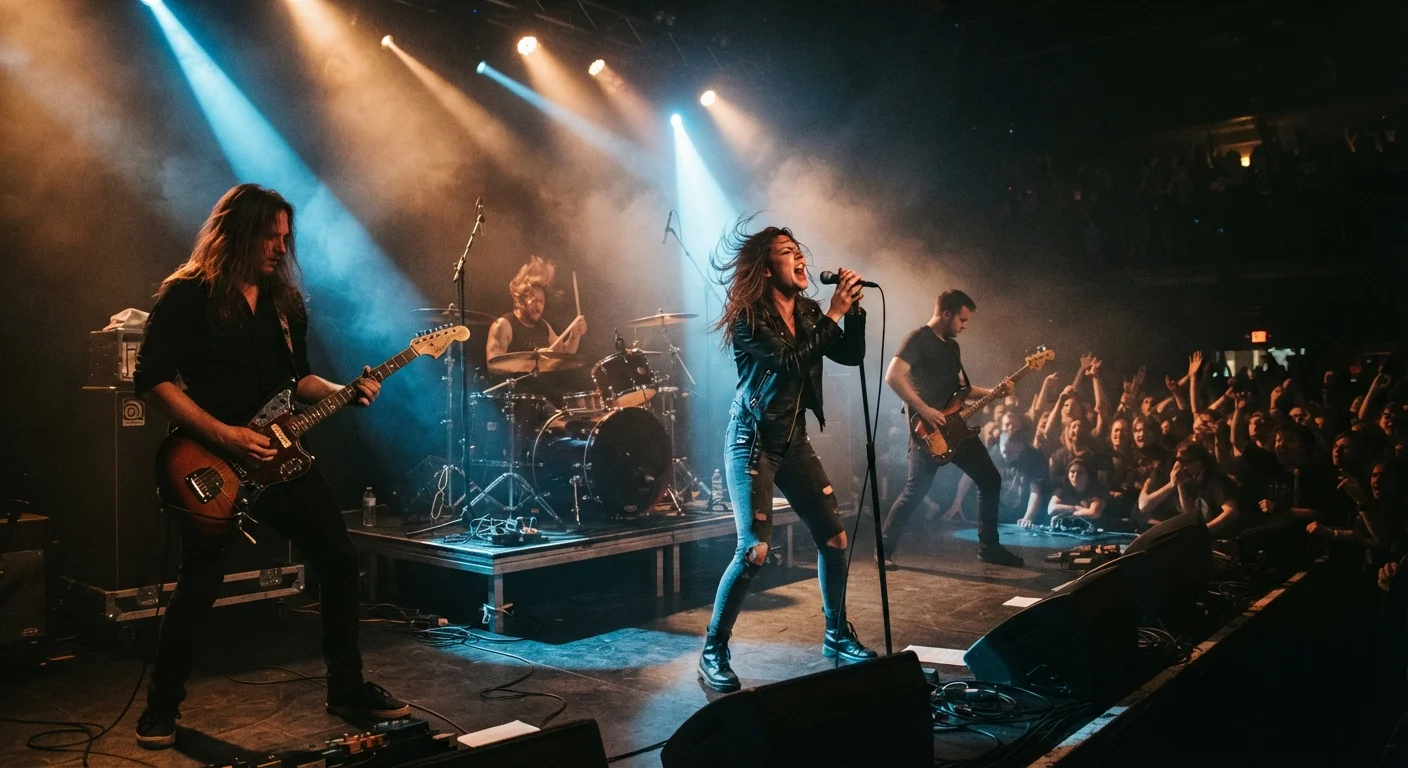
Live performance variability refers to the natural, unavoidable differences that occur between performances of the same music by the same artist. These differences arise from acoustic conditions, equipment behavior, human physicality, and audience energy - none of which can be perfectly replicated from one night to the next. It is a defining characteristic of live music, distinguishing it fundamentally from recorded sound.
In audio engineering, even minor changes in room temperature or humidity can shift the resonant frequencies of a venue, altering how sound waves travel and interact with surfaces.
The Room Is Never the Same Twice
Walk into any concert venue and you're stepping into an acoustic instrument of its own. The shape of the walls, the height of the ceiling, the materials covering every surface - all of it determines how sound waves travel, reflect, and decay. A cavernous arena behaves nothing like an intimate club, but even the same venue changes night to night depending on how many people are present. Bodies absorb sound; an empty hall rings with echo while a packed room feels tighter, more immediate.
Temperature and humidity add another layer of unpredictability. Warm air allows sound to travel slightly faster, which shifts the resonance of the room in subtle but audible ways. For a deeper look at how room size reshapes a performance, these environmental factors are a constant negotiation between the music and its physical container.
~4°F
Temperature shift that can alter string instrument tuning
Luthiers and instrument technicians commonly note that even small ambient temperature changes of a few degrees can shift string tension enough to require retuning between sets.
30-50%
Estimated sound absorption increase from a full crowd vs. empty room
Acoustic engineers estimate that audience bodies and clothing can absorb a significant portion of mid and high frequency sound energy, materially changing a venue's reverb character.
Instruments, Equipment, and the Limits of Consistency
String instruments go sharp in dry conditions and flat in humid ones. Drum skins tighten in cold weather and slacken in heat. Digital amplifiers may behave predictably, but analog gear - beloved by many musicians for its warmth - responds to environmental conditions in ways that no two nights will reproduce exactly. A guitar that sang beautifully in Houston may feel stiff and unresponsive in Denver's dry altitude the following week.
Beyond the instruments themselves, live audio systems introduce their own variability. Speaker stacks interact differently with each room's geometry. Cable connections develop subtle imperfections. Monitor mixes - the sound performers hear on stage - are adjusted by ear and judgment in real time, meaning what a singer hears in their earpiece shapes how they pitch and project their voice. These micro-decisions, made dozens of times each night, are invisible to the audience but profoundly shape what reaches them.
The Human Element: Voice, Energy, and Emotion
Musicians are not machines. Across a long tour, a vocalist's voice changes - sometimes deepening with fatigue, sometimes opening with confidence after weeks of nightly performance. A drummer who played a meticulous, restrained set on Tuesday may unleash something rawer and more urgent on Friday, driven by accumulated energy or a crowd that simply demanded more. These shifts are not mistakes; they are the organism of a live band responding to its own internal conditions.
Emotion plays an equally significant role. A performer who just received difficult personal news, or one who is riding the high of an exceptional run of shows, will bring different energy to identical material. Audiences rarely see this directly, but they feel it - something intangible in the phrasing of a lyric, the weight of a pause, the way a chorus is attacked. This is precisely what separates a great live act from a great studio recording - the irreducible presence of a human being navigating the moment.
The Crowd as Co-Creator
Perhaps the most underappreciated variable in any live performance is the audience itself. A quiet, attentive crowd draws a certain kind of intimacy from performers - hushed dynamics, careful phrasing, space allowed to breathe. A roaring crowd at full energy can push a band to play faster, harder, and louder than any rehearsal ever anticipated. Neither outcome is rehearsed; both are real.
Many musicians describe specific nights on tour as transformative precisely because of audience energy - a crowd that sang back every word, or fell into an unexpected silence at just the right moment. Understanding how performers connect with an audience reveals that this exchange is a two-way art form, not a one-directional broadcast. The crowd participates in shaping what the band delivers, making every show a genuine collaboration.
This is what separates a live performance from pressing play on a streaming service. The variables are not bugs in the system - they are the system. And that irreproducible quality is why fans travel hundreds of miles to see the same artist on consecutive nights, chasing something they know will never be exactly the same twice.
“The record is a document of one moment. The live show is a conversation with every person in the room - and that conversation is never the same.”
— Ani DiFranco, Independent singer-songwriter and recording artist known for her extensive touring career