

Key Takeaways
Cinematographer (Director of Photography)
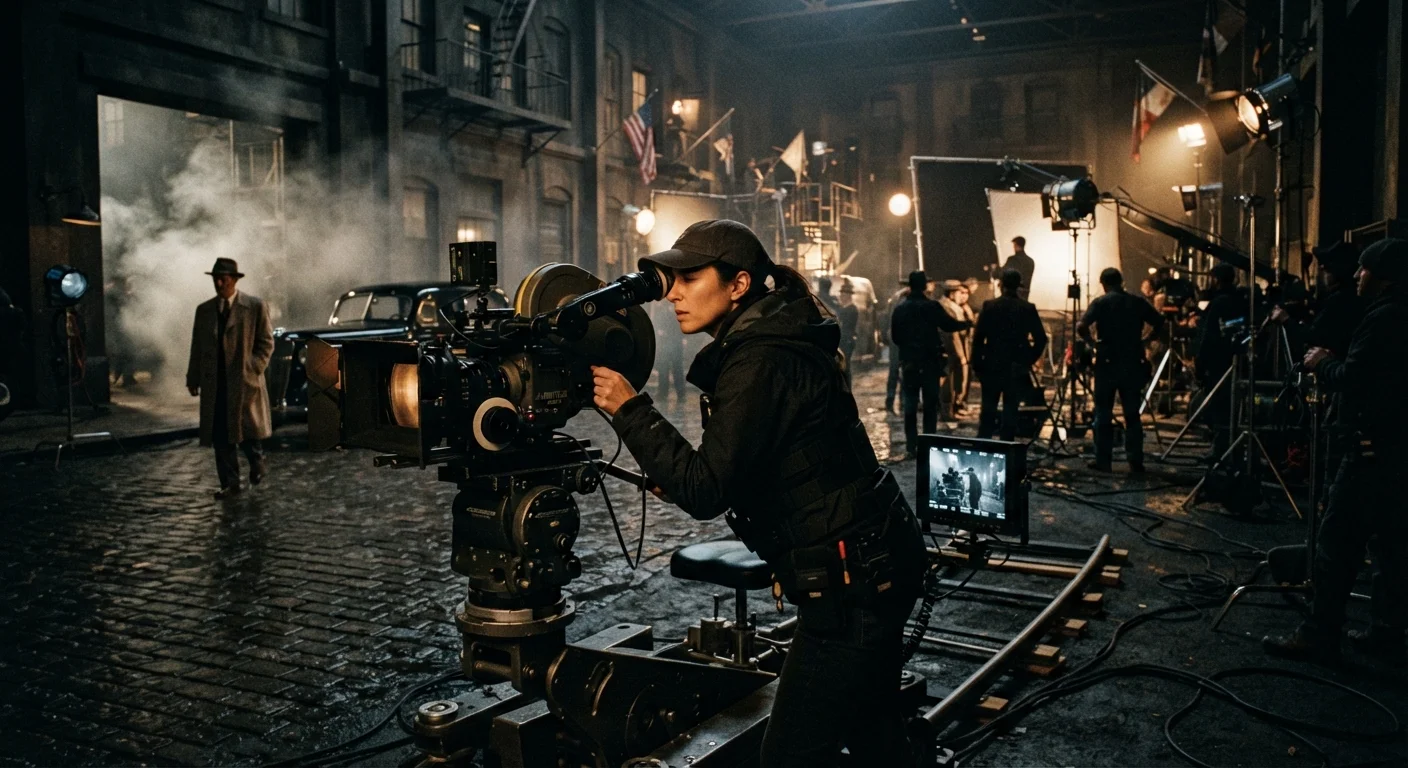
A cinematographer - formally called a Director of Photography, or DP - is the person responsible for everything the camera sees and how it sees it. They design the visual language of a film: the lighting, the framing, the movement of the camera, and the overall look and mood of every shot. Working closely with the director, they translate a screenplay's emotional intentions into images. Their job ends when they deliver footage that makes an audience feel something without the audience ever knowing why.
The DP typically oversees the camera department and the lighting (gaffer) department, often collaborating with a camera operator who physically handles the camera while the DP supervises composition and exposure.
The Person Behind What You Actually See
When audiences talk about a film, they usually talk about the director or the actors. Rarely does anyone walk out of a theater saying, 'That cinematography changed how I felt about the whole story.' And yet it did. Every time.
The director of photography - the DP - is the chief visual architect of a film. While the director shapes narrative and performance, the DP translates those intentions into light, shadow, movement, and frame. It is one of cinema's most consequential creative roles, and also one of its least understood. The best work in the craft is work you never consciously notice.
This is by design. When cinematography calls attention to itself, it risks breaking the spell. When it disappears into the story, it has succeeded completely. As you watch films more critically, the DP's choices become legible - and that awareness transforms the viewing experience.
Light as a Storytelling Tool
Nothing defines a DP's craft more fundamentally than light. Where it comes from, how hard or soft it falls, what color temperature it carries - all of these variables communicate meaning before a single line of dialogue is spoken.
Hard, directional light casts sharp shadows and tends to feel dramatic, even threatening. Think of the high-contrast chiaroscuro of classic film noir, where darkness swallows half a character's face, suggesting moral ambiguity. Soft, diffuse light feels safer, warmer - the kind you see in family dramas or romantic scenes. These are not accidental aesthetics. They are decisions made in collaboration with the director, often during weeks of pre-production work involving visual references, tests, and careful planning.
Color temperature adds another layer. Cooler blue-tinted light reads as isolation or clinical detachment. Amber and warm tones signal intimacy, nostalgia, or comfort. DPs frequently use these associations to guide audience emotion without the audience ever registering the mechanism. The core principles of light direction and quality that professional photographers use in still images apply directly to cinematography - scaled up and made to move.
~80%
Of emotional response attributed to visual cues
Research in visual psychology broadly suggests that a large majority of initial emotional responses to scenes come from non-verbal, visual information - color, contrast, and spatial composition among the primary drivers.
3-8 weeks
Typical DP pre-production period on major films
Industry accounts from working DPs consistently describe multi-week pre-production periods devoted to visual testing, location scouts, and collaboration with the director before principal photography begins.
Lenses, Framing, and the Grammar of the Shot
A lens is not neutral. Every focal length carries its own psychological signature, and experienced DPs choose them deliberately.
A wide-angle lens - something in the 18mm to 24mm range - stretches the apparent depth of a scene, making backgrounds feel far away and foreground subjects slightly distorted. Used in close-up, it can make a character look unhinged or dangerous. A telephoto lens, by contrast, compresses that same depth, pulling the background close and making the subject feel observed rather than intimate - the cinematic equivalent of watching someone through a long corridor. A lens close to 50mm approximates how the human eye perceives the world, lending footage a naturalistic, almost documentary quality.
Framing compounds these choices. Where the subject sits within the frame, how much headroom they are given, whether the horizon is level or slightly tilted - each decision shapes how the viewer unconsciously relates to what they are seeing. A character framed tightly against a wall reads as trapped even without a word of exposition. This visual grammar is as real and meaningful as the emotional logic of a film's score.
Camera Movement and the Feel of Time
A static camera holds the viewer at a distance - observational, formal, sometimes austere. A handheld camera, wobbling slightly with the operator's breath, places the viewer inside the action, generating urgency or intimacy depending on context. A slow, motorized track through a scene can create a sense of elegance or dread depending on the music and the subject matter.
These choices belong to the DP in execution, even when they originate in conversation with the director. On set, it is the DP who determines whether a dolly move serves the scene or whether stillness would be more powerful. The decision is almost always about emotional honesty - what does this moment actually feel like, and how can the camera body match that feeling?
The relationship between camera movement and narrative meaning is also linked to how film is captured. The differences between shooting on film versus digital affect texture, motion rendering, and the overall quality of the image in ways that interact directly with the DP's movement choices. A handheld shot on 16mm film has a very different grain structure and feeling than the same shot captured digitally.
“The best lighting is the lighting you don't notice. When you're aware of the lighting in a movie, something has probably gone wrong.”
— Conrad Hall, Three-time Academy Award-winning cinematographer
Ultimately, the cinematographer's job is to make the invisible felt. The audience should never think about light or lenses. They should simply believe in the world on screen - and that belief is the DP's real product.