

Key Takeaways
Film Score vs. Soundtrack
A film score is original music composed specifically for a movie, written to support its scenes and emotional beats. A soundtrack is a broader term that can include both the score and any pre-existing songs licensed for use in the film. Both work together to shape how an audience feels while watching.
In industry usage, 'score' refers specifically to the composed underscore, while 'soundtrack album' often packages both original compositions and source music - songs heard within the film's world - for commercial release.
The Invisible Hand Guiding Your Feelings
Think of the last time a film made you cry, or sent a cold shiver across your shoulders before anything frightening even appeared on screen. Chances are, the music got there first. Film scoring is one of cinema's oldest and most deliberate crafts - yet it succeeds precisely when audiences don't consciously notice it's happening.
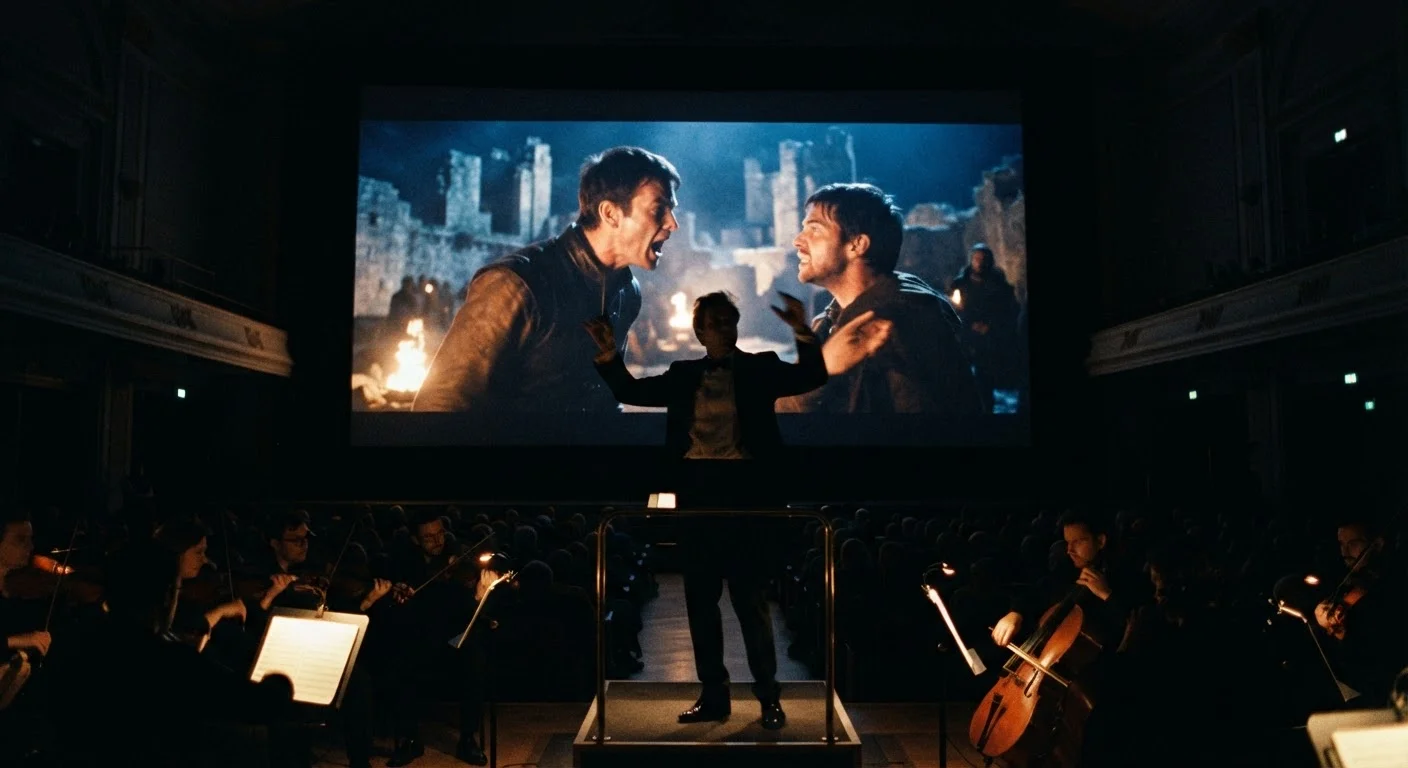
Composers work in close collaboration with directors to map the emotional architecture of a story. They time musical phrases to cuts, build harmonic tension beneath dialogue, and resolve chord progressions in exact synchrony with narrative releases. The goal isn't spectacle; it's seamless emotional guidance. When the music is doing its job well, viewers attribute what they feel to the performances and the story - not to the forty-piece orchestra that quietly engineered those feelings from the pit.
This is sometimes called the invisible art of film scoring, and understanding it changes how you watch everything.
~30%
Of a film's emotional impact attributed to music
Research in film psychology suggests music can account for roughly 30% of viewers' emotional responses to a scene, though estimates vary across studies depending on methodology.
1927
Year synchronized sound changed cinema
The release of <em>The Jazz Singer</em> marked the mainstream arrival of synchronized dialogue and music, fundamentally transforming how composers worked with moving images.
200+
Musicians in a full orchestral film session
Major studio productions can employ orchestras of over 200 players for recording sessions, though many contemporary scores are produced with smaller ensembles or hybrid digital arrangements.
Leitmotifs: Musical Signatures That Carry Memory
One of the most powerful techniques in a film composer's toolkit is the leitmotif - a short, recurring musical theme tied to a character, relationship, or idea. The concept was developed extensively in 19th-century opera by Richard Wagner, but cinema adopted it with enormous creative results.
When a leitmotif appears early in a film and then recurs - sometimes transformed in key, tempo, or instrumentation - it carries all the emotional history of its previous appearances. An audience that has heard a character's theme in a moment of triumph will feel something complex and layered when that same melody appears in a minor key during that character's failure. No exposition is needed. The music does the narrative work.
This is one reason why watching a film more critically rewards repeat viewings - recurring musical themes often appear in disguised forms that only register on a second watch.
“The job of film music is to prepare the unconscious of the viewer for what is to come - to give them feelings they don't know they're having.”
— Bernard Herrmann, Pioneering film composer, known for collaborations with Alfred Hitchcock
When Music Contradicts the Image
Film scores don't only amplify what's on screen - sometimes they deliberately work against it. This technique, called counterpoint or, more broadly, anempathetic music, creates some of cinema's most unsettling or ironic effects.
Consider a cheerful pop song playing over an act of violence, or a delicate lullaby accompanying a scene of genuine menace. The dissonance between sound and image forces the viewer into an uncomfortable interpretive space - neither reading cancels the other, and the emotional result is more complex than either element would produce alone. Directors from Stanley Kubrick to Quentin Tarantino have made this technique a signature of their style.
Silence, too, operates as a form of musical counterpoint. Pulling the score away entirely - especially when audiences have been conditioned to expect music - creates a sudden rawness, a sense that the safety net has been removed. Grief scenes, in particular, often gain their power not from swelling strings but from the stark quiet that replaces them.
Just as cinematographers shape meaning through what you see, composers shape it through what you hear - and equally through what you don't.
A Brief History: From Silent Screens to Digital Scores
Film music is nearly as old as cinema itself. During the silent era, live pianists and small ensembles performed alongside projected images, cueing emotional responses in audiences who might otherwise find the silent flickering alienating. Music provided the emotional bridge.
When synchronized sound arrived with films like The Jazz Singer in 1927, composers faced a new challenge: integrating music into a medium that now had dialogue and ambient sound competing for the listener's attention. The solution, developed over the studio era of the 1930s and 1940s, was the underscore - music that sits beneath dialogue in the mix, present but never overwhelming.
Composer Bernard Herrmann, working extensively with Alfred Hitchcock, pushed this relationship to new psychological territory. His score for Psycho - written entirely for strings - showed that unconventional instrumentation could carry a film's entire emotional logic. Ennio Morricone later demonstrated how folk instruments, unconventional sounds, and operatic ambition could expand the very definition of what a film score could be. The craft has continued evolving, with contemporary composers like Jonny Greenwood and Mica Levi using dissonance and texture in ways that feel pointedly modern.
The connection between music, cultural history, and material craft runs deeper than any single genre. As explored in the context of how instruments carry cultural history, the choices composers make about sound are never neutral - they reflect time, place, and meaning.