

Key Takeaways
Our Verdict
All three frameworks are legitimate, time-tested approaches to managing personal finances. The 50/30/20 rule offers the lowest barrier to entry for newcomers. Zero-based budgeting provides the deepest level of control for those willing to invest the time. The envelope method works best for people who struggle with overspending in specific categories. No single method is universally superior-the right choice depends on your income pattern, financial goals, and how much structure you need.
| Best for | Recommended |
|---|---|
| Budget beginners who want a simple starting framework | 50/30/20 Rule |
| Those who want granular control over every dollar | Zero-Based Budgeting |
| People prone to overspending in specific categories | Envelope Method |
| Those with irregular income who need flexibility | Zero-Based Budgeting |
Why Your Choice of Budgeting Method Matters
Budgeting is less about restriction and more about intention. When you decide in advance where your money goes, you reduce the chance of arriving at month's end wondering where it all disappeared. The challenge is that the word "budget" covers a wide range of approaches-some high-structure, some highly flexible-and picking the wrong one for your situation can make the habit feel unsustainable.
This comparison covers three widely used personal budgeting frameworks: the 50/30/20 rule, zero-based budgeting, and the envelope method. Each has a distinct philosophy, a different time commitment, and a different type of person it tends to serve well. For a quick reference on terms used throughout, see the Plain-Language Glossary of Budgeting Terms.
This article is for general informational and educational purposes only and does not constitute personalized financial advice. Consider consulting a licensed financial professional for guidance tailored to your specific circumstances.
The 50/30/20 Rule: Simple Percentages, Broad Categories
Popularized in personal finance literature, the 50/30/20 rule divides your monthly after-tax income into three buckets: 50% toward needs, 30% toward wants, and 20% toward savings and debt repayment. "Needs" covers essentials like rent, utilities, groceries, and minimum debt payments. "Wants" includes discretionary spending-dining out, subscriptions, and entertainment. The remaining 20% goes toward building savings or paying down debt above the minimum.
The appeal is its low overhead. You don't track individual purchases in granular detail; you simply check whether your spending broadly aligns with the three percentages each month. This makes it approachable for people new to budgeting or those with straightforward finances.
The limitation is equally clear: broad categories can mask problem spending. Someone spending 50% on needs technically stays within the rule even if their grocery bill is inflated and their streaming subscriptions have quietly multiplied. The method also assumes a relatively stable income-the percentages get harder to apply when monthly take-home pay varies significantly.
| 50/30/20 Rule | Zero-Based Budgeting | Envelope Method | |
|---|---|---|---|
| Core concept | Fixed % split across 3 broad categories | Every dollar assigned a specific purpose | Hard spending caps per category |
| Time commitment | Low - monthly percentage check | High - detailed monthly setup | Moderate - upfront category planning |
| Best income type | Stable, predictable income | Any income, especially variable | Stable or semi-stable income |
| Spending visibility | Broad overview only | Granular, line-by-line | Category-level visibility |
| Overspending control | Moderate - wide categories allow drift | Strong - every dollar is tracked | Strong - hard limits enforced per category |
| Flexibility | High - few rigid rules | Moderate - monthly replanning needed | Low to moderate - limits are preset |
| Ideal for | Beginners and simplicity-seekers | Detail-oriented and goal-focused planners | Those who overspend in specific areas |
Zero-Based Budgeting: Every Dollar Has a Job
Zero-based budgeting (ZBB) operates on a single principle: income minus expenses should equal zero by the end of your planning session. That doesn't mean spending everything-it means every dollar is deliberately assigned, whether to rent, a car payment, groceries, an emergency fund, or a vacation savings account. Nothing is left floating.
The process begins at the start of each budget period, typically monthly. You list your expected income, then allocate amounts to every spending category until you reach zero. If you have money left after essentials and goals, you assign it somewhere-extra debt repayment, an investment account, or a specific savings target.
ZBB tends to surface spending patterns that broad-category methods miss. Because you're forced to justify every line, it often reveals subscriptions, habits, or categories that have grown without notice. The trade-off is time: setting up a zero-based budget takes meaningful effort each month, particularly at first. For a deeper look, see Zero-Based Budgeting: Strengths, Drawbacks, and Who It Works For.
Start With One Month of Tracking
Before committing to zero-based budgeting, spend one month simply recording every transaction without judgment. This gives you real spending data to work from, rather than estimates that may be too optimistic. Accurate baseline numbers make your first zero-based budget far more realistic and easier to maintain.
The Envelope Method: Hard Limits, Tangible Control
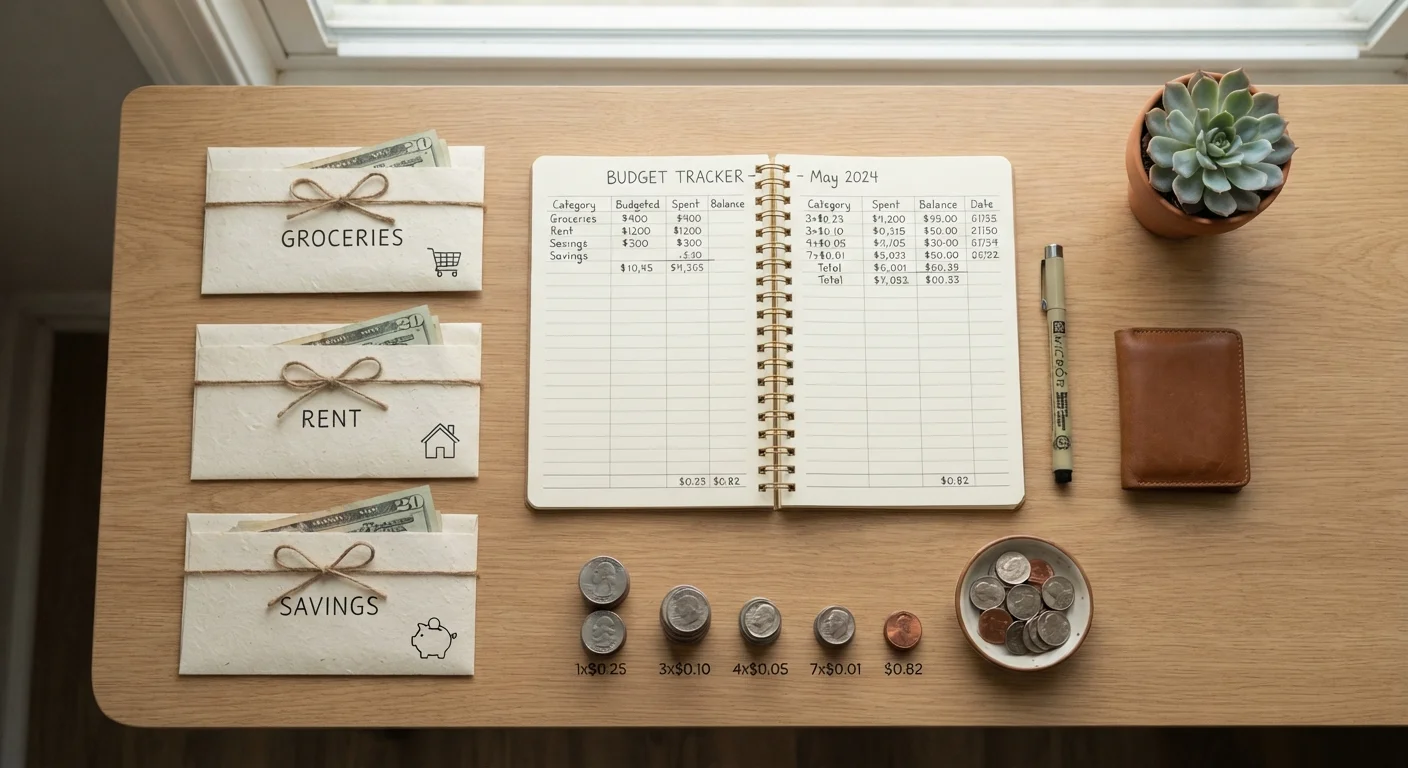
The envelope method works by allocating a fixed amount of cash-or a virtual equivalent-to specific spending categories at the start of each period. Historically, people used physical envelopes labeled "Groceries," "Gas," or "Entertainment." When the envelope is empty, spending in that category stops for the month.
Its strength is behavioral: a physical or clearly bounded limit makes overspending immediately visible rather than something discovered after the fact on a bank statement. It tends to work particularly well for categories where discretionary creep is common-dining, personal care, or entertainment.
The practical friction of carrying cash has led many people to digital adaptations-dedicated debit accounts or budgeting apps that replicate the envelope logic virtually. For more on how the method translates to modern tools, see Envelope Budgeting in the Digital Age. The main limitation is that the method requires identifying problem spending categories upfront and setting realistic limits-without that groundwork, the envelopes themselves won't solve an unclear spending picture.
Choosing a Framework-and What Comes Next
The most effective budget is the one you'll actually maintain. A complex system you abandon after two weeks accomplishes less than a simple one you stick with for a year. Consider your income pattern first: stable monthly income suits all three frameworks; variable income generally works better with zero-based budgeting, since you're planning from a specific number each month rather than a percentage estimate.
Consider also your financial goal mix. Paying down high-interest debt aggressively calls for more precision than the 50/30/20 rule typically provides, whereas someone primarily focused on building an emergency fund might find that rule perfectly adequate. These frameworks aren't mutually exclusive-some people use the 50/30/20 rule as an initial check and apply envelope limits within the "wants" category to prevent overspending. Mixing elements is entirely reasonable once you understand what each method is trying to accomplish.
Before building or resetting your budget, the Monthly Budget Setup Checklist offers a practical guide to gathering the information you'll need. And if you want a comprehensive grounding in budgeting from first principles, Personal Budgeting from First Principles covers the full arc from understanding income and expenses to staying consistent over time.