

Finance

Monthly Budget Setup Checklist

Share
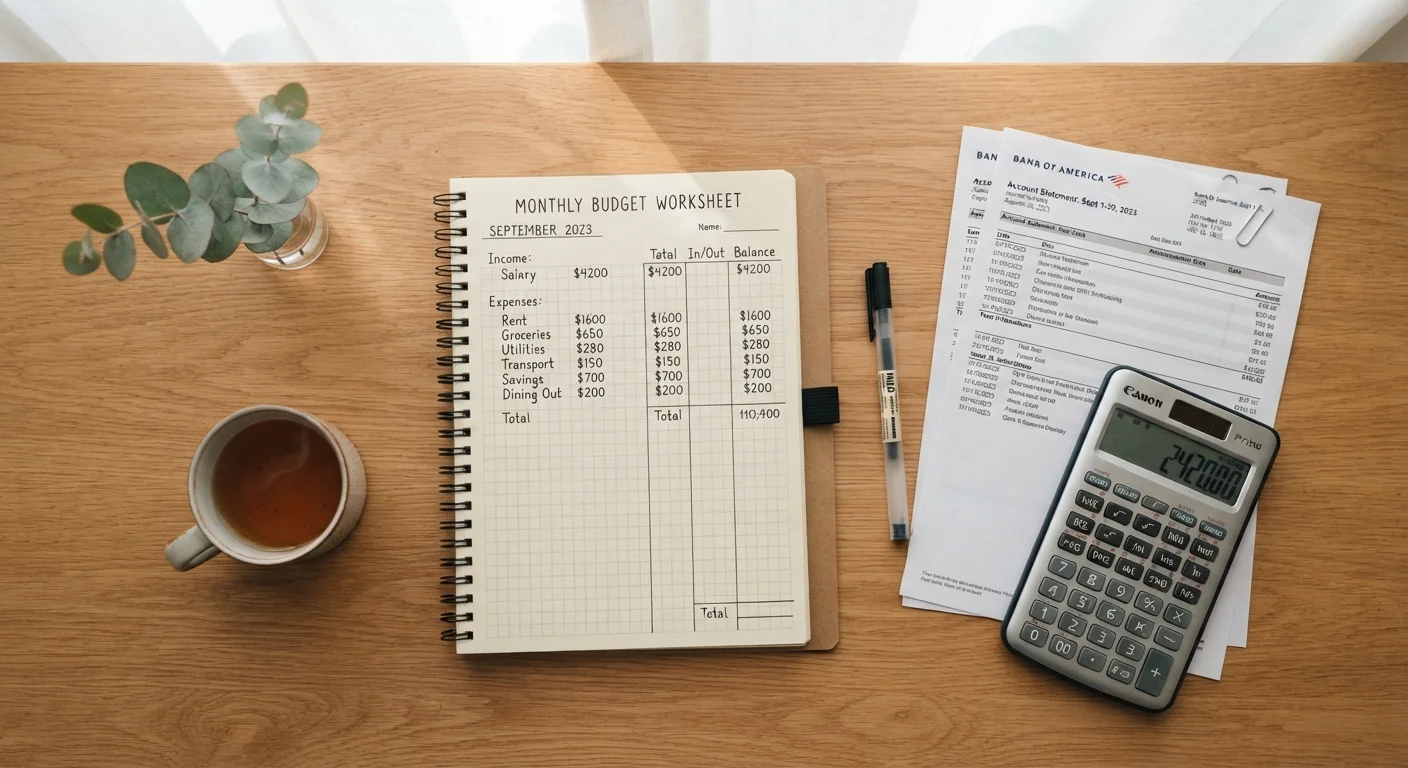
Open budget notebook with pen, calculator, and bank statements laid out on a wooden desk

Key Takeaways

Gathering income and expense records before you start saves significant time and reduces errors.
Separating fixed costs from variable spending gives you a clearer picture of where flexibility exists.
Reviewing subscriptions and irregular expenses prevents budget gaps that derail month two.
Choosing a tracking method that fits your habits is as important as the numbers themselves.
A monthly budget works best when revisited and adjusted, not treated as a one-time document.
30–60 min

Summary

22 items · 30–60 minutes

Why a Pre-Budget Checklist Matters

Most budgets don't fail because of complicated math — they fail because the person building them is working with incomplete information. Missing a recurring charge, underestimating grocery spending, or forgetting an annual insurance premium can throw off an otherwise solid plan within weeks.

This checklist is designed to eliminate those blind spots before you sit down to build or reset your monthly budget. Working through it once — ideally at the start of a new month or after a major life change — gives you the raw material you need to make decisions based on reality, not estimates. For a deeper foundation, see our comprehensive budgeting guide.

Required

Bank and Credit Card Online Portals

Access two to three months of transaction history needed to identify spending patterns and recurring charges.

Required

Spreadsheet Application

Build a flexible, customizable budget template where you can categorize income and expenses manually.

Optional

Budgeting or Personal Finance App

Automate transaction imports and category tracking if you prefer a digital-first, lower-effort approach.

Optional

Notebook or Printed Worksheet

Provide a tactile, distraction-free option for listing income sources and expenses by hand.

Required

Calculator

Quickly total income, fixed costs, and variable estimates without switching between applications.

How to Use This Checklist

Work through each group in order. The first two groups — gathering documents and calculating income — are prerequisites. You can't accurately categorize spending until you know what money is actually coming in. Each item is labeled by priority so you can focus your energy on what matters most if time is tight.

If you're using a digital budgeting app, keep it open alongside this checklist. If you prefer a spreadsheet or pen-and-paper method, have those ready too. Not sure which approach fits your habits? The envelope budgeting method is one framework worth understanding before you commit to a system.

Gather Your Financial Documents

Collect bank statements from the past two to three months for every account you use. Must
Pull credit card statements for the same period, including any cards you rarely use. Must
Locate your most recent pay stubs or income records if you're self-employed. Must
Find any loan or financing statements that show current balances and minimum payments. Must
Note any annual bills due in the coming month, such as insurance premiums or memberships. Should

Calculate Your True Monthly Income

Write down your net take-home pay after taxes and deductions — not your gross salary. Must
Add any secondary income sources, such as freelance work, rental income, or side jobs. Must
If your income varies month to month, use a conservative average from the last three months rather than your best month. Must
Note any irregular income expected this month, such as a tax refund or bonus, and treat it separately from your base budget. Should

List Fixed Monthly Expenses

Write down every expense that is the same amount each month — rent or mortgage, car payment, loan minimums. Must
List all active subscription services and their exact monthly charges. Review for any you've forgotten; subscription costs can accumulate silently. Must
Include insurance premiums paid monthly, such as health, auto, or renters insurance. Must

Estimate Variable Expenses

Review past statements to find an average for groceries, dining, and household supplies. Must
Estimate utility bills, using a three-month average to account for seasonal variation. Must
Include transportation costs — fuel, parking, tolls, or transit passes — based on recent spending. Must
Budget a realistic amount for personal spending categories like clothing, entertainment, or hobbies. Should
Set aside a small buffer amount for unplanned but inevitable expenses. Should

Review Savings and Debt Priorities

Confirm the current balance on any emergency fund and note your target savings goal for the month. Must
List all debts with their interest rates so you can prioritize repayment beyond minimum payments. Should
Decide whether any savings contributions — retirement, short-term goals — need to be reflected in this month's plan. Should
Check whether any automatic transfers or scheduled payments fall this month and confirm their amounts. Nice to have

Choose and Prepare Your Tracking Method

Decide whether you'll track spending manually with a spreadsheet, a notebook, or a budgeting app. Must
Set up category labels in your chosen tool that match the expense groups you've identified. Must
Schedule a recurring 10–15 minute weekly check-in on your calendar to review spending against the plan. Should

Don't Skip the Variable Expense Step

Fixed costs are easy to list, but variable spending is where most budgets underestimate reality. Skipping or guessing at categories like groceries, dining, and personal care almost always leads to a budget that runs short within the first week or two. Take time to review actual statements rather than estimating from memory — the data will likely surprise you.

After You Complete the Checklist

Once you've worked through all the groups, you'll have a complete snapshot of your financial picture for the month. From here, the goal is to assign every dollar of income to a category — whether that's needs, savings, debt repayment, or discretionary spending — before the month begins.

Unexpected costs are inevitable, and no budget survives contact with reality unchanged. Building a small buffer into each month is one of the most effective ways to avoid starting over. Our article on budgeting for irregular expenses covers this in practical detail. For broader strategies on saving alongside debt, explore the Saving & Debt hub.

This article is for general informational and educational purposes only. It does not constitute personalized financial, investment, tax, or legal advice. For guidance specific to your situation, consult a qualified financial professional.

Finance Editorial Team is the collective byline for our editorial team and contributor network. Articles published under this byline or an editorial pen name are researched, written, and reviewed according to our editorial standards for clarity, consistency, and independence before publication.

View all articles by Finance Editorial Team →
Disclaimer: The content on this site is for informational purposes only and is not a substitute for professional advice. Always consult a qualified professional for guidance specific to your situation.