

Key Takeaways
Why Most Home Art Routines Fade by Week Three
Every January, millions of Americans pull out a sketchbook, mix some paint, or dust off a camera with honest intentions. By the third week, the supplies are usually shoved to a shelf. This isn't a character flaw - it's a predictable behavioral pattern that researchers who study habit formation have documented across virtually every kind of creative and wellness routine. As habit researchers have explored in movement contexts too, the culprit is almost always the gap between initial enthusiasm and sustainable structure.
For visual art specifically, several forces compound the problem. The intimidation of the blank page, the cultural mythology that art requires innate talent, and the sheer logistical friction of setting up materials all conspire to make skipping one session feel reasonable - and then permanent. Understanding these dynamics is the first step toward designing a practice that outlasts them.
The Core Practices That Actually Stick
What follows isn't a motivational pep talk. These are structural habits - drawn from behavioral research on routine formation and the real experiences of working artists - that meaningfully reduce the likelihood of abandonment.
Anchor your art session to an existing daily habit.
Behavioral research consistently shows that new routines form fastest when attached to established ones - a mechanism called habit stacking. Without an anchor, the new behavior competes against the entire day for a time slot. With one, it inherits the existing habit's cue and momentum.
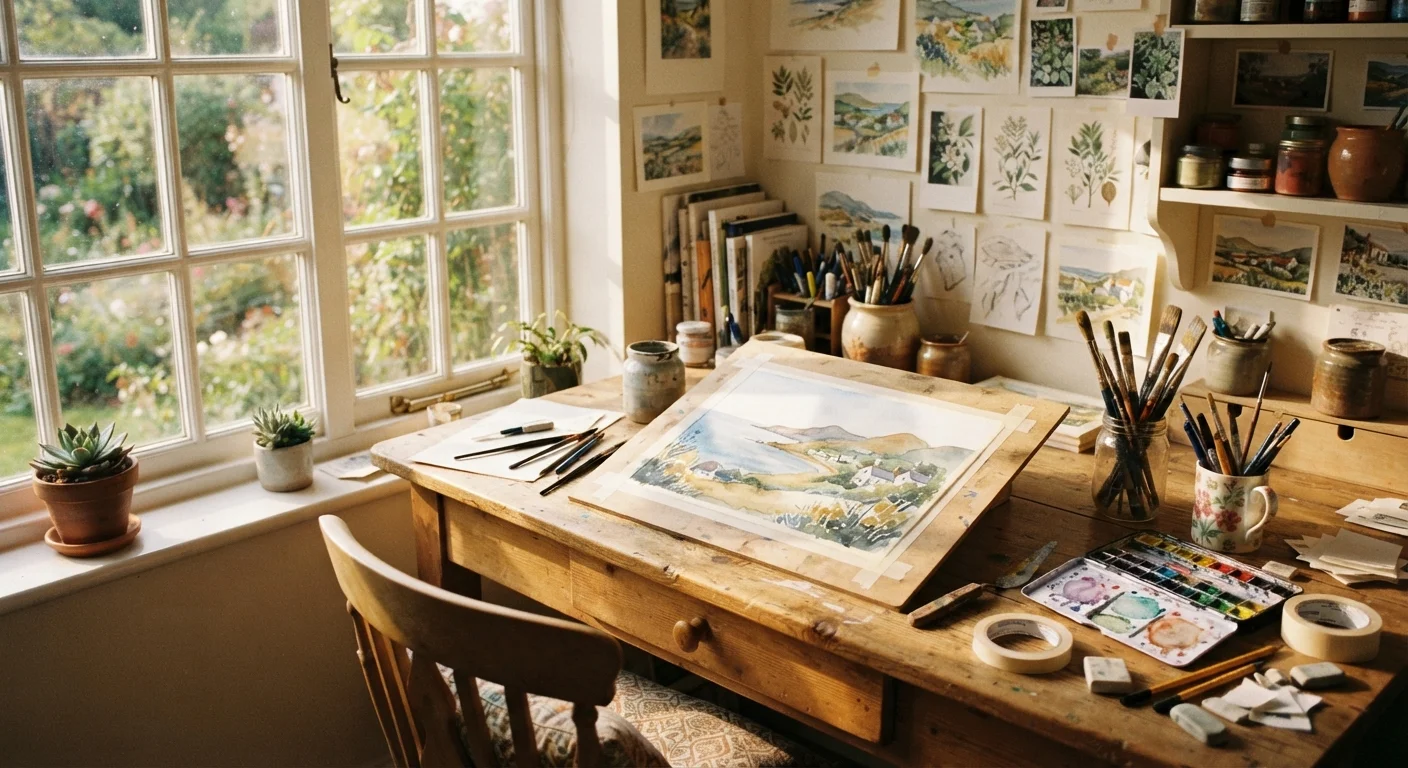
Define a dedicated physical space, however modest.
Location acts as a powerful environmental cue. Even a single corner of a desk, consistently used for art-making, begins to signal your brain that this is the place where creative work happens. Setup friction - the effort of preparing materials each time - is one of the top reasons practice sessions get skipped.
Set a session length so short it feels almost embarrassing.
Ambitious goals feel inspiring but produce avoidance when time or energy is limited. A ten- or fifteen-minute minimum removes the psychological barrier of starting. Most sessions naturally extend once you're in the flow - but the commitment to show up is honored either way.
Separate making from evaluating.
Critiquing work while creating it activates a different cognitive mode - analytical rather than generative - and reliably dampens creative output. Treating every session as pure exploration, and reserving reflection for after, protects the open-ended quality that makes sustained practice enjoyable.
Allow for low-energy practice modes.
Expecting every session to be ambitious produces guilt on tired days, which leads to skipping. Building a 'maintenance mode' - a simpler, lower-stakes activity you can do when depleted - keeps the streak alive and the habit signal strong.
If you're also thinking about how an art practice fits into a broader wellness routine, consider reading about everyday habits that support long-term mental resilience, since creative engagement and psychological wellbeing often reinforce each other.
Starting Small and Getting Smarter About Your Space
The single most reliable predictor of whether a home art practice survives isn't talent, materials, or even available time - it's setup friction. If making art requires clearing a dining table, hauling out three bins of supplies, and waiting for good lighting, you will subconsciously delay until the moment never comes.
For readers who want to deepen their relationship with visual art beyond the home studio, a thoughtful museum visit can feed your practice with new visual language and ideas. And if you've wondered whether a structured class might complement home work, an honest look at adult art classes outlines the real trade-offs.
“Art is not what you see, but what you make others see. The act of making, repeated over time, is what teaches the eye.”
— Edgar Degas, French Impressionist painter and sculptor
The Long Game: Tracking Progress Without Judgment
One of the most durable strategies for any creative routine is shifting what you count. Instead of measuring whether a piece turned out well, track only whether you showed up. A simple calendar mark - a dot, a check, any symbol - creates a visible chain of evidence that you are, in fact, an artist who makes things regularly. Breaking that chain starts to feel like a concrete loss rather than an abstract failure.
This same behavioral logic applies across many kinds of personal routines. The scheduling principles behind sustainable movement habits translate directly to creative work: block the time, protect it, and measure attendance rather than performance. Over weeks and months, that log becomes its own motivation - proof that the practice is already yours.
66 days
Average time for a new habit to become automatic
A 2010 study published in the European Journal of Social Psychology by Phillippa Lally and colleagues found new behaviors took an average of 66 days to become automatic, not the commonly cited 21.
~45%
Daily behaviors driven by habit, not conscious decision
Research published in Psychological Science estimates that roughly 45 percent of everyday behaviors are habitual, underscoring why environmental design matters more than willpower for sustaining any routine.
A home art practice isn't about producing gallery-ready work. It's about maintaining a relationship with making, one session at a time. The artists who sustain it longest are rarely the most talented in the room - they're the ones who showed up on the days they didn't feel like it.