

Key Takeaways
Why Most Movement Schedules Fail Before They Begin
The gap between intending to exercise and actually doing it consistently is one of the most studied problems in behavioral health. The culprit is rarely motivation - it's planning. Most people design schedules based on an idealized version of their week rather than the real one, loading up on ambitious sessions that don't survive contact with actual life.
A movement schedule that sticks has three structural features: it is calibrated to your current fitness baseline (not your aspirational one), it fits the time you genuinely have rather than the time you wish you had, and it includes variety and recovery by design rather than as afterthoughts.
This Is General Education, Not Medical Advice
The guidance in this article is intended for general informational purposes and does not substitute for advice from a qualified healthcare professional. If you have a chronic health condition, recent injury, or haven't been active in a long time, consult your doctor before significantly increasing your physical activity level.
The steps below guide you through building that kind of plan from the ground up. Whether you're returning to activity after years away or simply trying to add more structure to an inconsistent routine, the same principles apply.
What You'll Need Before You Start
What you will need
Weekly planner or calendar app
Used to block out specific movement sessions as scheduled appointments throughout the week.
Activity tracker or smartphone
Helps you measure baseline step counts and monitor activity duration over time.
Comfortable, supportive footwear
Reduces injury risk during walking, jogging, or gym-based movement sessions.
Once you have these in place, you're ready to work through the schedule-building process step by step.
How to Build Your Weekly Movement Schedule
Audit your current activity level honestly
Before designing anything, spend one week tracking what you actually do - not what you intend to do. Note how many days you move intentionally, for how long, and at what intensity. This baseline prevents you from building a plan disconnected from your real life. If you've been largely sedentary, our guide to starting movement after inactivity offers a judgment-free foundation to build from.
Identify your realistic availability
Look at your weekly calendar and mark the windows - even short ones - where movement is genuinely possible. Be specific: "Tuesday and Thursday evenings for 30 minutes" is actionable; "whenever I have time" is not. Account for commute, family obligations, and energy levels at different times of day. Most people overestimate available time on weekdays and underestimate weekends.
Set a weekly movement target grounded in evidence
The U.S. Department of Health and Human Services Physical Activity Guidelines recommend at least 150 minutes of moderate-intensity aerobic activity per week for most adults, plus muscle-strengthening activities on two or more days. These are population-level targets - your personal starting point may be lower, and that's appropriate. Note that exercise needs also shift across life stages; our overview of how movement needs change across adulthood provides useful context.
Choose movement types that match your preferences and goals
A schedule you dread won't last. Effective plans typically combine aerobic movement (walking, cycling, swimming), some form of resistance work (bodyweight exercises, resistance bands, weights), and flexibility or recovery activity (stretching, yoga). If the gym isn't appealing, there are many alternatives - forms of movement that go beyond the gym outlines options like dance, martial arts, and gardening that build fitness without a membership.
Build rest and recovery into the schedule by design
Rest days are not failures of ambition - they are when your muscles repair and adapt. Most adults benefit from at least one or two rest or light-activity days per week. Schedule these explicitly rather than leaving them as defaults for days you miss a session. Light movement like a gentle walk or stretching on recovery days is fine and often beneficial.
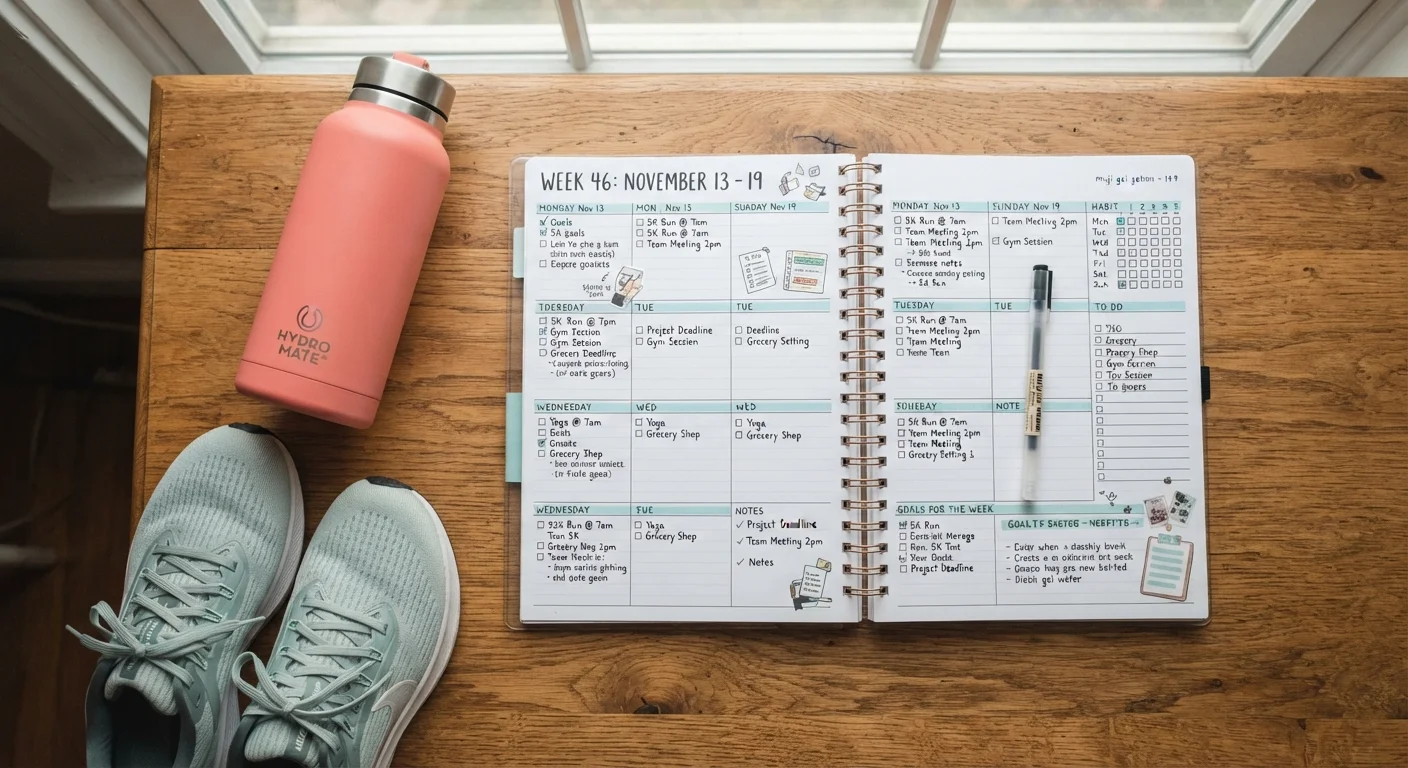
Write the schedule down and treat it like an appointment
Transfer your plan into your actual calendar with specific days, times, and activity types. Research on implementation intentions - the psychological strategy of planning the exact when, where, and how - shows this simple step significantly increases follow-through. Block the time, set a reminder, and treat a movement session with the same weight as a work meeting.
Review and adjust after two weeks
After two weeks, assess honestly: Which sessions happened? Which were skipped and why? Adjust the plan based on what you learn - not as a concession, but as smart design. Understanding why new exercise habits stall is just as valuable as the initial plan; our article on why exercise habits fall apart after two weeks covers the behavioral patterns most likely to derail you.
Pair Movement With an Existing Habit
Habit stacking - attaching a new behavior to something you already do reliably - is one of the most evidence-supported strategies for building exercise consistency. Consider a 10-minute walk after your morning coffee, or a stretching routine immediately after brushing your teeth at night. The trigger doesn't need to be fitness-related; it just needs to be dependable.
Maintaining Momentum Beyond the First Month
A written schedule gets you started, but sustaining movement long-term requires ongoing attention. A few evidence-informed strategies help here. First, pair your movement habits with something you already do reliably - a concept known as habit stacking. Second, track your sessions in a simple log; visible progress acts as a reinforcing feedback loop. Third, build in flexibility: missing one session is not a reason to abandon the week.
Avoid the 'All or Nothing' Trap
One of the most common reasons movement schedules fail is setting an unrealistically demanding week-one plan. Research on habit formation consistently shows that starting too aggressively - then missing a day - often triggers complete abandonment. Build in buffer days and accept that imperfect consistency beats perfect-but-unsustainable every time.
It also helps to think of your movement schedule as a living document. As your fitness improves, your schedule should evolve - gradually increasing duration or intensity, exploring new activity types, or shifting timing as your life changes. If you're interested in how nutrition supports your activity, pairing your schedule with practical weekly nutrition checkpoints can reinforce overall wellbeing habits without rigid rules.
This article is for general informational purposes only and does not constitute medical advice. Always consult a qualified healthcare professional before making significant changes to your physical activity level, particularly if you have any health conditions or concerns.