

Key Takeaways
Why Sequence Is a Creative Decision
Ask most audiences what makes a great concert and they'll mention energy, connection, maybe a stunning song or two. What they rarely name - but always feel - is order. The sequence in which a performer arranges songs is one of the most consequential and least-discussed creative decisions in live music.
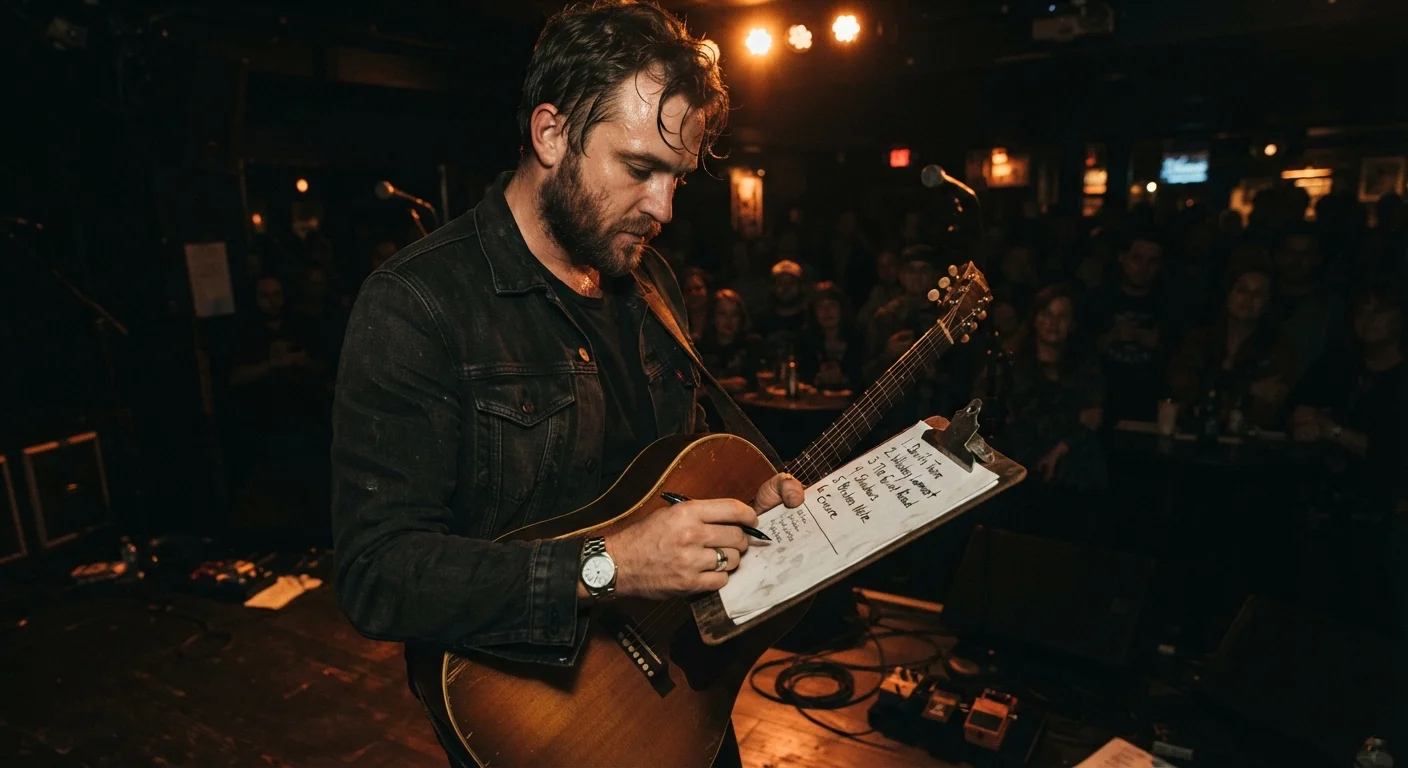
Experienced performers treat the set list as a narrative structure. Each song is a chapter, and like any good story, the shape matters as much as the individual pieces. Legendary touring acts have been known to spend hours, sometimes days, rearranging songs before a major run of shows - not because the music changes, but because the journey changes everything.
This applies far beyond rock concerts. Jazz ensembles, folk singer-songwriters, stand-up comedians, and spoken-word artists all grapple with the same core challenge: how do you move people through a sustained experience rather than just presenting a collection of moments? Understanding how live performance differs from studio recording is the first step - because the logic of a set list belongs entirely to the stage.
What You'll Need Before You Start
Building a set list is part instinct, part analysis. Before you arrange a single song, take stock of what you're working with.
What you will need
Song inventory list
Catalogs all available material with notes on energy, tone, and audience familiarity to inform sequencing decisions.
Index cards or sticky notes
Allow physical rearrangement of song order during the planning process without committing to a digital format too early.
Setlist planning app or spreadsheet
Helps track multiple set list versions across different venues or tour dates.
Recording of a recent rehearsal or show
Lets you listen back objectively and identify where energy flagged or attention drifted.
How to Build Your Set List Step by Step
Follow these steps to construct a sequence that holds an audience from the first note to the last.
Catalog Your Material Honestly
Lay out every song in your current repertoire and rate each one across three dimensions: energy level (high, medium, low), emotional tone (joyful, melancholic, tense, triumphant), and audience familiarity (well-known, newer material, deep cut). This inventory gives you the raw materials to work with and prevents you from accidentally clustering too many slow songs or unfamiliar tracks in the same stretch.
Choose Your Opener with Intention
The first song sets the terms of the contract between performer and audience. It answers the question: what kind of night is this? Generally, openers should be high-energy and familiar enough to signal confidence, but not so climactic that you have nowhere to go. Many performers resist opening with their single biggest hit - saving it creates anticipation and gives the show a destination.
Build the Early Arc (Songs 2-4)
After the opener grabs attention, the next few songs establish momentum and begin layering emotional texture. This is where you can introduce a slightly slower or more complex song without losing the crowd - they're now invested. Think of this section as the part of a film where the world is being built and characters are being established. Vary tempo and tone, but keep energy trending upward overall.
Design a Mid-Set Valley
The middle of a set is where inexperienced performers lose audiences - and where skilled ones deepen them. Plan a deliberate dip in energy: a stripped-back arrangement, a more intimate story-driven song, or a quiet moment that demands active listening. This contrast makes the return to high energy feel earned rather than relentless. Pacing and silence are tools that most beginners overlook, but veterans use them as anchors.
Build Back to Your Peak
After the mid-set valley, rebuild deliberately. One medium-energy song, then a step up, then another. By the time you approach your biggest moment, the audience should feel the anticipation building without being able to name exactly why. This is where your most powerful, most beloved, or most technically impressive material lives. Place your peak moment roughly two-thirds to three-quarters of the way through the set - not at the very end, which is reserved for something different.
Close with Emotional Resolution
The final song - or final encore - should leave the audience with something to carry out the door. That doesn't always mean the loudest or most famous song. Some of the most memorable closing moments in concert history have been quiet, tender, or even surprising. What matters is that the emotional note you end on feels intentional: a resolution, not just a stopping point. Ask yourself - how do you want people to feel walking to their cars?
Reading the Room and Staying Flexible
Even the most carefully built set list is a living document. Experienced performers know when to deviate - when a crowd is responding so enthusiastically to a slower song that you hold the energy there longer, or when an unexpected technical glitch forces a pivot. That flexibility is only possible when you understand why your current sequence is arranged the way it is. If you know the logic, you can adapt without losing the thread.
Pay close attention to what makes every performance genuinely different - crowd energy, room acoustics, and even the time of night affect how songs land. A closing anthem that electrifies a late-night festival crowd may feel flat at a 7 p.m. seated theater show. Build your set list with your ideal performance in mind, then stay observant enough to adjust in real time.
Write Multiple Versions for Different Contexts
A set list that works brilliantly at a loud, late-night club may not translate to an afternoon festival or an intimate seated venue. Build at least two or three versions of your set that re-sequence the same core material for different energy contexts. Knowing which version to deploy - and being willing to switch - is a mark of a mature performer.