

Key Takeaways
Economic Sanctions
Economic sanctions are government-imposed restrictions that limit trade, financial transactions, or other economic activity with a targeted country, organization, or individual. Governments use them as a foreign policy tool - a form of pressure short of military force - to change another party's behavior. The United States, European Union, and United Nations are among the most frequent issuers of sanctions.
Sanctions can be 'primary' (directly targeting the sanctioned party) or 'secondary' (penalizing third-country entities that do business with the sanctioned party), significantly expanding their reach and complexity.
What Sanctions Actually Are - and What They Are Not
Sanctions are sometimes described in news coverage as if they are a single, uniform action. In reality, they are a family of legal tools that vary widely in scope and target. A sanction might freeze a single individual's bank account, block an entire country from the international banking system, or prohibit the sale of specific technologies to a foreign government.
What sanctions are not is a declaration of war or a trade embargo in the traditional sense - though they can approach that scale. They occupy a deliberate middle ground in foreign policy: more forceful than a diplomatic protest, less escalatory than military intervention. Policymakers typically reach for them when they want to impose real costs on a government or entity without deploying troops.
The United States currently maintains dozens of active sanctions programs, covering countries, specific industries, terrorist organizations, drug traffickers, and human rights violators. Each program has its own legal authority, scope, and set of prohibited activities.
Not All Sanctions Are Created Equal
Targeted or 'smart' sanctions - freezing specific accounts or banning named individuals from travel - are designed to minimize collateral economic damage. Broad sectoral sanctions, such as blocking a country's entire banking or energy sector, carry far greater potential for widespread economic disruption, including effects on uninvolved third parties and civilians.
How Sanctions Move Oil Markets - and Your Gas Bill
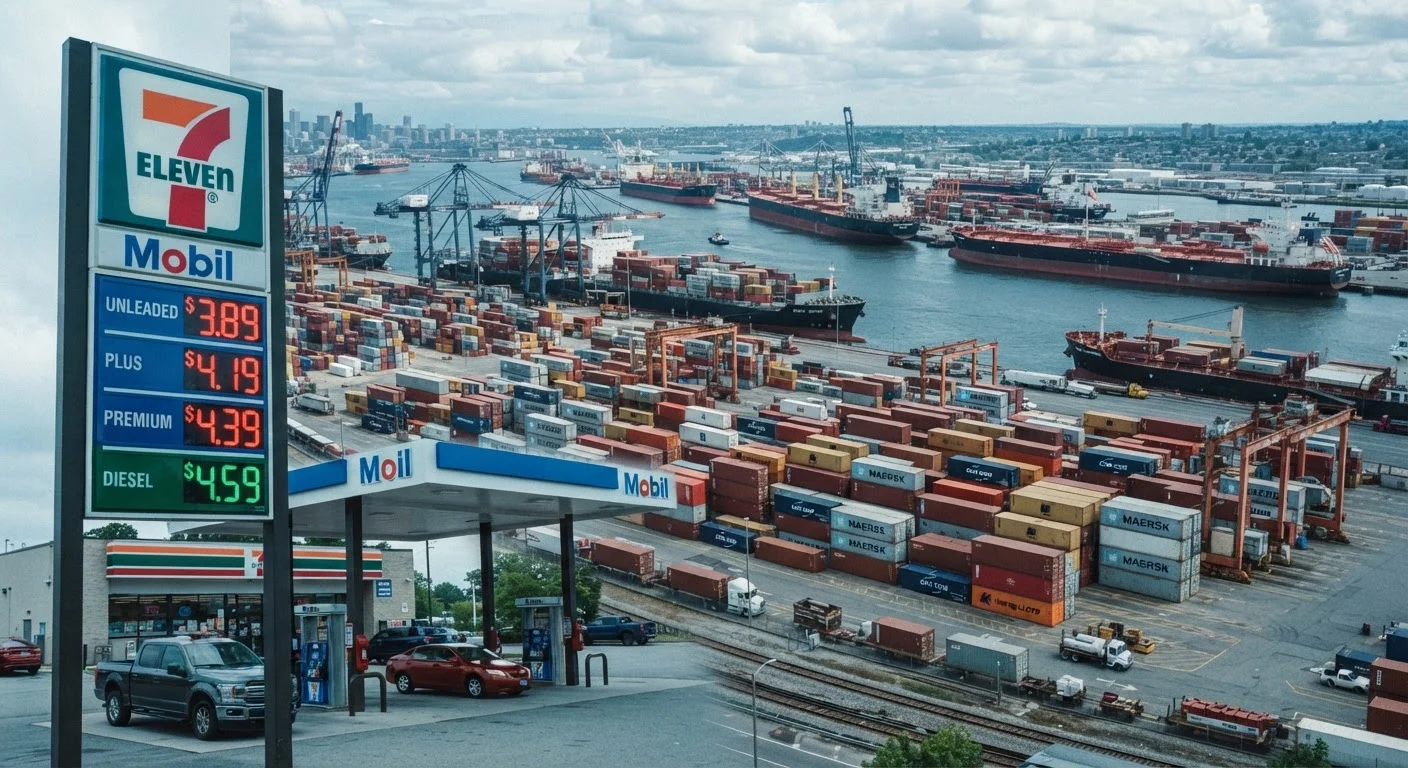
The clearest way most Americans encounter sanctions is at the gas pump. Oil is a globally traded commodity priced in U.S. dollars, and its price responds quickly to changes in perceived or actual supply. When the United States or a coalition of nations sanctions a major oil-exporting country - Iran, Russia, and Venezuela have all faced such measures - the expectation that less oil will flow to market pushes prices up.
This doesn't require American drivers to buy oil from the sanctioned country directly. Because crude oil markets are globally integrated, removing barrels from anywhere in the world tightens supply everywhere. Refiners across the globe compete for the remaining supply, and that competition drives up the benchmark prices - West Texas Intermediate (WTI) and Brent crude - that ultimately determine what Americans pay per gallon.
30+
Active U.S. sanctions programs
The U.S. Treasury's Office of Foreign Assets Control (OFAC) administers more than 30 active sanctions programs targeting countries, industries, and individuals worldwide.
~10%
Share of global oil supply sanctioned at peak
At various points since 2018, the combined effect of U.S. sanctions on Iran, Venezuela, and Russia has placed a significant fraction of global oil export capacity under restrictions, according to energy policy analysts.
$13B+
OFAC penalties collected since 2000
The U.S. Treasury has collected billions in civil penalties from companies found to have violated sanctions programs, reflecting the scale of enforcement activity.
For deeper context on why energy markets abroad are so entangled with U.S. prices, see this overview of the Middle East's long relationship with American energy costs.
The Limits - and Unintended Consequences - of Sanctions
Sanctions are powerful, but their track record is complicated. Academic research and policy analysis have found that sanctions alone rarely force major policy reversals in targeted governments. Leaders under sanctions can redirect economic pain toward their populations, crack down on domestic dissent, and cultivate alternative trading partners - particularly those outside the U.S.-aligned international financial system.
Humanitarian effects are a persistent concern. Broad sanctions on an economy can restrict access to food, medicine, and basic goods for ordinary citizens who have no role in the policies the sanctions are meant to change. The United States and other sanctioning bodies typically include humanitarian exemptions in their programs, but enforcement gaps and banking sector caution - known as "over-compliance" - can still impede aid flows.
How to Read a Sanctions Announcement
When governments announce new sanctions, look for three things: what specific activity is prohibited, who is designated (an individual, company, or government), and whether secondary sanctions apply. These details determine how broadly the measures will affect global trade and whether oil markets are likely to react.
There is also a geopolitical dimension: repeated use of economic sanctions, particularly those that cut countries off from the U.S.-dominated financial system, has accelerated efforts by some nations to develop alternative payment networks and trade in currencies other than the dollar. Analysts debate whether this long-term erosion of financial leverage outweighs the near-term pressure sanctions apply.
What Ordinary Americans Should Understand
For most Americans, sanctions are a background fact of global commerce - rarely visible until they produce an effect close to home, like higher energy costs or supply chain disruptions. Understanding the basic mechanics helps cut through the political noise that often surrounds these announcements.
When a new round of sanctions is announced against an oil-producing country, it is reasonable to expect some upward pressure on fuel prices, though the actual magnitude depends on how much oil the targeted country exports, how effectively other producers can fill the gap, and how rigorously the measures are enforced internationally. Not every sanctions announcement produces a price spike, and prices can moderate as markets adjust.
Sanctions are ultimately a tool of statecraft - one with real economic consequences that flow from foreign capitals to American wallets. Following how and why they are applied is one of the clearest ways to connect global events to daily financial life.