

Key Takeaways
How a Few Bottlenecks Reach Every American Home
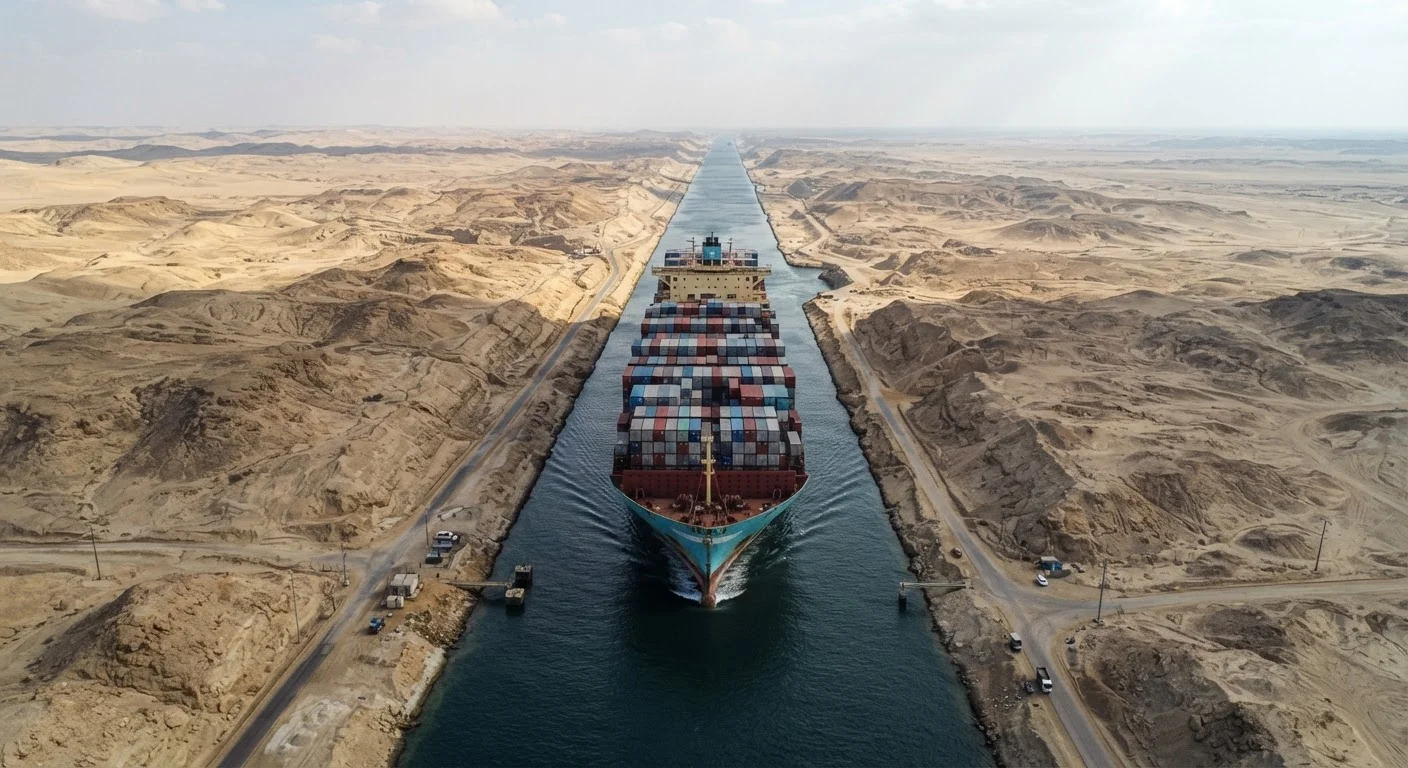
When a single container ship ran aground in the Suez Canal in March 2021, it blocked an estimated $9.6 billion in daily trade - and Americans eventually felt it in furniture delays, auto parts shortages, and consumer electronics backorders. That episode was dramatic, but the underlying dynamics it exposed are ordinary. A handful of geographic, industrial, and geopolitical pressure points repeatedly stress U.S. supply chains, and their effects show up in grocery aisles, car dealerships, and hardware stores.
The United States imports roughly $3 trillion in goods annually. Much of that volume flows through the same narrow passages - physical and logistical - that have proven brittle under pressure. The five pressure points below account for a disproportionate share of supply disruptions that Americans have experienced over the past decade. For a broader look at how foreign crises translate into domestic price increases, see how global conflicts transmit inflation to the U.S..
The Suez Canal Corridor
About 12-15% of global trade transits the Suez Canal, connecting Asian and European manufacturing to U.S. ports on both coasts. The canal's 120-mile length makes it one of the most consequential stretches of water on Earth - and one of the narrowest. The 2021 grounding of the Ever Given blocked the canal for six days and disrupted roughly 369 ships, demonstrating how a single incident can create weeks of downstream delays.
More recently, Houthi attacks on commercial shipping in the Red Sea beginning in late 2023 forced many carriers to reroute around the Cape of Good Hope, adding up to two weeks of transit time and significantly raising freight costs. Those increases eventually showed up in U.S. import prices for everything from clothing to electronics components.
Twelve to fifteen percent of global trade moves through one canal - enough to shake American shelves when transit is disrupted.
Semiconductor Manufacturing Concentration
Modern economies run on semiconductors - the chips embedded in cars, appliances, medical devices, defense systems, and smartphones. The vast majority of advanced chip fabrication is concentrated in Taiwan, South Korea, and a few facilities in Japan and the Netherlands. Taiwan alone produces roughly 90% of the world's most advanced chips, according to widely cited industry analyses.
The COVID-19 pandemic exposed this concentration sharply. A demand surge for consumer electronics, combined with factory shutdowns, created a global chip shortage that idled automotive assembly lines across the U.S. and contributed to vehicle price spikes. The structural geography of chip production - driven by decades of specialized investment - cannot shift quickly, even with new U.S. domestic chip manufacturing incentives.
One island produces the majority of the world's most advanced chips - a geographic concentration with global consequences.
West Coast Port Congestion
The ports of Los Angeles and Long Beach together handle roughly 40% of all U.S. containerized imports. When those ports back up - due to labor disputes, COVID-related worker shortages, or surging import volumes - the effects ripple inland within days. During the 2021-2022 port congestion crisis, hundreds of ships sat anchored off Southern California waiting to unload, contributing to nationwide inventory shortages and delays.
The concentration of import volume through a small number of West Coast facilities reflects decades of infrastructure investment decisions and trade route optimization. While East Coast and Gulf ports have grown their market share in recent years, the West Coast corridor remains the primary gateway for trans-Pacific goods, meaning its performance directly shapes what American retailers can keep in stock.
Two ports handling 40% of containerized U.S. imports create a structural single point of failure for American retail.
Pharmaceutical and Active Ingredient Sourcing
The United States depends heavily on overseas sources for active pharmaceutical ingredients (APIs) - the chemical compounds that make medications effective. Estimates from the U.S. Food and Drug Administration and congressional research have indicated that a significant share of API manufacturing is concentrated in China and India. This creates exposure when geopolitical tensions rise, export restrictions are imposed, or manufacturing quality failures occur at a major foreign facility.
Drug shortages in the U.S. are a persistent and underreported problem. The American Society of Health-System Pharmacists tracks hundreds of active drug shortages at any given time, affecting everything from cancer treatments to common anesthetics. While causes vary, geographic concentration of production is a recurring factor that public health experts and policymakers have flagged as a systemic vulnerability.
Pharmaceutical supply chains stretch to a handful of countries, leaving U.S. patients exposed when foreign production falters.
Energy Price Transmission Through Freight
Every product that moves by ship, truck, or rail depends on fuel. When global energy prices spike - triggered by conflict, production cuts by major oil-producing nations, or extreme weather events - transportation costs rise across the entire supply chain simultaneously. Those costs are eventually passed through to consumer prices, often hitting lower-income households hardest because they spend a higher proportion of income on goods and groceries.
The relationship between oil markets and U.S. consumer prices is not linear or immediate, but it is persistent. Elevated diesel prices, in particular, directly affect the trucking industry that moves nearly 70% of all freight in the United States by value. Energy shocks therefore function as a kind of system-wide supply chain tax, compressing margins and raising prices across categories that have nothing to do with oil directly.
Energy price spikes act as a hidden system-wide tax on every product that moves by truck, ship, or rail.
Why These Vulnerabilities Persist - and What Changes
Each of these chokepoints exists partly because global supply chains were optimized over decades for cost efficiency, not resilience. Just-in-time manufacturing, geographic concentration of production, and thin inventory buffers reduced costs but left little slack to absorb shocks. When disruption hits one node, the effects propagate quickly across interconnected systems.
Tracking Disruptions Before They Hit Shelves
Several publicly available tools can help readers and business owners monitor emerging supply chain stress. The Federal Reserve Bank of New York publishes a Global Supply Chain Pressure Index (GSCPI) that aggregates shipping costs, delivery times, and manufacturing survey data into a single indicator. Freight rate trackers and port congestion dashboards from organizations like the Port of Los Angeles also provide real-time visibility into developing bottlenecks - often weeks before shortages show up at the retail level.
Policymakers and corporations have responded with efforts to diversify sourcing, reshore critical production, and build larger safety stocks - particularly for semiconductors and pharmaceuticals. But structural change is slow, and many of the same chokepoints remain active risks. For a closer look at how domestic supply chains work from a different angle - and how much complexity sits between producers and consumers before products even reach global shipping - see what the U.S. agricultural supply chain actually looks like.
None of these pressure points are inevitable forever, but none will resolve quickly either. Recognizing them is the first step toward expecting - rather than being blindsided by - the next disruption on American shelves.