

Key Takeaways
Agricultural Supply Chain
The agricultural supply chain is the full sequence of steps that moves food from a farm to your grocery store shelf. It includes growing, harvesting, processing, packaging, transporting, and distributing food - often involving dozens of separate businesses and workers. Each link in this chain adds time, cost, and handling before a product reaches you.
Economists refer to this as a vertically coordinated system, where different stages of production and distribution are linked through contracts, ownership, or market relationships rather than a single integrated actor.
From the Field: The First Stops After Harvest
The journey begins the moment a crop is harvested or an animal leaves a farm. At this stage, raw agricultural products are rarely ready for a store shelf. Instead, they move to a first-handling facility - a grain elevator for corn and wheat, a packing house for fresh produce, or a livestock processing plant for meat.
At these facilities, food undergoes sorting, grading, cooling, or initial processing. The USDA sets grading standards that determine quality classifications - a factor that directly influences which buyers will purchase the product and at what price. Fresh produce like lettuce or strawberries enters refrigerated packing lines within hours of harvest to maintain quality.
Many farmers sell their output to these first-stage buyers through forward contracts signed months earlier, locking in a price before harvest. Others sell on spot markets after the crop comes in, accepting whatever the current price may be. Either way, the farmer's role in the supply chain typically ends here.
~$1.8T
U.S. food and beverage sales at retail annually
The USDA Economic Research Service tracks total U.S. food expenditures, reflecting the scale of the retail end of the agricultural supply chain.
1-4%
Typical grocery retailer net profit margin
Industry analyses consistently show grocery retail operates on some of the thinnest margins of any major sector, making cost efficiency across the supply chain critical.
40%+
Share of food spending on food away from home
According to USDA data, Americans have historically spent roughly 40% or more of their food dollars on restaurant and away-from-home meals, with the remainder on retail groceries.
Processors, Packers, and the Transformation Stage
Raw agricultural goods rarely resemble finished grocery products. A food processor converts raw inputs - soybeans, wheat, or chicken - into the packaged, shelf-ready items consumers recognize. This stage involves milling, cooking, blending, canning, freezing, or packaging, and it may occur at a single facility or across several plants in different states.
Food processing is one of the largest manufacturing sectors in the U.S. economy. Large processors typically operate under strict food safety protocols governed by the FDA and USDA. They also work closely with retailers on product specifications, labeling, and private-label manufacturing - meaning the store-brand pasta or canned beans on a shelf may be produced in the same facility as a national brand.
“The farm share of the retail food dollar has been declining for decades. Most of what consumers pay reflects processing, packaging, transportation, and marketing - not what the farmer received.”
— USDA Economic Research Service, Federal research agency tracking U.S. food pricing and farm income
Co-packers - contract manufacturers that produce food under a retailer's or brand's label - have grown significantly as grocery chains expanded their private-label offerings. This arrangement keeps production efficient while giving retailers flexibility in sourcing.
The Distribution Layer: Warehouses, Wholesalers, and Logistics
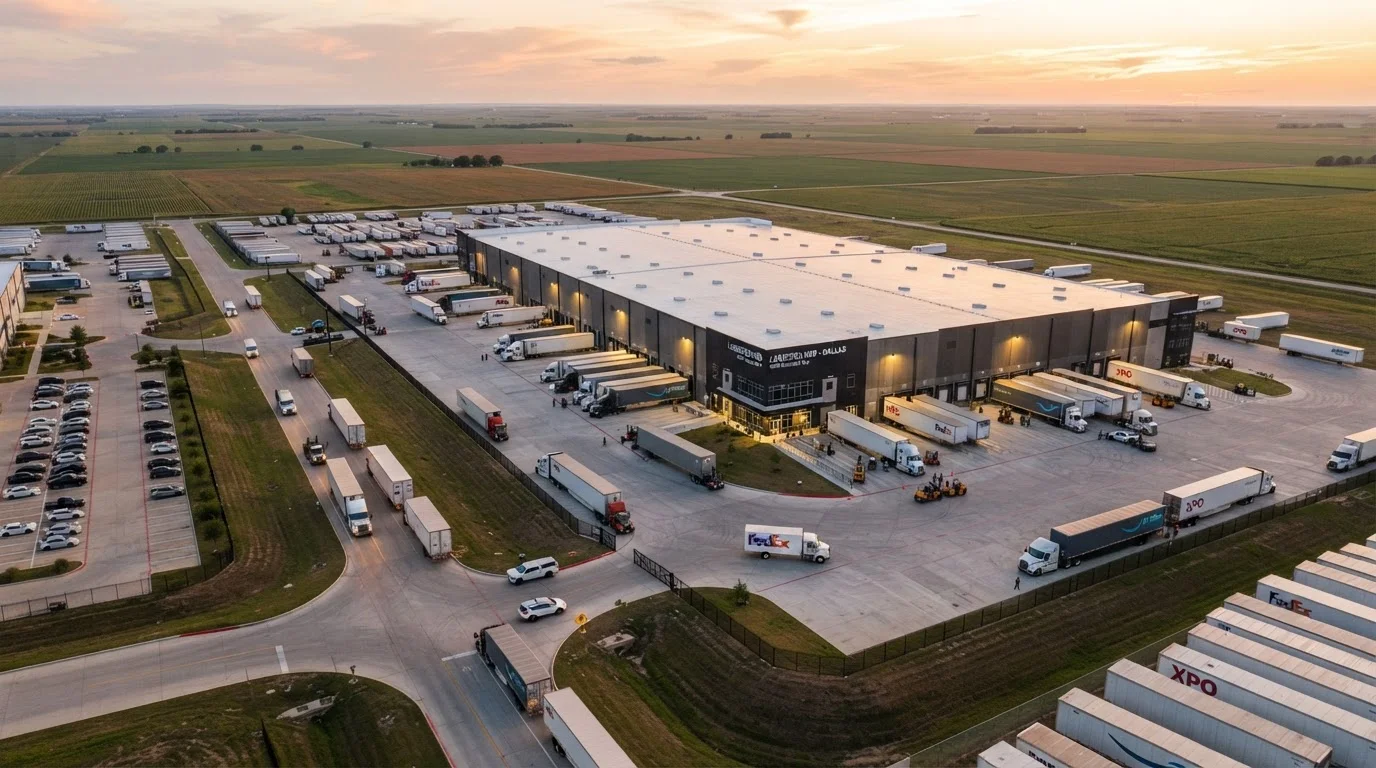
Once food is processed and packaged, it enters the distribution network - the segment of the supply chain that most consumers never see. Regional and national distributors operate massive warehouse facilities that aggregate products from hundreds of manufacturers and sort them for delivery to individual stores.
For perishable goods, this stage is particularly time-sensitive. The cold chain - an unbroken sequence of refrigerated trucks, loading docks, and storage facilities - must remain intact from processor to store. A single lapse can compromise product safety and result in significant losses. Refrigerated trucking is a specialized and costly segment of the freight industry that underpins this system.
Large grocery chains often operate their own distribution centers, giving them direct control over inventory and timing. Smaller independent grocers typically rely on third-party wholesalers like regional food distributors who negotiate bulk pricing with manufacturers and handle logistics on their behalf.
Retail: The Visible Tip of a Long Chain
By the time food reaches the grocery store, it has already passed through several business relationships, each adding cost and margin. Retailers manage their own complexity: negotiating shelf-space agreements with suppliers, forecasting demand to minimize waste, and pricing products to cover their own overhead - labor, utilities, shrinkage, and real estate.
Grocery retailing operates on notoriously thin margins, often in the low single digits as a percentage of revenue. This is why disruptions anywhere upstream - a drought reducing crop yields, a processing plant closure, or a logistics bottleneck - can translate quickly into empty shelves or price spikes for consumers. The global pressure points that disrupt U.S. supply chains illustrate how far upstream a shock can originate and still affect what you find at checkout.
Understanding the structure behind your grocery store doesn't just satisfy curiosity - it helps explain why food prices move the way they do and why policy decisions involving trade, transportation, and agriculture can show up directly in your weekly shopping bill. For a related perspective on how global trade rules shape those costs, the WTO's role in food pricing is worth exploring.