

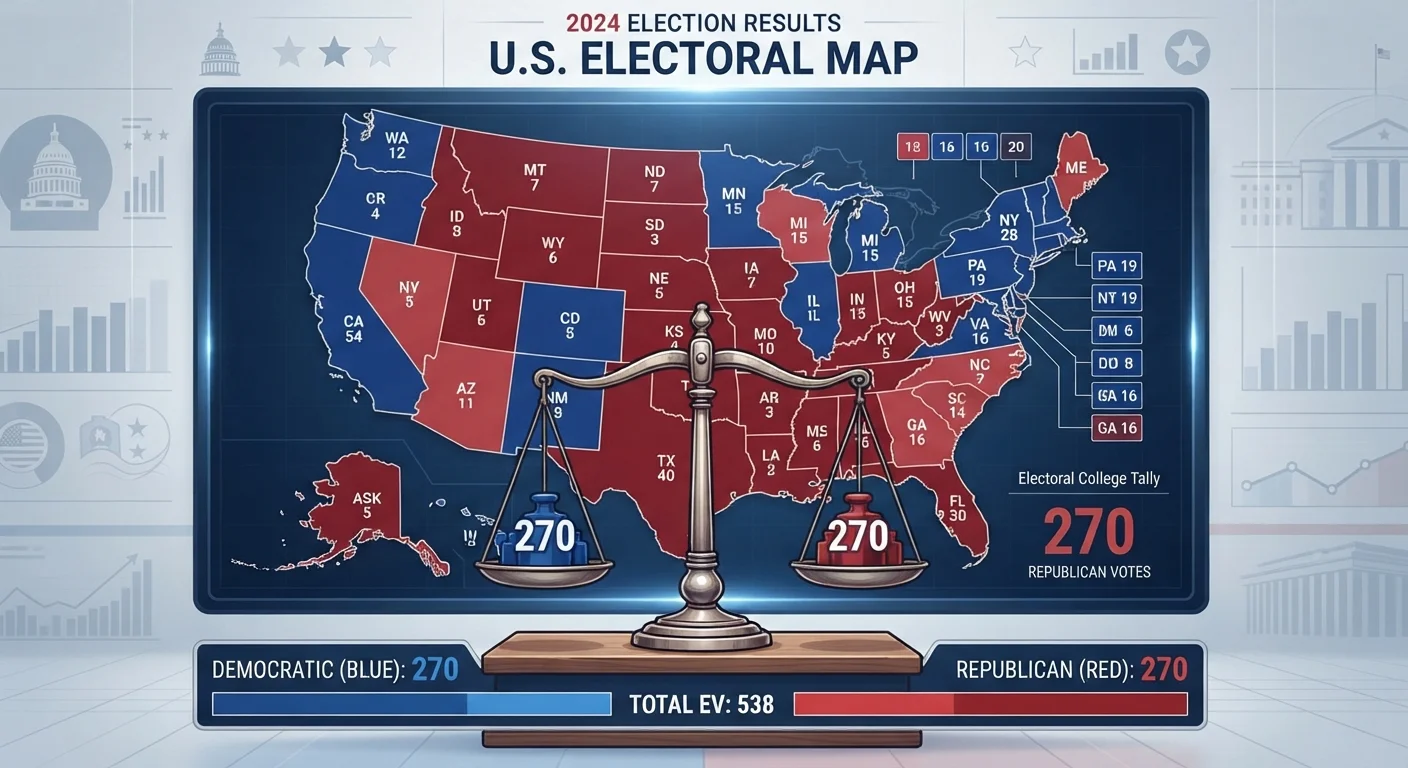
Key Takeaways
Option A
Electoral College
The constitutionally established, state-by-state method that actually decides who becomes president.
Best for: Understanding how the US officially selects its president through a distributed, state-weighted process.
Option B
Popular Vote
The straightforward national count of individual ballots cast across all 50 states.
Best for: Measuring which candidate received the most votes from American citizens nationwide.
If you want to understand how the president is legally chosen
Electoral College
The Electoral College is the only mechanism with constitutional standing. Winning the popular vote carries no legal weight in determining the outcome.
If you want to measure overall voter preference nationwide
Popular Vote
The popular vote total reflects the aggregate choice of all American voters and is the most direct measure of nationwide sentiment.
If you're debating whether the system should be changed
Popular Vote
Advocates for a national popular vote argue it would ensure every individual vote carries equal weight regardless of state of residence.
Two Different Ways of Counting Votes
When Americans vote for president, they are technically voting for a slate of electors pledged to their preferred candidate - not directly for the candidate themselves. This distinction sits at the heart of the difference between the Electoral College and the popular vote.
The popular vote is simply the raw national total of all ballots cast. The Electoral College is the constitutional system that converts those votes into a state-by-state outcome. Under the Electoral College, each state is assigned a number of electors equal to its total seats in Congress - its House delegation plus its two senators. California, the most populous state, currently has 54 electoral votes. Wyoming, one of the least populous, has 3.
In 48 states plus Washington D.C., the candidate who wins the most votes in that state receives all of that state's electoral votes - the winner-take-all rule. Maine and Nebraska are exceptions, allocating some electors by congressional district. For more context on how these and other mechanics are often misunderstood, see common myths about American democracy.
Head-to-Head: How the Two Systems Compare
The table below outlines the core structural differences between the Electoral College and a hypothetical direct national popular vote system.
| Criterion | Electoral College | Popular Vote |
|---|---|---|
| Legal authority | Constitutionally binding | No direct legal weight |
| How votes are counted | State-by-state totals | Single national total |
| Total votes that matter | 538 electoral votes | All ballots cast nationally |
| Winning threshold | 270 electoral votes | More than 50% of ballots |
| Small-state weighting | Minimum 3 electors per state | Every vote counts equally |
| Winner-take-all rule | 48 states plus D.C. | Not applicable |
| Can produce split outcome | Yes - has happened 5 times | Not applicable |
The differences are not merely technical. Because electoral votes are allocated by state rather than population alone - every state gets a minimum of three electors regardless of size - smaller states receive a slight proportional boost. Critics argue this creates an unequal weighting of individual votes. Supporters counter that it preserves the federal character of the union and prevents a handful of heavily populated urban centers from dominating every election.
When the Two Systems Produce Different Winners
The most consequential tension between the Electoral College and the popular vote emerges when they point in opposite directions. This has happened five times in US history: 1824, 1876, 1888, 2000, and 2016. In each case, the candidate who won more individual votes nationwide did not become president.
5
Presidents who lost the popular vote but won presidency
This has occurred in 1824, 1876, 1888, 2000, and 2016, according to historical election records.
270
Electoral votes needed to win the presidency
Out of 538 total electoral votes, a majority of 270 is required under the 12th Amendment.
538
Total US electoral votes allocated across all states and D.C.
The figure equals 435 House seats plus 100 Senate seats plus 3 votes for the District of Columbia.
These split outcomes fuel much of the ongoing debate. Proponents of the current system argue that the Electoral College forces candidates to build geographically broad coalitions rather than concentrating campaign resources exclusively in the most populous states. Critics respond that it produces a distorted result that does not reflect the will of the majority of voters.
It's worth noting that the winner-take-all structure also means millions of votes cast in non-competitive states have no practical impact on the outcome - a Republican vote in a heavily Democratic state and a Democratic vote in a heavily Republican state both fail to shift any electoral votes.
Reform Efforts and the Path to Change
Changing or abolishing the Electoral College would require a constitutional amendment - a high bar that demands two-thirds approval in both chambers of Congress and ratification by three-quarters of states. No such amendment has come close to passing in recent decades.
A notable alternative reform effort is the National Popular Vote Interstate Compact, an agreement among states to award their electoral votes to whichever candidate wins the national popular vote - but only once states totaling 270 or more electoral votes have joined. As of the time of writing, states representing a majority of the 270-vote threshold have signed on, but the compact has not yet taken effect.
Debates about electoral reform are separate from the mechanics of how any individual election is decided. Until the law changes, the Electoral College remains the sole determinant of who wins the presidency. For context on how elections beyond the presidential cycle affect the broader balance of political power, see how midterm elections reshape the political landscape.