

Key Takeaways
Midterm Elections
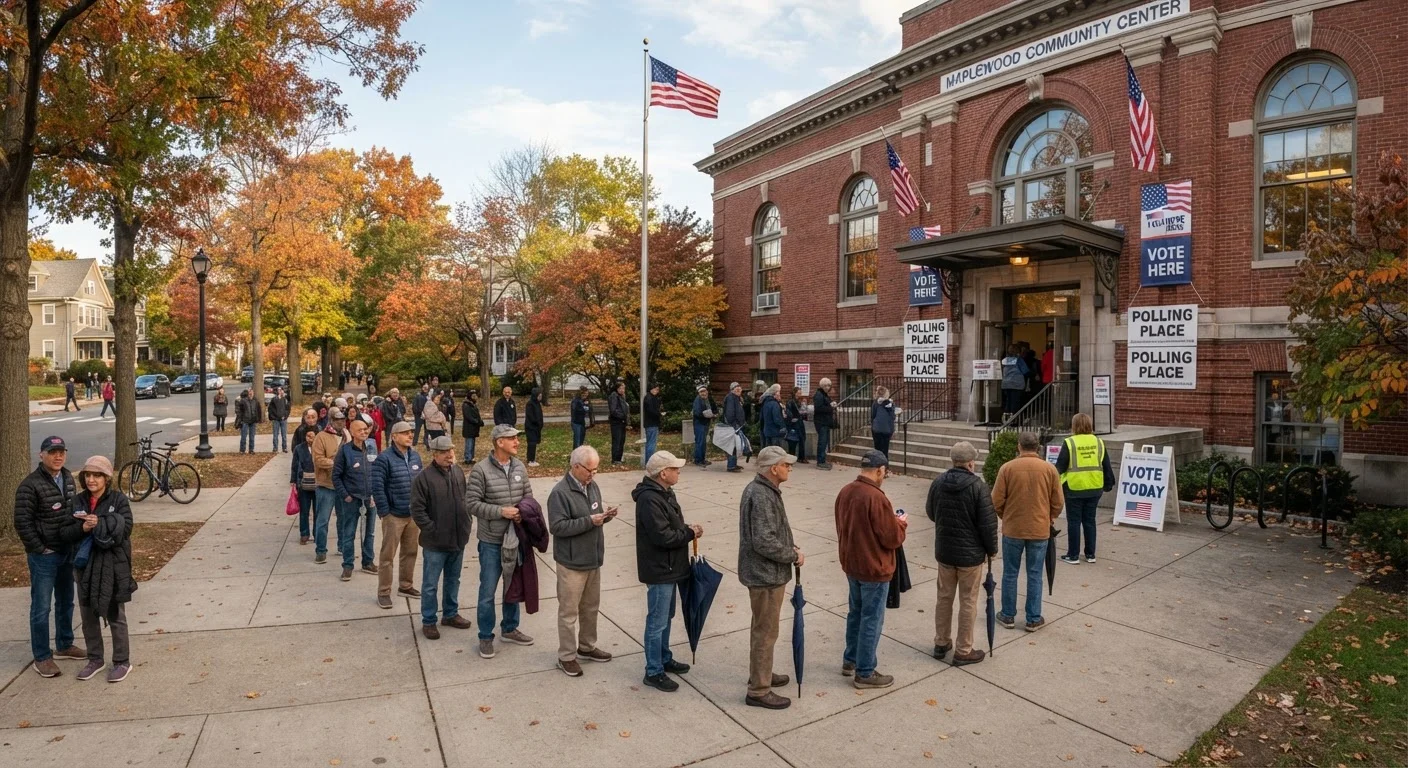
Midterm elections are federal elections held in the United States every two years, roughly at the midpoint of a president's four-year term. All 435 seats in the House of Representatives are on the ballot, along with roughly one-third of Senate seats and many state and local offices. They give voters an opportunity to weigh in on the direction of government between presidential cycles.
Because House members serve two-year terms, every House seat is contested at each midterm. Senate seats are staggered across three classes, so only about 33-34 seats appear on the ballot in any given midterm cycle.
What Midterms Actually Decide
The term "midterm" can make the election sound like a warm-up act, but the stakes are concrete and significant. When voters cast ballots in a midterm, they are directly determining who holds the gavel in the House of Representatives and, depending on which Senate seats are up, potentially who controls that chamber too.
Congressional control matters in practice. The majority party in each chamber sets the legislative agenda, chairs committees that can advance or block legislation, and holds confirmation power over executive and judicial nominees. A president whose party loses the majority in even one chamber faces a fundamentally different governing environment - bills stall, investigations can be launched, and budget negotiations shift in character.
Beyond Washington, midterms include gubernatorial races in many states, state legislative contests, and ballot measures that can directly change state law on issues ranging from minimum wage to voting procedures. For a full picture of what appears on a typical ballot, see A First-Time Voter's Guide to Understanding the US Ballot.
~40-50%
Typical eligible voter turnout in midterm elections
Based on historical data compiled by the United States Elections Project, midterm participation regularly trails presidential-year turnout by 15-20 percentage points.
435
House seats contested every midterm cycle
Every seat in the House of Representatives is up for election every two years, making each midterm a complete reset of the lower chamber's membership.
~33-34
Senate seats typically on the midterm ballot
Because senators serve six-year terms divided into three staggered classes, roughly one-third of the chamber faces voters in any given midterm election.
The Pattern: Why the President's Party Usually Loses Ground
Political scientists have tracked a durable historical pattern: the party that holds the White House tends to lose seats in the House during midterm elections. Since World War II, this has occurred in the majority of midterm cycles. The losses vary widely - from a handful of seats to several dozen - but the directional trend is consistent enough that both parties factor it into their planning.
The leading explanation is a kind of electoral asymmetry. Voters who are dissatisfied with the current administration are, on average, more motivated to show up at the polls than those who are content. This dynamic is amplified by lower overall turnout in midterms: when the electorate is smaller, the composition of who actually votes shifts toward more engaged, often more ideologically committed citizens.
“The midterm election is the most important election most Americans ignore. It determines the practical capacity of any administration to govern.”
— Norman Ornstein, Emeritus Scholar, American Enterprise Institute, and co-author of works on Congressional dysfunction
Economic conditions play a measurable role as well. Periods of high unemployment, rising prices, or financial uncertainty tend to correlate with larger seat losses for the president's party. Presidential approval ratings heading into October are closely watched by analysts as a leading indicator of how badly - or how narrowly - the governing party might fare.
It is worth noting, though, that this is a pattern, not a law. There are notable exceptions where the president's party held its own or even gained seats, and individual district-level factors can override national trends. Readers should be cautious about treating any prediction as a certainty - for more on how to interpret political forecasting, see Misreading Political News.
Turnout, Voter Composition, and Why Both Matter
Midterm turnout is consistently lower than in presidential election years. In recent decades, presidential election turnout has ranged roughly between 55% and 67% of eligible voters, while midterms have typically fallen in the 40%-50% range - though the 2018 midterms saw higher-than-usual participation. These are aggregate figures and vary significantly by state and district.
The composition of the midterm electorate tends to skew older and more politically engaged compared to the broader presidential-year pool. Younger voters and infrequent voters are less likely to participate when there is no presidential contest on the ballot. This means the results of a midterm can reflect a narrower slice of public opinion than a general election - a point worth remembering when reading coverage that frames midterm results as a definitive national verdict.
Campaign strategists on both sides work aggressively to shape turnout. Get-out-the-vote operations, early voting drives, and targeted advertising are all aimed at ensuring that supporters actually cast ballots, not just express opinions in polls. Understanding these mechanics helps readers evaluate polling data and election-night results more clearly. For a grounding in the key vocabulary involved, Key Terms in American Politics Every News Reader Should Know is a useful reference.
Reading Midterm Coverage Without Getting Lost
Midterm cycles generate enormous volumes of political commentary, much of it framed in ways that emphasize drama over context. A few principles help readers stay grounded.
First, individual polls are snapshots - not verdicts. A single survey showing a candidate up five points does not mean a race is decided; polling averages and trends over time are more meaningful than any single data point.
Second, House and Senate races follow separate dynamics. Statewide Senate contests reflect broader opinion, while House races are fought in individual congressional districts whose boundaries and demographics can diverge sharply from the national mood. A party can gain Senate seats while losing House seats in the same election.
Third, the results of a midterm are a political signal, not a policy outcome in themselves. What actually happens in Congress after the election depends on the specific makeup of the new majority, internal party dynamics, and the ongoing relationship between Congress and the executive branch.
Midterms are, at their core, a regular constitutional mechanism for accountability - one of the more direct ways the public can influence the direction of federal governance between presidential cycles. Knowing how they work is a foundation for following political news with more confidence and less confusion.