

Key Takeaways
Why the Label Is Worth Your Attention
The Nutrition Facts label has appeared on most packaged foods sold in the U.S. since 1994, and the FDA updated its format significantly in 2020 to reflect current nutrition science. Yet surveys consistently find that many shoppers find the label confusing or ignore it entirely. That's a missed opportunity. Used correctly, the label is one of the most reliable, standardized tools available for understanding what you're eating - no app required.
The label doesn't tell you whether a food is "good" or "bad." It gives you information. How that information applies to your life depends on your health status, activity level, and overall eating pattern. For personalized guidance - especially if you manage a chronic condition - a registered dietitian or your healthcare provider is the right resource. What follows is a plain-language walkthrough of how to read what's actually there.
For a broader look at how individual foods fit into your overall eating habits, see how to build a balanced plate.
What you will need
Step-by-Step: Decoding the Label
Work through the label from top to bottom. Each section builds on the one above it.
Start With Serving Size
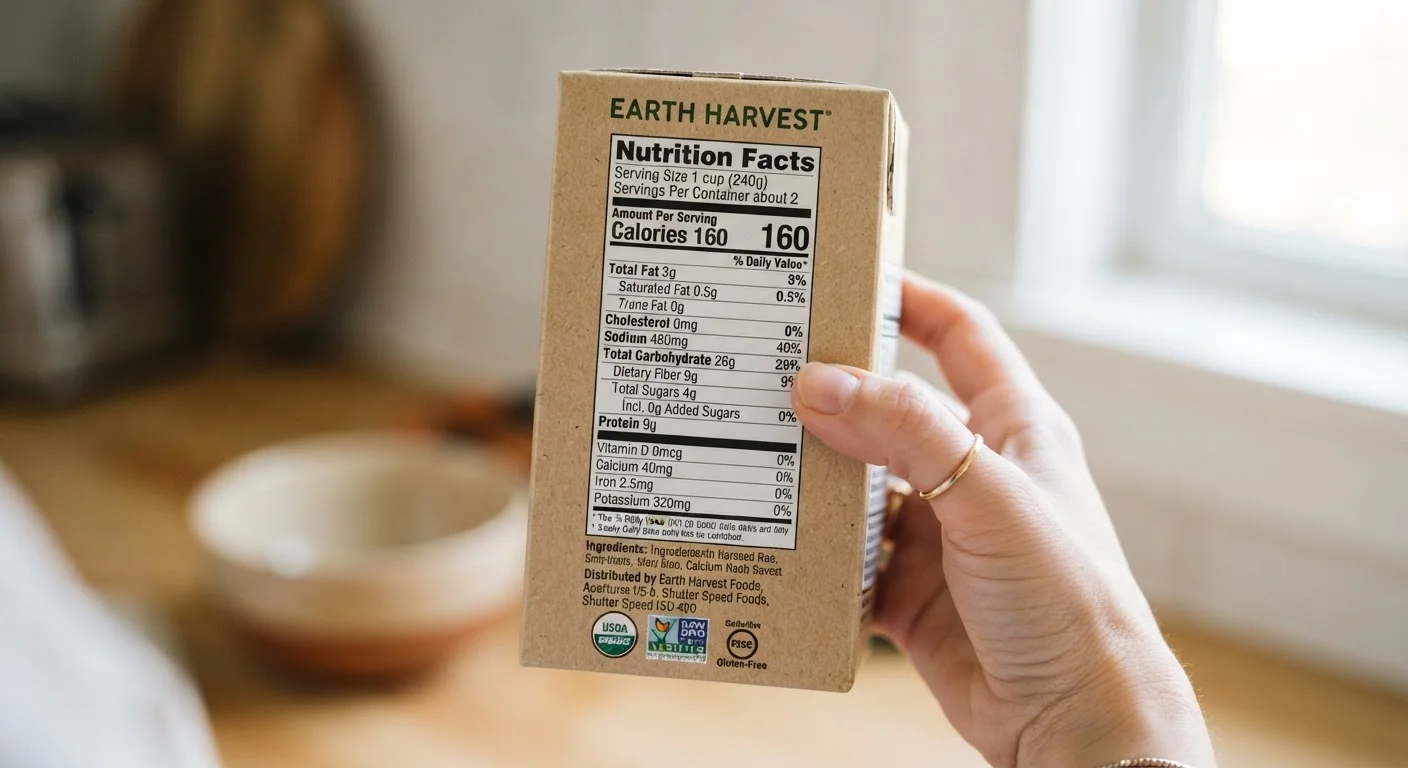
The serving size is printed at the very top of the panel in large, bold type. Every number that follows - calories, grams, percentages - refers to this amount, not the entire package. If the label says a serving is 1 cup and you eat 2 cups, you double every value shown.
Serving sizes are standardized by the FDA to reflect amounts people typically eat, not ideal or recommended portions. They're a measuring reference, not a prescription.
Read the Calorie Count in Context
Calories are displayed prominently beneath serving size. This number represents the energy provided by one serving. Calorie needs vary significantly by age, sex, body size, and activity level - the label's reference point of 2,000 calories per day is a general adult benchmark, not a universal target.
Use the calorie figure as a relative comparison tool rather than an absolute rule. A 400-calorie snack is very different from a 400-calorie main meal in terms of what it means for your day.
Understand % Daily Value
The % Daily Value (%DV) column is one of the label's most useful features and one of its most misunderstood. It shows how much of a nutrient one serving contributes toward the recommended daily intake for a person eating roughly 2,000 calories per day.
- 5% DV or less is generally considered low for a nutrient.
- 20% DV or more is generally considered high.
Use this scale to quickly compare products or gauge whether a food is a meaningful source of a given nutrient.
Focus on Nutrients That Matter Most for Your Context
The updated FDA label highlights certain nutrients based on public health priorities. Nutrients to be mindful of limiting include saturated fat, sodium, and added sugars - overconsumption of these is linked to increased risk of heart disease, high blood pressure, and metabolic issues in population-level research. Nutrients that many Americans under-consume and are worth seeking out include dietary fiber, vitamin D, calcium, iron, and potassium.
"Added sugars" now appears as its own line, separate from total sugars. This distinction matters: the sugar naturally in an apple or plain milk behaves differently in the body than sugar added during food processing, and the updated label reflects that scientific understanding.
Compare Labels Between Products
One of the most practical uses of the Nutrition Facts label is direct comparison. When choosing between two similar products, align the serving sizes first - if one serving is 30g and the other is 55g, the numbers aren't directly comparable yet. Adjust mentally or by weight, then look at the nutrients you care about most.
This approach works for bread, yogurt, cereals, sauces, and nearly any packaged category. It sidesteps marketing claims on the front of the package - "natural," "wholesome," "light" - and grounds your decision in standardized, regulated data.
Don't Let One Number Decide Everything
No single label value - not calories, not sodium, not fiber - tells you whether a food belongs in your diet. Labels are tools for comparison and awareness, not pass/fail grades. Dietary patterns over time matter far more than the profile of any single food. If you're concerned about how particular nutrients fit your health needs, read why eliminating entire food groups often backfires - and consider speaking with a registered dietitian.
The Ingredient List: A Different Kind of Information
The ingredient list is separate from the Nutrition Facts panel but printed on the same package. Ingredients are listed in descending order by weight - the first ingredient is present in the greatest amount. If a form of sugar (cane sugar, high-fructose corn syrup, honey, dextrose, etc.) appears among the first three ingredients in a food that doesn't present itself as a dessert or sweetened product, that's useful context.
Long ingredient lists aren't automatically problematic - a multigrain bread with many whole grains will have a long list. What matters more is what those ingredients are. Look for whole foods near the top and be aware that a single nutrient like sodium or added sugar can appear under multiple names, which adds up.
Understanding ingredient lists pairs well with practical weekly checkpoints for eating well - a habit-based approach that doesn't require counting every gram.
This Is General Information, Not Medical Advice
This article explains how to read nutrition labels as a general educational resource. It does not constitute dietary or medical advice and is not a substitute for guidance from a qualified healthcare professional. If you have a specific health condition, dietary restriction, or medical concern, please consult your doctor or a registered dietitian before making changes to your diet.