

Business

Licenses, Permits, and Zoning: The Compliance Checklist Before You Launch

Share
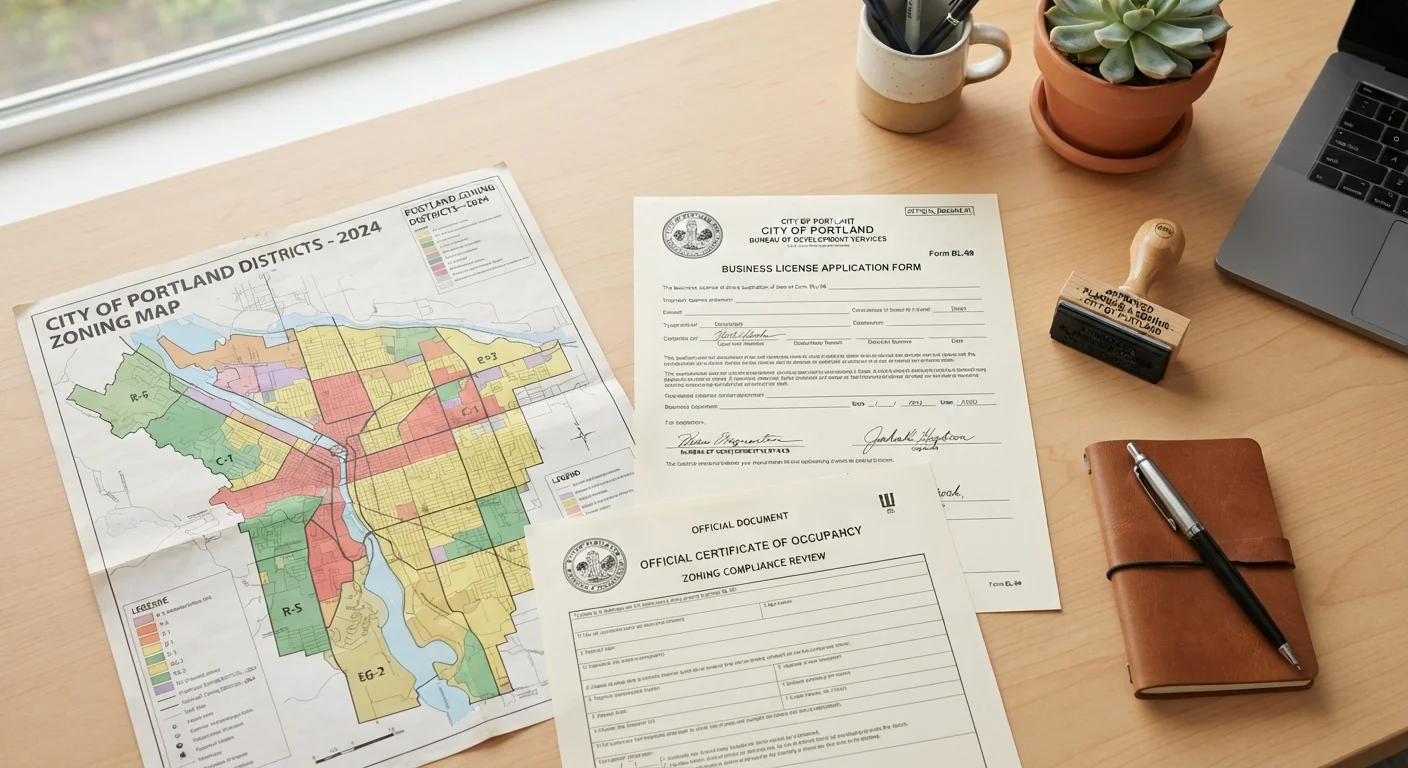
Business license and permit documents spread across a desk with a pen and zoning map

Key Takeaways

Most new businesses need licenses or permits at the federal, state, and local level — often all three.
Zoning laws determine whether your intended location legally permits your type of business activity.
Operating without required licenses can result in fines, forced closure, or personal liability.
Requirements vary significantly by industry, business structure, and municipality.
Compliance is an ongoing obligation — many licenses require renewal on a regular schedule.
30–60 min

Summary

22 items · 30–60 minutes to review; days to weeks to complete filings

Why Compliance Comes Before Customers

Many first-time entrepreneurs treat licenses and permits as an afterthought — something to sort out once revenue starts flowing. That's a costly mistake. Operating without the proper approvals can expose you to fines, forced closure, and in some industries, personal legal liability. Lenders and commercial landlords will also routinely ask for proof of licensure before finalizing agreements.

The compliance landscape in the U.S. is layered: federal requirements exist alongside state-level rules, and local city or county governments add their own layer on top. What applies to your business depends on your industry, your structure, and your physical location. Before you commit your first dollar to marketing or inventory, work through this checklist systematically.

If you haven't yet chosen a legal structure for your business, that decision shapes several of the filings below. Our guide to business structures walks through the most common options for first-time founders. Likewise, if your business name isn't officially registered yet, that step typically needs to happen before you apply for most licenses — see our business name registration walkthrough for details.

Federal Requirements

Obtain an Employer Identification Number (EIN) from the IRS — required for most business tax filings, hiring employees, and opening a business bank account. Must
Determine whether your industry requires a federal license or permit. Federally regulated industries include firearms dealers, alcohol producers, commercial trucking, aviation, broadcasting, and financial services, among others. Must
Register with the relevant federal agency for your sector (e.g., TTB for alcohol, FCC for broadcasting, FMCSA for trucking) if federal oversight applies. Must
Check export or import licensing requirements if your business involves cross-border trade in goods, technology, or controlled materials. Should

State-Level Licenses and Registrations

Register your business entity with the state Secretary of State's office — required for LLCs, corporations, and most formal structures before conducting business. Must
Apply for a general business license in states that require one; many states issue a base license that covers operating within state borders. Must
Obtain a state sales tax permit (sometimes called a seller's permit) if you will sell taxable goods or services within the state. Must
Verify whether your specific profession or industry requires a state-issued occupational or professional license (examples include contractors, cosmetologists, real estate agents, CPAs, and healthcare workers). Must
Register for state payroll taxes and obtain any required workers' compensation insurance if you plan to hire employees. Must
Check for state-level environmental or health permits if your business involves food production, waste, chemicals, or similar regulated activities. Should

Local Licenses and Zoning

Apply for a city or county business license — most municipalities require this as a baseline authorization to operate within their jurisdiction. Must
Verify zoning classification for your intended business address by contacting your local planning or zoning department before signing any lease or purchase agreement. Must
Confirm that your planned business activity is a permitted use under the applicable zoning designation; some areas distinguish between retail, office, industrial, and mixed-use zones. Must
If operating from home, check local home occupation ordinances that may restrict signage, customer traffic, employees on-site, or certain business types. Should
Apply for a conditional use permit or variance if your intended use is not outright permitted by current zoning but may be approved through a formal review process. Should
Schedule any required building inspections or obtain a certificate of occupancy before opening a physical location to the public. Must

Industry-Specific and Operational Permits

Obtain a health department permit if your business handles food preparation, food service, or any activity involving public health risk. Must
Apply for a signage permit from your local municipality before installing exterior signs — size, lighting, and placement are commonly regulated. Should
Secure an alarm permit if your location will use a burglar or fire alarm system, as many cities require registration with the police or fire department. Nice to have
Obtain any required liquor license from both state and local authorities well in advance of opening if you plan to sell or serve alcohol — approval timelines can be lengthy. Must

Ongoing Compliance

Create a renewal calendar for all licenses and permits from day one — many expire annually or biennially and operating on a lapsed license carries the same penalties as operating without one. Must
Reassess your compliance requirements whenever your business expands into a new state, adds a new product or service category, or hires its first employee. Should

Tools and Resources You'll Need

Before you start working through the checklist, gather a few key resources. Having these on hand will speed up the research and application process significantly.

Required

SBA Business License & Permits Tool

The U.S. Small Business Administration's online resource helps identify which federal, state, and local permits apply to your business type and location.

Required

State Secretary of State Website

Your state's official Secretary of State portal is the authoritative source for entity registration, name availability searches, and state filing requirements.

Required

Local City or County Clerk's Office

The first point of contact for local business licenses, zoning inquiries, and information on any municipal-level permits your business may require.

Required

IRS EIN Application (Online)

The IRS provides a free online application to obtain your Employer Identification Number, typically issued immediately upon completion.

Optional

Licensed Business Attorney

An attorney familiar with your state and industry can identify compliance gaps that general resources may not surface, especially for regulated industries.

Keep in mind that licensing fees are a real startup cost. If you're budgeting for your launch, our breakdown of common startup costs includes license and permit fees alongside other early expenditures, so you can plan more accurately.

Don't Assume — Always Verify Locally

Licensing requirements in the U.S. are highly localized and can change. A business type that is fully permitted in one city may be prohibited or heavily restricted just across the county line. Never rely solely on what worked for a friend's business or what you read in a general guide — always confirm current requirements directly with the relevant federal, state, and local agencies before you operate.

This checklist is part of a broader series on the early-stage business journey. For an end-to-end view of what it takes to go from idea to legally operating entity, see Going From Idea to Registered Business.

This article is for general informational purposes only and does not constitute legal advice. Requirements vary by jurisdiction and industry. Consult a licensed attorney or compliance professional for guidance specific to your situation.

Business Editorial Team is the collective byline for our editorial team and contributor network. Articles published under this byline or an editorial pen name are researched, written, and reviewed according to our editorial standards for clarity, consistency, and independence before publication.

View all articles by Business Editorial Team →
Disclaimer: The content on this site is for informational purposes only and is not a substitute for professional advice. Always consult a qualified professional for guidance specific to your situation.