

Key Takeaways
Start here
Why the Blank Page Feels So Daunting
Next
What You Actually Need to Get Started
Then try
The First Exercises Worth Doing
Keep in mind
Managing Expectations as a New Drawer
When you're ready
Building a Simple Practice Routine
Why the Blank Page Feels So Daunting
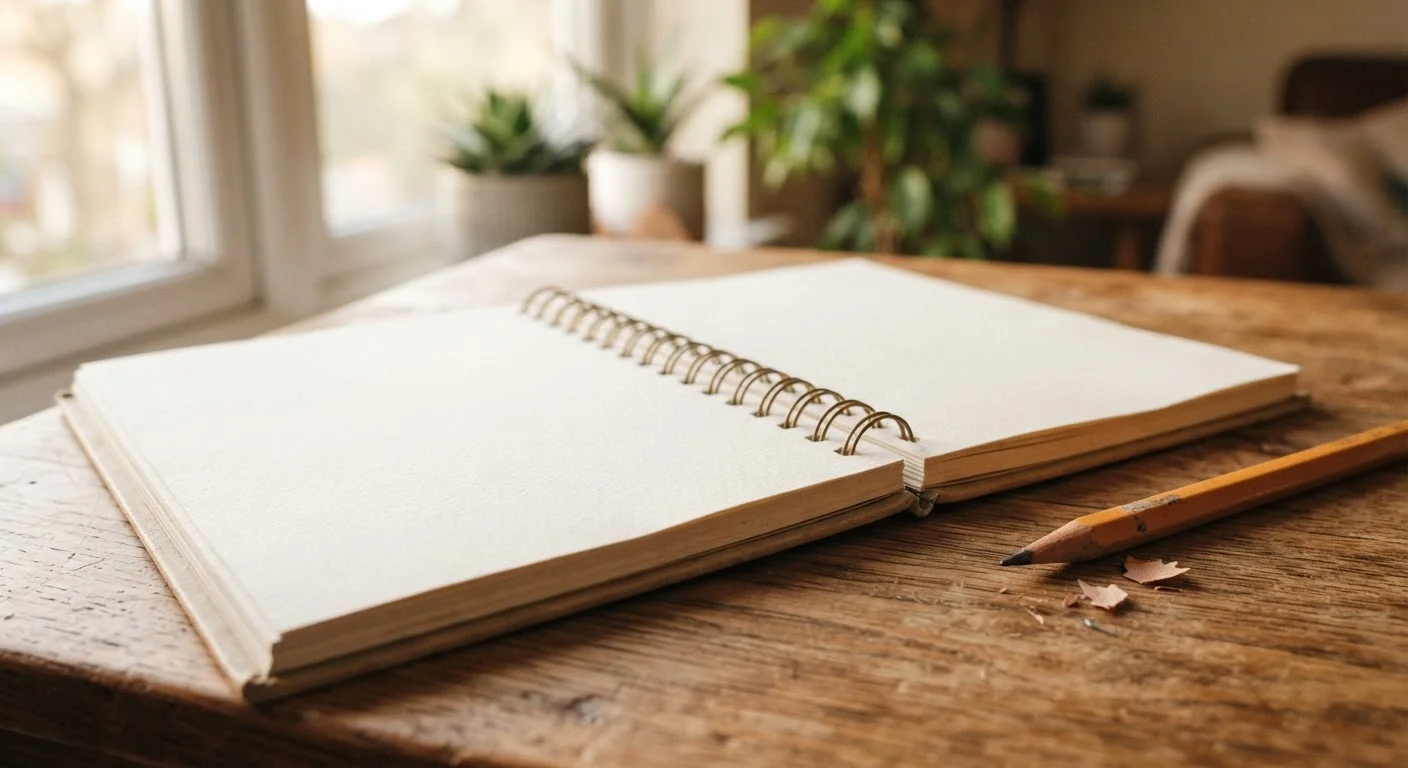
There is something quietly intimidating about a blank page. For many adults picking up a pencil for the first time - or the first time in decades - the empty white expanse doesn't feel like possibility. It feels like a test they haven't studied for.
Part of that anxiety comes from a deeply held cultural myth: that drawing is a gift you either have or you don't. Children who could render a realistic horse in third grade are pointed to as proof, while everyone else quietly files themselves into the category of 'not artistic.' That story is largely false, and understanding that matters before you ever put pencil to paper. Our article on the myth of the natural artist unpacks the research behind how artistic skill actually develops.
The blank page isn't a judgment. It's simply the starting condition. Every skilled artist still begins there - the difference is that they've made peace with it.
Contour drawing
A drawing exercise where you trace the outline of an object by keeping your eye primarily on the subject rather than the paper, training careful observation.
Graphite pencil grades
Pencils are graded from hard (H) to soft (B). Harder pencils make lighter, finer lines; softer pencils deposit more graphite for darker, richer marks.
Observational drawing
Drawing what you can actually see in front of you - a real object or scene - as opposed to drawing from imagination or memory.
Symbol memory
The tendency to draw a stored mental shorthand for something (like a generic eye or house shape) rather than what the object actually looks like from observation.
Foreshortening
The visual effect where an object appears compressed or shorter because it is angled toward the viewer - a common challenge when drawing hands or limbs.
Kneaded eraser
A soft, pliable eraser that can be shaped into any form and lifts graphite gently from paper without tearing or leaving residue.
What You Actually Need to Get Started
One of the most effective ways to postpone drawing is to convince yourself you need better supplies first. You don't. The materials required to begin are genuinely minimal.
- Pencils: An HB and a 2B will cover most early exercises. The HB is a workhorse for general line work; the 2B deposits more graphite and is useful for shading.
- Paper: A basic spiral-bound sketchbook or even printer paper works fine. The texture of the paper matters less at this stage than simply having a surface you're willing to mark up without feeling precious about it.
- An eraser: A kneaded eraser is gentle and moldable - it lifts graphite without damaging paper fibers. A white vinyl eraser handles heavier corrections.
That's it. The instinct to seek out expensive materials before starting is understandable but counterproductive. Spend that energy drawing instead.
Use paper you're willing to waste
Treating your sketchbook pages as precious makes it harder to draw freely. Many experienced artists keep two books: one they care about and one for messy experimentation. As a beginner, all your pages should feel like the experimental one. Permission to make bad marks is essential to making better ones.
The First Exercises Worth Doing
Beginning with foundational exercises rather than attempting finished drawings is one of the most reliable ways to build real capability without burning out on frustration.
Line Practice
Fill a page with parallel horizontal lines, drawn freehand from left to right. Then vertical lines. Then diagonals. The goal isn't perfection - it's developing control over how your hand moves. Many beginners grip the pencil too tightly; loose, flowing marks almost always look better than rigid, labored ones.
Basic Shape Construction
Draw circles, squares, and ellipses repeatedly. These aren't childish exercises - they form the structural skeleton of nearly everything you'll ever draw. An apple is essentially a sphere. A book is a rectangular solid. Training your hand to render these shapes cleanly pays dividends quickly.
Contour Drawing
Place an object - a coffee mug, a shoe, your own hand - in front of you, and draw its outline slowly, trying to keep your eye on the object more than on the paper. This exercise, known as contour drawing, forces you to actually observe rather than draw from symbol memory. It feels strange at first and produces results that look odd. That's exactly the point.
If your sketches still don't match what you imagined, that's completely expected. Our piece on why sketches don't look the way you imagined breaks down exactly why this gap exists and how to close it.
Managing Expectations as a New Drawer
Progress in drawing is real but rarely feels dramatic on a day-to-day basis. This is one of the most common reasons beginners give up: they expect visible improvement session by session, and when it doesn't come, they conclude they simply can't do it.
A more useful frame is to compare your work across weeks, not hours. Photograph your practice pages. Most people who do this are genuinely surprised when they look back after a month and see how far their line control and shape accuracy have come.
Don't compare day-one sketches to expert work
Social media feeds are full of polished finished drawings with no trace of the years of practice behind them. Measuring your early attempts against professional output is a recipe for discouragement. Seek out 'first sketchbook' posts and progress comparisons instead - they offer a far more realistic picture of the learning curve.
It's also worth recognizing that drawing from imagination is a significantly more advanced skill than drawing from observation. New drawers who sit down and try to render a scene from their mind are essentially attempting a graduate-level task without the foundational coursework. Start with things you can see. The imaginative work will come later, built on that observational foundation.
Learning to look critically at art - not just your own - also deepens your sense of what works and why. Our guide to reading a painting offers a practical framework for seeing visual art more attentively, which informs your own making in subtle but meaningful ways.
Building a Simple Practice Routine
Consistency beats intensity at this stage. Fifteen minutes of focused drawing five days a week will develop your skills faster than a single three-hour session on the weekend. The daily repetition builds muscle memory and keeps the observational habit active.
A simple structure that works well for beginners:
- Warm up with five minutes of loose line and shape exercises - no pressure, just movement.
- Work from observation for ten minutes. Pick one object and draw it. Don't switch subjects mid-session.
- Reflect briefly on what felt difficult. Naming the specific challenge - foreshortening, curved lines, proportion - helps focus the next session.
If structured community and feedback appeal to you, taking an art class as an adult is a logical next step. Classes offer something self-study genuinely cannot: a trained eye giving real-time feedback on your specific marks and habits.
But even without a class, a sketchbook and fifteen minutes a day are enough to begin. The blank page doesn't become less blank. You simply become more practiced at meeting it.