

Key Takeaways
The Story We Tell Ourselves Before the Curtain Rises
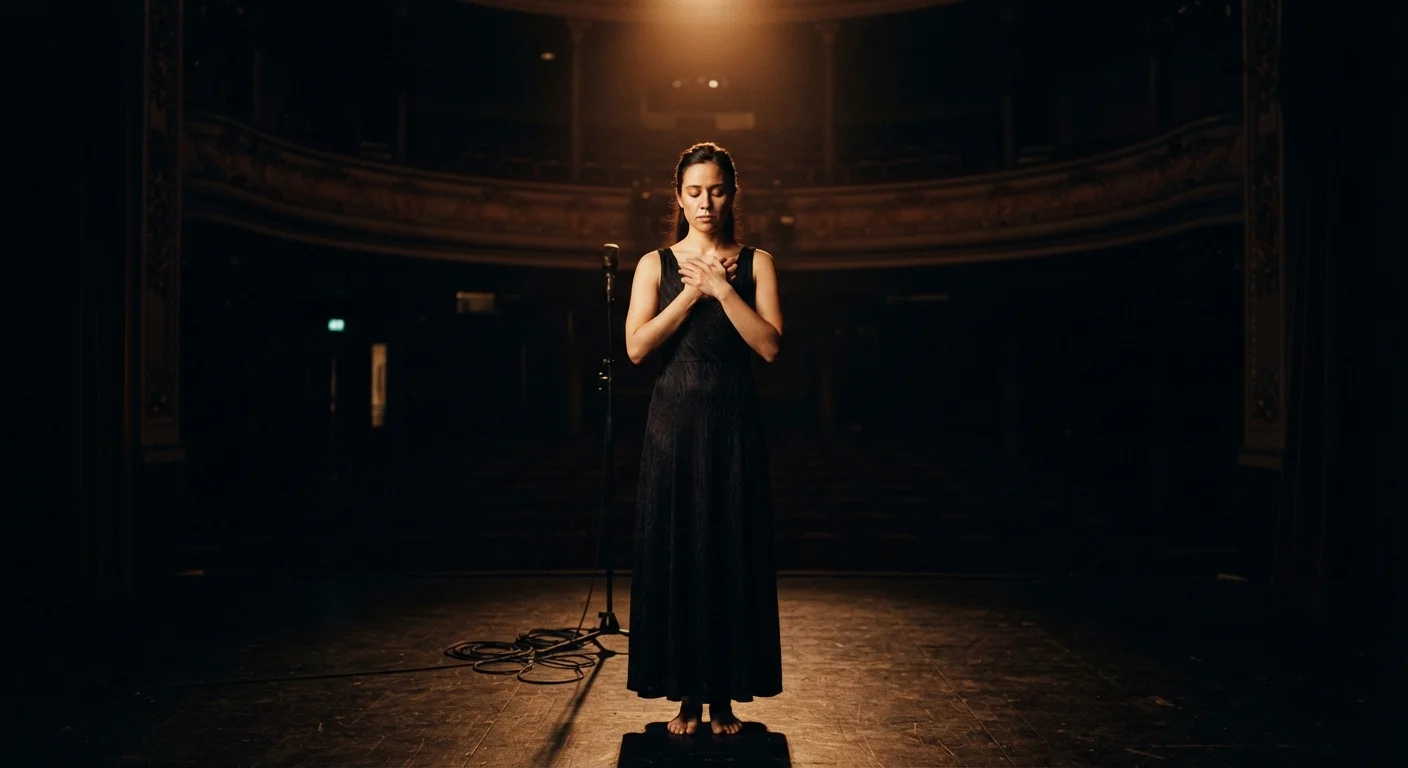
There is a particular silence that happens backstage, in the minutes before a performance begins. Hearts race. Hands tremble. Mouths go dry. For many performers - from community theater first-timers to seasoned concert soloists - this is the moment the internal narrative turns cruel: I'm not ready. I shouldn't be here. This was a mistake.
That story is almost always wrong. But it is extraordinarily common, and the culture of performance has done performers few favors by treating pre-show anxiety as shameful evidence of weakness. The more useful truth is that stage fright is a physiological response rooted in the same survival circuitry that sharpens human focus during any high-stakes situation. Understanding that - rather than fighting it - is where real progress begins.
Myth
Stage fright means you're not ready. If you were truly prepared, you wouldn't feel nervous.
Fact
Even the most experienced performers report pre-show anxiety. Preparedness and nervousness coexist routinely.
The idea that nerves signal inadequacy is one of the most damaging myths in performance culture. Renowned musicians, actors, and dancers have openly described debilitating pre-performance anxiety - Barbra Streisand famously avoided live concerts for nearly three decades partly because of it. Anxiety does not measure readiness; it measures how much the performance matters to you. Research in performance psychology consistently shows that anxiety is a natural arousal response, and even highly skilled performers experience it before high-stakes moments.
Myth
The goal should be to eliminate stage fright completely before you can perform well.
Fact
A complete absence of pre-performance anxiety can actually dull a performance. Moderate arousal is associated with optimal output.
This is where the Yerkes-Dodson principle, a well-established concept in psychology, becomes useful. It describes an inverted U-shaped relationship between arousal and performance: too little stimulation leads to flat, disengaged execution, while too much tips into panic. The sweet spot - moderate anxiety - tends to sharpen attention, quicken reflexes, and bring an urgency to a performance that audiences feel. Aiming to eradicate nerves entirely may actually cost performers the edge that makes live art electric.
Myth
Stage fright is a sign of introversion or a shy personality - extroverts just don't get as nervous.
Fact
Performance anxiety cuts across personality types. Extroverts experience it just as commonly as introverts.
Personality type is a poor predictor of stage fright. What drives performance anxiety is closer to the perceived gap between expectation and ability - the fear of being judged and found lacking - not how socially comfortable someone is in everyday life. Highly gregarious public figures have described profound pre-performance dread. The stage is its own social context, distinct from ordinary interaction, and it triggers its own set of threat responses regardless of how someone behaves offstage.
Myth
Telling yourself to calm down is the most effective way to manage nerves before you go on.
Fact
Research suggests that reframing anxiety as excitement is more effective than trying to suppress it.
Studies by organizational psychologist Alison Wood Brooks, published in the Journal of Experimental Psychology, found that people who told themselves "I am excited" before a stressful performance task outperformed those who tried to calm themselves down. The reasoning: excitement and anxiety share similar physiological signatures - elevated heart rate, heightened alertness - and it is cognitively easier to shift between adjacent emotional states than to leap from anxiety to calm. Reframing repositions the same energy as an asset rather than a threat.
Myth
Visualization and mental rehearsal are just feel-good techniques with no real effect on performance.
Fact
Mental rehearsal activates similar neural pathways to physical practice and has documented benefits for performers.
Sports psychology and performance research have accumulated substantial evidence that mental rehearsal - vividly imagining oneself executing a skill - engages overlapping brain regions to those activated during actual performance. Musicians, dancers, and athletes use structured visualization as a genuine training tool, not a comfort ritual. The key is specificity: imagining the sensory details of the environment, the physical sensations of performance, and the successful execution of particular passages or movements, rather than vague positive thinking.
What the Science and Practice of Performance Actually Say
Performance psychology has spent decades studying what separates effective stage presence from paralysis, and the findings consistently push back against the folk wisdom that anxiety must be conquered. The nervous system does not distinguish neatly between fear and excitement - both states involve elevated cortisol, faster breathing, and sharpened sensory awareness. What changes is the meaning performers assign to those sensations.
When Anxiety Goes Beyond the Stage
Performance anxiety described here is the common, manageable kind that most performers experience. If anxiety is severely disrupting daily life, relationships, or the ability to function, that is worth discussing with a qualified mental health professional. This article is for general informational purposes and is not a substitute for professional psychological or medical advice.
Professional coaches, acting teachers, and music educators increasingly draw on cognitive reframing not as a wellness trend but as a practical skill. When performers learn to narrate their pre-show state as readiness rather than danger, the physiological experience doesn't change - but its interference with execution does. This kind of mental agility is trainable, and it belongs alongside technical rehearsal as part of any serious performance practice. For more on the interpersonal dimension of this, see what new performers misunderstand about connecting with an audience.
Don't Self-Medicate to Calm Nerves
Some performers turn to alcohol or unprescribed medications to dull pre-show anxiety. This approach carries real risks - impaired judgment, dependency, and degraded performance quality. If performance anxiety feels unmanageable, speaking with a healthcare provider or performance psychologist is the safer, more effective path.
None of this means anxiety is trivial or that struggling performers should simply think their way past genuine distress. Context matters enormously. But for the vast majority of performers navigating ordinary pre-show nerves, the evidence is clear: the goal is not a calm, anxiety-free body. It is a body whose energy is pointed in the right direction.