

Key Takeaways
Refugee Crisis
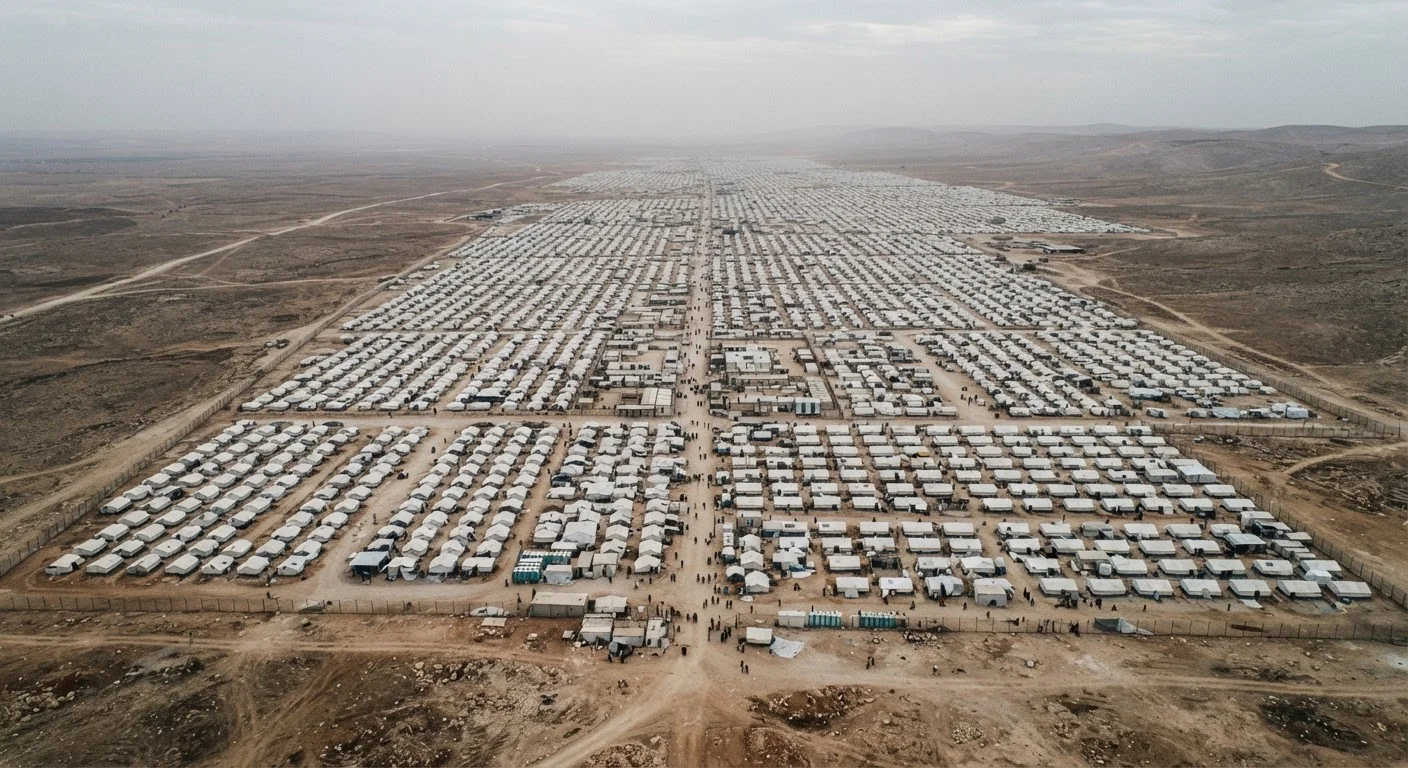
A refugee crisis occurs when a large number of people are forced to flee their homes due to armed conflict, persecution, or natural disaster, typically crossing international borders in search of safety. These events can strain the resources of neighboring countries and draw international attention, including from the United States. Under international law, a refugee is someone who cannot return home because of a well-founded fear of persecution based on race, religion, nationality, political opinion, or membership in a particular social group.
Refugees are distinct from asylum seekers - an asylum seeker has applied for protection but has not yet received a formal determination. Internally displaced persons (IDPs) have fled their homes but remain within their country's borders and are not covered by the 1951 Refugee Convention.
The Scale of Global Displacement Today
The United Nations Refugee Agency (UNHCR) reported that the number of forcibly displaced people worldwide surpassed 100 million for the first time in 2022 - a figure that includes refugees, asylum seekers, and internally displaced persons. Conflicts in Syria, Afghanistan, South Sudan, Ukraine, and Myanmar have each produced displacement on a massive scale over the past decade.
These numbers matter to American policymakers because the U.S. has historically positioned itself as a leader in humanitarian response. When displacement crises emerge, the question of how much the U.S. should contribute - financially, diplomatically, and through direct resettlement - almost always surfaces in domestic political debates.
100M+
People forcibly displaced worldwide
UNHCR reported global forced displacement surpassed 100 million for the first time in 2022, driven by multiple overlapping conflicts.
18,000
U.S. refugee admissions ceiling, FY2020
The presidential ceiling reached its lowest point under the modern U.S. Refugee Admissions Program in fiscal year 2020.
125,000
U.S. refugee admissions ceiling, FY2022
The ceiling was raised to 125,000 for fiscal year 2022, reflecting a significant policy shift between administrations.
How the U.S. Refugee System Works
The U.S. Refugee Admissions Program (USRAP) is one of the world's largest resettlement programs. Each fiscal year, the president sets a maximum number of refugees to be admitted - a figure known as the Presidential Determination. Congress is consulted but does not formally approve the ceiling.
Applicants undergo a multi-agency vetting process that typically takes one to two years and includes biometric screening, background checks by intelligence and law enforcement agencies, and in-person interviews. Supporters of the program argue it is among the most rigorous screening processes in the U.S. immigration system; critics argue the volume should be managed in relation to domestic capacity and border security conditions.
Once admitted, refugees are eligible for a range of resettlement services and a path to permanent residency and eventually citizenship.
Refugees vs. Undocumented Immigrants: A Key Distinction
Public debate sometimes conflates refugees with undocumented immigrants, but the two categories are legally and procedurally distinct. Refugees are vetted abroad and admitted through a formal government program. Undocumented immigrants enter or remain in the country outside of authorized channels. Conflating the two can distort policy discussions, since the risks, legal frameworks, and policy levers involved are different for each group.
The Link Between Foreign Policy and Displacement
U.S. foreign policy decisions - including military interventions, arms sales, sanctions regimes, and diplomatic partnerships - can influence conditions that generate or prolong refugee crises. The large displacement flows from Afghanistan following the 2021 withdrawal of U.S. forces, and from Iraq after the 2003 invasion, are frequently cited in policy discussions as cases where American decisions contributed to displacement.
This creates a feedback loop: foreign policy generates crises, crises generate refugees, and refugee flows generate domestic debate about immigration, national security, and international obligations. Just as armed conflicts abroad can drive economic ripple effects at home - as explored in our breakdown of how global conflicts affect U.S. inflation - they also reshape the domestic political landscape around immigration.
Key Tensions in the Domestic Policy Debate
American public opinion on refugee admissions is not monolithic. Polling consistently shows that views depend heavily on framing, with more support expressed when humanitarian need is emphasized and more skepticism when security concerns are foregrounded. Several distinct arguments shape the debate:
- Humanitarian obligation: Advocates argue the U.S. has both a legal and moral responsibility to offer protection to those fleeing persecution, particularly when American foreign policy has contributed to instability.
- Security screening: Critics and some moderates argue that even rigorous vetting cannot eliminate risk, and that the admissions ceiling should reflect current border and national security conditions.
- Economic integration: Research from institutions including the National Bureau of Economic Research has found that refugees contribute to local economies over time, though short-term resettlement costs and local capacity vary widely by region.
- Political sovereignty: Some policymakers argue that the volume of admissions should be purely a domestic decision, insulated from international pressure or treaty obligations.
These tensions rarely resolve cleanly, which is why refugee policy tends to shift significantly between administrations.
What Drives the Numbers Up and Down
The annual refugee admissions ceiling has fluctuated dramatically based on the priorities of each administration. The ceiling dropped to 18,000 under executive action in fiscal year 2020, the lowest since the modern resettlement program was established by the Refugee Act of 1980. It was subsequently raised to 125,000 by the following administration for fiscal year 2022.
Actual admissions often lag behind the ceiling, constrained by processing infrastructure, staffing at overseas posts, and the time required for security vetting. Advocacy groups have pointed to this gap as a sign that increasing the ceiling alone is insufficient without investment in processing capacity.
Geopolitical events also shape which nationalities are prioritized in a given year. The emergence of new crisis zones - or the escalation of existing ones - can prompt emergency designations that redirect processing resources.