

| FY2023 Total Foreign Assistance | ~$71.9 billion (U.S. State Department / USAID, FY2023) |
| Share of Federal Budget | Less than 1% (Congressional Research Service estimates) |
| Largest Single Aid Program | PEPFAR (global HIV/AIDS relief) (USAID, ongoing) |
| Top Recipient (recent years) | Ukraine (supplemental appropriations) (State Department foreign assistance data) |
| U.S. Jobs Supported | ~60 cents per dollar spent domestically (USAID estimate, published guidance) |
| Primary Civilian Agency | USAID (U.S. Agency for International Development) |
The Real Numbers Behind Foreign Aid
Foreign aid is one of the most consistently misunderstood line items in the federal budget. Polls regularly show Americans believe the U.S. spends roughly 25 to 28 percent of its federal budget on foreign assistance. The actual figure is closer to 1 percent.
| FY2023 Total Foreign Assistance | ~$71.9 billion (U.S. State Department / USAID, FY2023) |
| Share of Federal Budget | Less than 1% (Congressional Research Service estimates) |
| Largest Single Aid Program | PEPFAR (global HIV/AIDS relief) (USAID, ongoing) |
| Top Recipient (recent years) | Ukraine (supplemental appropriations) (State Department foreign assistance data) |
| U.S. Jobs Supported | ~60 cents per dollar spent domestically (USAID estimate, published guidance) |
| Primary Civilian Agency | USAID (U.S. Agency for International Development) |
In fiscal year 2023, the U.S. government obligated approximately $71.9 billion in foreign assistance, according to data published by the State Department and USAID. That figure covers everything from military financing and food aid to global health programs and disaster relief. For context, total federal spending that year exceeded $6.1 trillion, making foreign aid a fraction of overall outlays.
The gap between public perception and reality matters because it shapes political debate. Calls to "cut foreign aid to fix the deficit" often assume far larger savings than the numbers actually support.
Where the Money Goes: Aid Categories Explained
U.S. foreign assistance is not a single program. It spans dozens of accounts administered by multiple agencies, divided into two broad categories: economic assistance and military assistance.
Foreign Military Financing (FMF)
A U.S. government grant or loan program that helps foreign governments purchase American-made military equipment, training, and services. It is counted as foreign assistance but largely benefits U.S. defense manufacturers.
PEPFAR
The President's Emergency Plan for AIDS Relief, launched in 2003. It is a U.S. government initiative to address the global HIV/AIDS epidemic, primarily in sub-Saharan Africa, through treatment, prevention, and care programs.
Development Assistance
Aid intended to support long-term economic growth, governance, education, or health in lower-income countries, as distinct from emergency humanitarian relief or military aid.
Humanitarian Aid
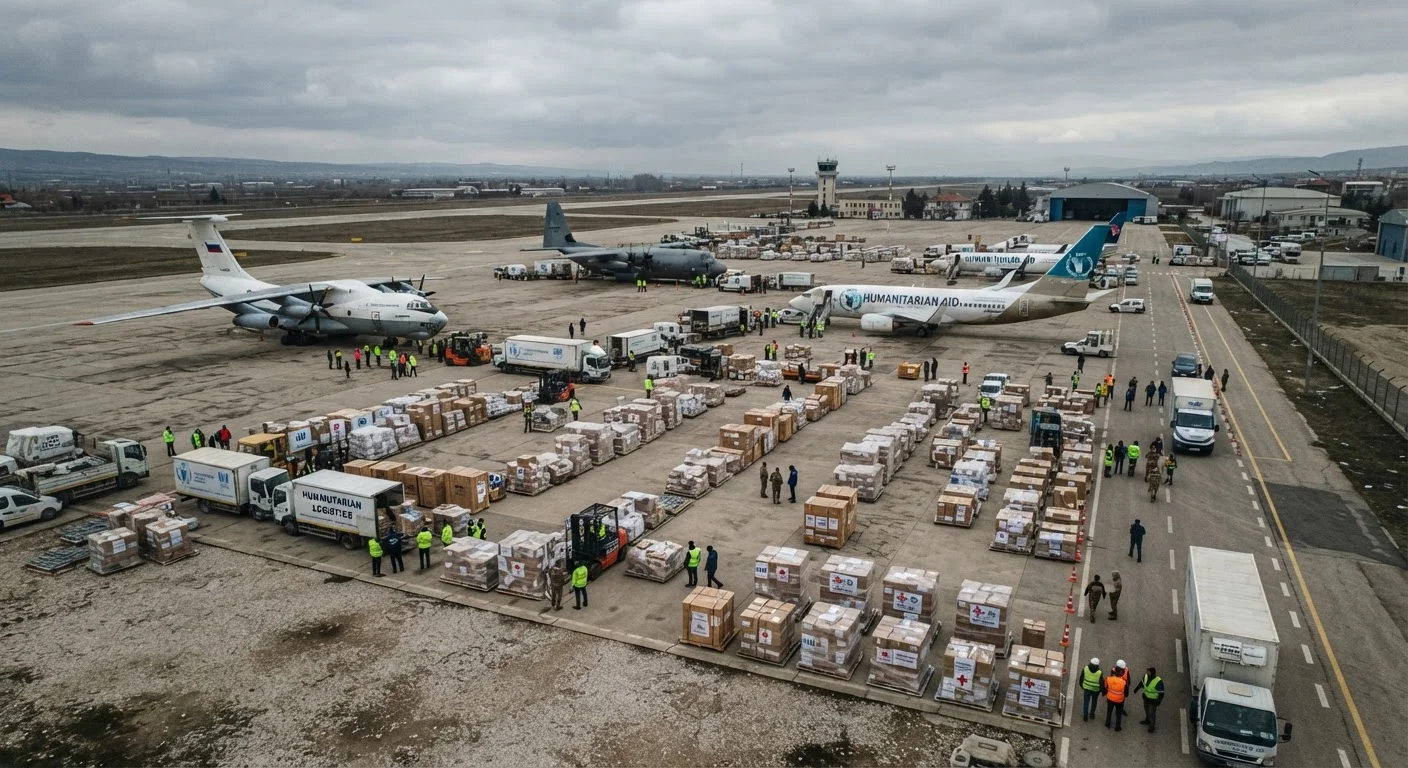
Short-term assistance provided in response to natural disasters, armed conflict, or other crises. It typically includes food, water, shelter, and medical support.
Implementing Partner
A non-governmental organization, contractor, or international body that receives U.S. government funds and is responsible for delivering specific aid programs on the ground.
Supplemental Appropriation
Additional congressional funding approved outside the regular annual budget process, often in response to an emergency or unanticipated need such as a foreign conflict or natural disaster.
Economic and development aid includes funding for global health initiatives (such as HIV/AIDS treatment under PEPFAR, the President's Emergency Plan for AIDS Relief), food security programs, disaster relief, democracy promotion, and education. The U.S. Agency for International Development (USAID) administers much of this work, though the State Department, Department of Defense, and Treasury also control portions.
Military and security assistance covers foreign military financing, peacekeeping support, and counterterrorism cooperation. This category has grown significantly in recent years, partly driven by supplemental appropriations for Ukraine following Russia's 2022 invasion.
The top recipients by dollar value in recent years have included Ukraine, Israel, Egypt, Jordan, and Ethiopia - a mix reflecting both active conflicts and long-standing strategic partnerships.
What Foreign Aid Is Designed to Buy
U.S. policymakers have historically justified foreign aid on three overlapping rationales: humanitarian obligation, national security, and economic self-interest.
PEPFAR's Scale and Bipartisan Support
PEPFAR has maintained bipartisan congressional support since its creation under President George W. Bush in 2003. The program has been reauthorized multiple times under administrations of both parties. Global health experts widely credit it with transforming HIV treatment access across sub-Saharan Africa, though debates about its funding level and conditions continue. It represents one of the largest single commitments in U.S. foreign assistance history.
On the humanitarian side, programs like PEPFAR - launched in 2003 - are credited by the global health community with supporting treatment access for millions of people living with HIV, primarily in sub-Saharan Africa. Emergency food aid helps stabilize regions after natural disasters or crop failures that could otherwise generate mass displacement.
The security argument holds that stable, economically developing countries are less likely to become breeding grounds for extremism, mass migration, or state collapse that eventually requires more costly military intervention. Aid to Jordan and Egypt, for instance, is closely tied to regional stability commitments and peace agreements.
The economic case is more transactional: a significant share of U.S. foreign assistance is spent on American goods, services, and contractors. USAID estimates that roughly 60 cents of every dollar in U.S. foreign assistance supports jobs inside the United States.
Common Misconceptions and What They Mean for Policy
Beyond the budget-share myth, several other misconceptions routinely distort public debate about foreign aid.
Most aid is not cash handed to foreign governments. The majority flows through U.S.-based contractors, international organizations like the United Nations World Food Programme, or local implementing partners - and is tied to specific programmatic objectives with auditing requirements.
Military aid is often equipment credits, not currency. Foreign Military Financing (FMF) grants are typically used to purchase U.S.-manufactured defense equipment, keeping production lines active domestically.
Cutting aid does not automatically reduce the deficit proportionally. Some aid programs are authorized through emergency supplementals rather than the base discretionary budget, and others are legally tied to treaty obligations or bilateral agreements that carry diplomatic consequences if broken.
Informed voters and policymakers benefit from understanding these mechanics - not because foreign aid is beyond scrutiny, but because effective debate requires accurate starting points.