

Key Takeaways
Currency Wars
A 'currency war' refers to a situation where multiple countries compete to weaken their own currencies relative to others, typically to make their exports cheaper and more attractive on global markets. When one nation lowers the value of its money, trading partners often feel pressure to do the same. For everyday Americans, the ripple effects show up in the prices of imported goods, from electronics to clothing to groceries.
Economists use the term 'competitive devaluation' to describe deliberate policy actions - such as central bank intervention or interest rate cuts - intended to reduce a currency's exchange rate value.
The Mechanism: How Exchange Rates Feed Into Prices
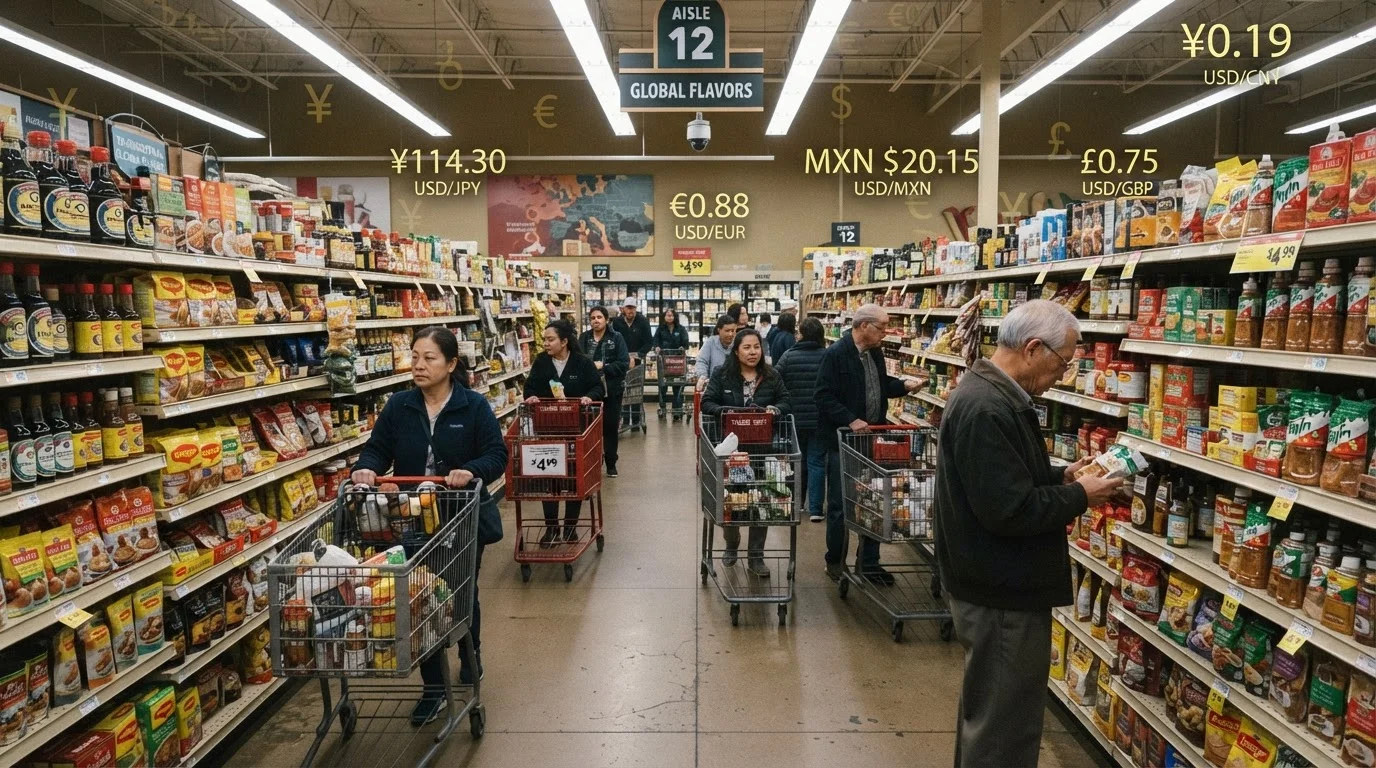
When the U.S. dollar rises in value against another currency - say, the Japanese yen or the euro - American importers can suddenly buy more foreign goods for the same number of dollars. That cost advantage can translate into lower retail prices for consumers, or at minimum, less pressure on importers to raise them.
The reverse is equally true. If the dollar weakens, importing a Toyota made in Japan or a pair of sneakers manufactured in Vietnam costs more in dollar terms. Businesses absorb some of that increase, but sustained currency moves tend to show up in consumer prices within several months.
This dynamic is sometimes called exchange rate pass-through - the degree to which currency fluctuations filter through to the prices consumers actually pay. Research from the Federal Reserve and academic economists consistently finds that pass-through in the U.S. is partial rather than complete, meaning companies and retailers often buffer some of the impact rather than immediately passing it on.
$3T+
Daily global foreign exchange trading volume
The Bank for International Settlements estimates global forex markets trade over $7 trillion daily as of its 2022 triennial survey, reflecting the scale of forces shaping any single currency's value.
~10-15%
Estimated exchange rate pass-through to U.S. import prices
Federal Reserve research suggests a 10% dollar depreciation raises U.S. import prices by roughly 10-15% over one to two years, though the consumer retail effect is more muted.
15%
Share of U.S. GDP from goods imports
According to World Bank data, goods imports represent roughly 15% of U.S. GDP, illustrating how broadly exchange rate shifts can touch the domestic economy.
What 'Currency Wars' Actually Look Like in Practice
The phrase 'currency war' entered mainstream economic debate in 2010, when Brazil's finance minister described a wave of monetary easing by major economies as a form of competitive conflict. The concern was that countries were effectively racing to weaken their currencies to gain export advantages - an outcome that benefits no one in the long run if it triggers retaliatory devaluations.
In practice, currency competition is rarely declared or coordinated. It tends to emerge from individual decisions - a central bank cutting interest rates to stimulate a domestic economy, or a government intervening directly in currency markets to cap an exchange rate. China's management of the yuan has drawn repeated scrutiny from U.S. policymakers and trade partners who argue it keeps Chinese exports artificially cheap. For a deeper look at how trade disputes connect to consumer prices, see what the WTO actually does.
“Exchange rate policy is ultimately trade policy by another name. When countries manipulate their currencies, they are shifting the competitive landscape for every exporter and importer in the world.”
— C. Fred Bergsten, Founding Director, Peterson Institute for International Economics
Everyday Americans in the Crossfire
The most direct consumer exposure to exchange rate volatility comes through imported goods categories: consumer electronics (largely sourced from East Asia), automobiles, apparel, and certain agricultural products. When the dollar weakens meaningfully over a sustained period, prices in these categories tend to drift upward - adding to overall inflationary pressure.
The connection to broader inflation is not always straightforward. Other factors - domestic labor costs, shipping rates, energy prices - also drive what Americans pay. Global conflicts, for instance, can simultaneously move currency values and disrupt commodity markets. Tracking the path from foreign crisis to U.S. inflation illustrates how these forces compound each other.
American exporters face the mirror image of this dynamic. A weaker dollar makes U.S. farm commodities, industrial equipment, and services more price-competitive abroad - which can boost revenues for those sectors but also fuels the broader geopolitical tensions that characterize currency disputes.
Why Prices Don't Move Overnight
Many large importers use financial instruments called currency hedges to lock in exchange rates months in advance, insulating themselves - and initially consumers - from short-term volatility. This means a sudden dollar move may not appear in retail prices for six months or more. Sustained, multi-year currency shifts tend to have the most visible consumer impact.
This article is for general informational purposes only and does not constitute financial or investment advice. Readers should consult a qualified financial professional for guidance specific to their circumstances.