

Key Takeaways
Budget (Personal Finance)
A budget is a written or tracked plan that matches your expected income against your planned expenses over a set period - usually a month. It tells your money where to go before it arrives, rather than wondering where it went afterward. A budget doesn't restrict spending; it gives every spending decision context and purpose.
In formal accounting, a budget is a forward-looking financial statement. In personal finance, the term is used interchangeably with 'spending plan' or 'cash flow plan,' all of which describe the same core activity: allocating income to categories before funds are spent.
The Definition Most People Carry Is Wrong
Ask most people to define a budget and they'll say something like: "a list of things you can't buy." That framing is understandable - but it's also what keeps millions of Americans from ever starting one.
A budget is not a ceiling on enjoyment. It's a plan for how money will move during a given period - what comes in, what goes out, and where. That's it. The restriction feeling comes from the word itself, not the practice. Many financial educators prefer the term spending plan precisely because it describes what budgeting actually does: it gives spending a direction.
Several persistent myths - like "budgets are only for people in financial trouble" - make this framing problem worse. Understanding the actual definition is the first step toward making the tool work.
A Note on Terminology
"Budget," "spending plan," and "cash flow plan" are used interchangeably across financial literature. The underlying concept is the same: a forward-looking allocation of income to expenses. The label that feels least loaded is the one most likely to stick for you.
What a Budget Actually Contains
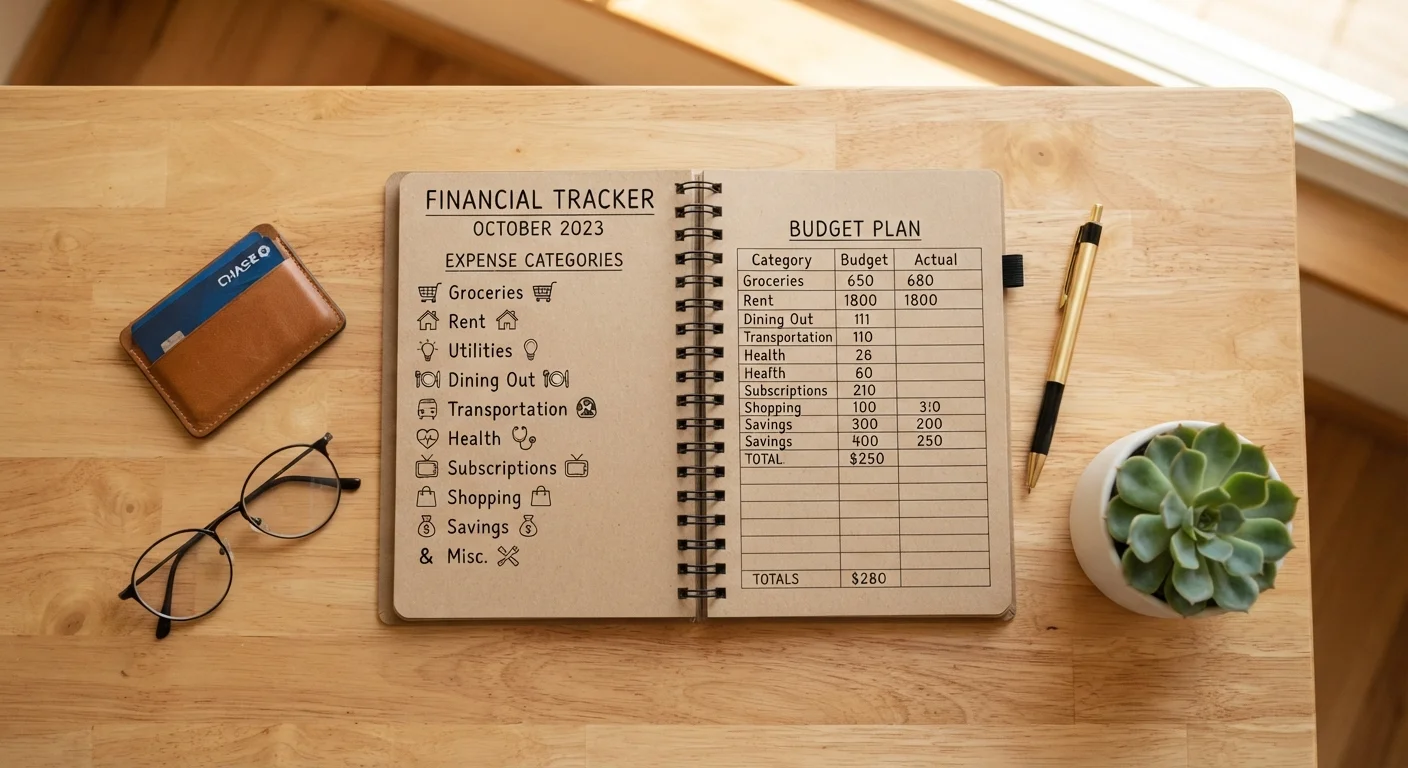
A functional budget has two sides: income and expenses. Income is any money reliably coming in - wages, freelance payments, side income. Expenses are every category of spending, from rent and groceries to subscriptions and savings contributions.
The job of a budget is to align these two sides intentionally. That means:
- Listing all expected income for the period
- Assigning dollar amounts to every spending category
- Ensuring total expenses don't exceed total income
- Revisiting the plan when reality diverges from the estimate
Savings belong inside a budget as a line item - not as an afterthought. When savings are treated as a category, they become a commitment rather than whatever's left over at the end of the month.
If terms like discretionary spending or cash flow feel unfamiliar, the plain-language glossary of budgeting terms covers the vocabulary you'll encounter most.
32%
Americans who maintain a detailed household budget
According to a Gallup survey, fewer than one in three American adults track their spending against a formal budget.
65%
Adults who say they couldn't cover a $1,000 emergency
Bankrate's annual emergency savings survey has consistently found that a majority of Americans lack a financial cushion, highlighting the gap budgeting aims to close.
What a Budget Is Not
Clarity about what a budget isn't matters just as much as the definition itself.
- Not a moral judgment
- A budget doesn't tell you whether your choices are good or bad. It reflects priorities. Spending $200 a month on a hobby isn't wasteful if that category is funded and planned for.
- Not a static document
- A budget that was built in January and never updated is not a budget - it's a historical artifact. Life changes: income shifts, expenses grow, goals evolve. A budget must be maintained, not just created.
- Not a guarantee
- Having a budget doesn't prevent financial hardship or ensure wealth. It improves awareness and decision-making - which are valuable - but it cannot protect against every unexpected expense or income disruption.
- Not only for people in debt
- Budgeting is a planning tool used by people across the full spectrum of financial situations. It's as useful for someone building an emergency fund as for someone paying down a credit card.
Understanding these boundaries makes the tool less intimidating and easier to use honestly.
Why This Distinction Changes Everything
When you reframe a budget from "restriction" to "intention," the emotional relationship with the process shifts. Instead of something imposed on you, it becomes something you design. That shift in agency is not trivial - behavioral research consistently shows that how we frame financial decisions affects whether we follow through on them.
A budget built around your actual priorities - including the things that make life enjoyable - is far more sustainable than one that treats every want as an enemy. And one that's revisited regularly stays useful as circumstances change.
If you're ready to move from concept to method, zero-based budgeting is one structured approach worth understanding - particularly if you want a framework that accounts for every dollar. For a broader foundation, the complete guide to personal budgeting walks through the full process from income to consistency.
This article is for general informational and educational purposes only. It does not constitute personalized financial advice. For guidance specific to your financial situation, consider consulting a licensed financial professional.