

| Annual industry output | Over $1.8 trillion (U.S. Census Bureau, Construction Spending Survey) |
| Total U.S. construction employment | ~8 million workers (U.S. Bureau of Labor Statistics) |
| Primary licensing authority | State-level contractor licensing boards |
| Key contract types | Lump sum, cost-plus, design-build, GMP |
| Largest construction sector by value | Residential building (U.S. Census Bureau) |
| Inspection authority | Municipal or county building departments |
How the Construction Industry Is Organized
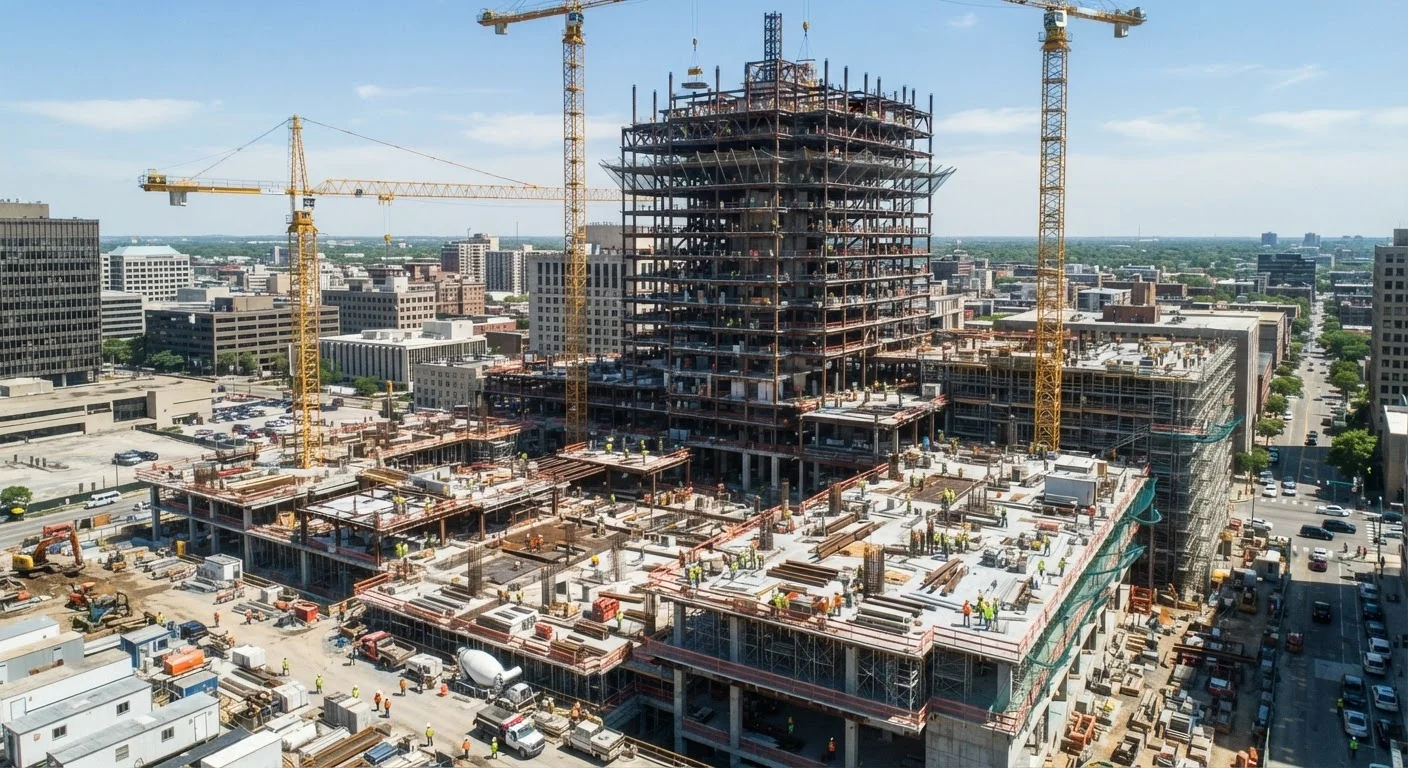
The U.S. construction industry generates over $1.8 trillion in annual economic output and employs roughly 8 million workers, according to the U.S. Bureau of Labor Statistics. Behind every completed building, highway, or hospital renovation is a layered structure of professionals, each with a distinct role and legal responsibility. Understanding who those players are - and how they relate to one another - helps owners, investors, and curious observers make sense of how projects actually get built.
| Annual industry output | Over $1.8 trillion (U.S. Census Bureau, Construction Spending Survey) |
| Total U.S. construction employment | ~8 million workers (U.S. Bureau of Labor Statistics) |
| Primary licensing authority | State-level contractor licensing boards |
| Key contract types | Lump sum, cost-plus, design-build, GMP |
| Largest construction sector by value | Residential building (U.S. Census Bureau) |
| Inspection authority | Municipal or county building departments |
Construction projects typically follow a chain of authority: an owner or developer funds and initiates the project; a general contractor manages execution; and a network of subcontractors handles specialized trades. Designers, inspectors, and legal professionals complete the picture. This structure applies to residential homebuilding, commercial development, and large-scale public infrastructure alike, though the scale and complexity vary considerably.
For a complementary look at how property transactions work alongside construction, see who plays what role in a U.S. property sale.
The Core Roles Explained
Owner / Developer
The project owner - often a real estate developer, government agency, or private business - initiates and finances construction. Developers coordinate land acquisition, secure permits, arrange financing, and define project goals. They bear ultimate financial risk and set the timeline expectations all other parties must meet.
Architect and Engineer
Licensed architects produce design drawings and specifications; structural, civil, and mechanical engineers ensure the design is safe and functional. Their stamped drawings are typically required before any permits are issued. These professionals may also visit the site during construction to verify the work matches approved plans.
General Contractor (GC)
The GC holds the primary contract with the owner and takes responsibility for delivering the finished project. This includes hiring and supervising subcontractors, managing schedules, sourcing materials, and maintaining site safety. GCs are licensed at the state level and typically carry general liability and workers' compensation insurance.
Subcontractors and Trade Contractors
Subcontractors specialize in a single trade: electrical, plumbing, HVAC, concrete, roofing, drywall, and dozens of others. The GC coordinates their sequencing - rough electrical work, for example, must be completed before insulation is installed. Each sub typically holds its own trade license and insurance.
General Contractor (GC)
The primary contractor who holds the contract with the project owner, manages all site activity, and is responsible for delivering the completed project on time and within budget.
Subcontractor
A licensed trade specialist - such as an electrician or plumber - hired by the general contractor to perform a specific scope of work on a project.
Construction Manager (CM)
A professional hired by the owner to oversee project planning and execution, often working on a fee basis without directly holding trade contracts.
Performance Bond
A surety instrument guaranteeing that a contractor will complete a project as specified in the contract, protecting the owner if the contractor defaults.
Mechanic's Lien
A legal claim that contractors, subcontractors, or suppliers can place on a property if they are not paid for their work or materials, giving them leverage to recover owed amounts.
Guaranteed Maximum Price (GMP)
A contract structure in which the owner agrees to pay actual costs up to a defined ceiling, incentivizing the contractor to manage costs efficiently.
Construction Manager (CM)
On complex or large-scale projects, an owner may hire a construction manager to act as their representative throughout design and construction. Unlike a GC, a CM typically works on a fee basis and does not hold the trade contracts directly.
Inspectors and Code Officials
Municipal building inspectors review work at defined milestones - foundation pours, framing, electrical rough-in, and final completion - to ensure compliance with local building codes. These are government employees, not hired by the contractor. Passing inspections is required before any subsequent phase can legally proceed.
Supporting Roles That Keep Projects Moving
Beyond the core construction team, several other professionals influence how a project is financed, documented, and protected.
Licensing Requirements Vary by State
There is no single national contractor license in the United States. Each state sets its own requirements for general contractors and trade contractors, and many require separate licenses for each trade category. Before hiring any construction professional, verify their license status through your state's contractor licensing board. Working with an unlicensed contractor can expose owners to significant legal and financial risk.
- Surety companies issue performance and payment bonds, guaranteeing that contractors will complete their work and pay suppliers even if the contractor defaults.
- Lenders and construction banks provide draw-based financing, releasing funds in stages as construction milestones are verified.
- Material suppliers and distributors deliver everything from lumber and concrete to HVAC equipment. Their delivery schedules can directly affect construction timelines.
- Land surveyors establish legal boundaries and elevation data, which are prerequisites for permits and foundation work.
- Environmental consultants assess soil contamination, wetland boundaries, and other regulatory requirements that affect what can be built where.
The relationships between these parties are governed by a web of contracts, lien laws, and state licensing requirements that vary meaningfully by jurisdiction. Just as the freight industry relies on layered contractor relationships, construction depends on each participant understanding their scope, liability, and responsibilities within the broader chain.
For readers interested in how other complex U.S. industries are structured, a breakdown of how the healthcare industry fits together offers a useful parallel.