

Key Takeaways
Why the Supply Chain Behind Fuel Matters
Every time a driver fills a tank at a gas station, they are at the final stop of a journey that may have begun thousands of miles away - and weeks earlier. Understanding how a gallon of gasoline gets from underground crude oil to a nozzle at the pump reveals why fuel prices fluctuate, who profits at each stage, and why disruptions in one part of the world ripple into local prices everywhere else.
The fuel supply chain is not controlled by a single company or government. It is a network of distinct industries - upstream extraction, midstream transport, downstream refining, and retail - that interact through commodity markets, long-term contracts, and spot purchases. Each segment carries its own cost structure, regulatory environment, and risk exposure.
The Supply Chain Is Rarely Seamless
Even under normal conditions, the fuel supply chain involves dozens of handoffs between independent operators. Contracts, spot market purchases, and logistics scheduling all interact in real time. This complexity is a key reason that even minor disruptions - a refinery fire, a pipeline shutdown, an unexpected cold snap - can have outsized effects on regional fuel availability and pricing.
From Wellhead to Refinery Gate: Steps in the Journey
Follow the stages below to understand how crude oil is extracted, processed, and ultimately converted into the fuel sold at retail stations.
Extraction at the Wellhead
Crude oil is extracted from underground reservoirs through drilling - either on land (onshore) or beneath the ocean floor (offshore). Once a well is producing, crude is gathered at a wellhead and moved to a collection point via small-bore gathering pipelines. At this stage, natural gas and water that come up with the crude are separated out through basic processing equipment called separators.
Midstream Transport to the Refinery
After extraction, crude must travel to a refinery. The primary method in the United States is pipeline - a vast network of high-capacity pipes carrying crude hundreds or thousands of miles. Where pipelines are unavailable or impractical, crude is moved by ocean-going tankers (for international shipments) or by rail and truck for shorter inland distances. Major pipeline hubs - such as Cushing, Oklahoma - serve as key pricing and distribution points.
Refining: Converting Crude into Usable Products
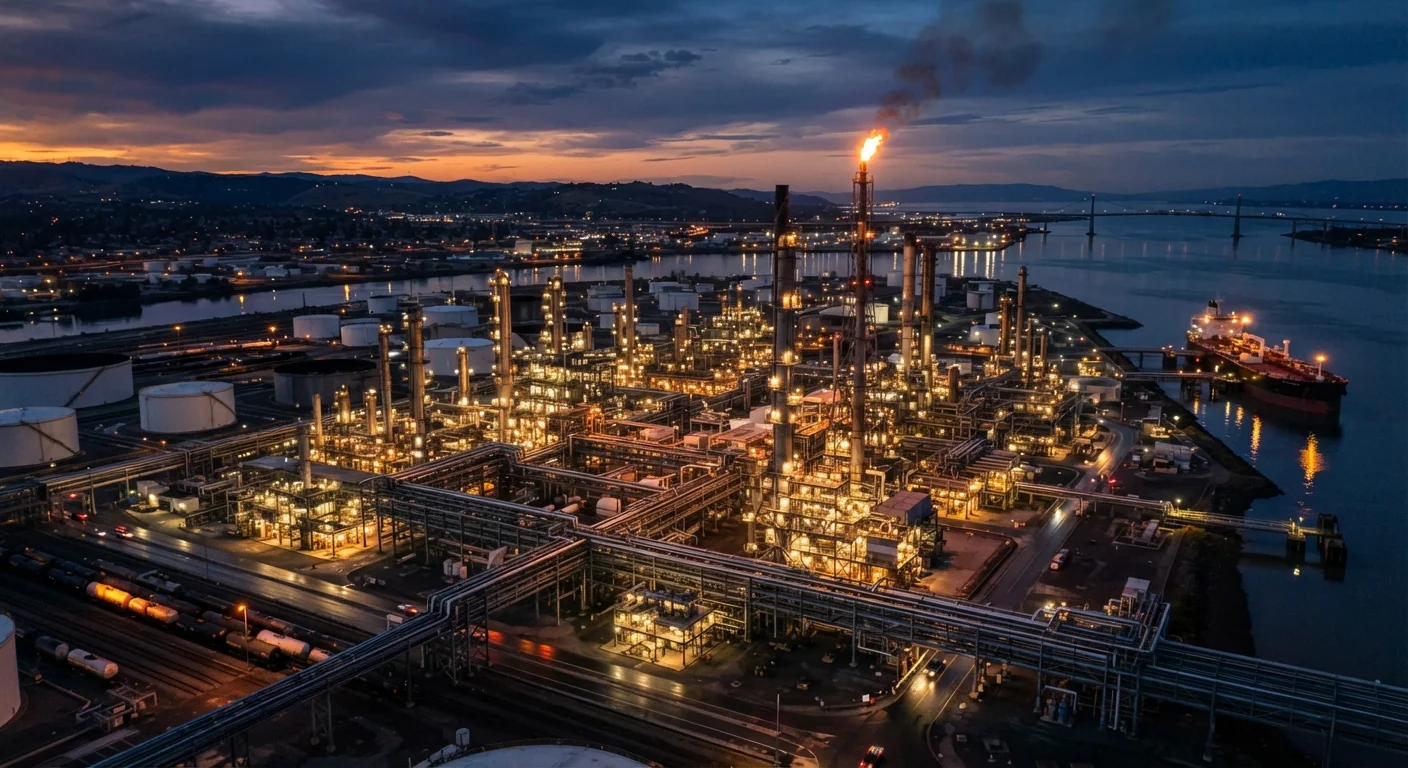
At the refinery, crude oil is heated in a distillation tower, causing different hydrocarbon compounds to separate by boiling point. Lighter fractions rise to the top and become gasoline and jet fuel; heavier fractions sink and become diesel, heating oil, and asphalt. Secondary refining processes - including cracking and reforming - break down heavier molecules and improve fuel quality. Additives are blended in to meet regional regulatory requirements for emissions and performance.
Product Distribution via Terminals and Pipelines
Finished gasoline and diesel leave the refinery through product pipelines - a separate network from crude pipelines - and travel to bulk storage terminals located near metropolitan areas. These terminals receive product from multiple refiners and store it in large tanks. Different fuel grades and blends are kept separate throughout this process. Terminals also serve as the point where ethanol blending often occurs, since ethanol cannot be transported through standard pipelines without absorbing water.
Last-Mile Delivery by Tanker Truck
From the terminal, fuel is loaded into specialized tanker trucks - compartmentalized to carry multiple fuel grades simultaneously - and driven to individual gas stations. Deliveries are typically scheduled based on station sales volume and inventory monitoring. This final leg is the most labor-intensive and visible part of the supply chain, and it is where regional trucking costs, driver availability, and road infrastructure play a direct role in distribution efficiency.
Retail Sale at the Gas Station
At the retail station, fuel is stored in underground storage tanks and dispensed through metered pumps. The price posted includes the station's cost of product, operating expenses (rent, labor, equipment maintenance), credit card processing fees, and federal, state, and local fuel taxes. Retail margins on fuel are typically narrow; many stations rely heavily on convenience store sales to maintain profitability.
Who Controls What - and Why It Affects Prices
Each stage of the supply chain is dominated by different types of players. Upstream extraction is led by national oil companies (such as Saudi Aramco and Kuwait Petroleum), large international oil companies, and independent producers. Midstream pipeline and terminal operations are often governed by regulated utilities or dedicated infrastructure companies. Refining is dominated by a smaller group of specialized operators, since building and maintaining a refinery requires billions of dollars in capital. Retail is the most fragmented segment - a mix of large branded chains, independent dealers, and convenience-store operators.
Crude oil is priced globally against benchmarks such as West Texas Intermediate (WTI) and Brent Crude. Because crude is a globally traded commodity, geopolitical events, production decisions by major producers, and shifts in global demand all affect the baseline cost that every downstream participant pays. Refiners add their processing margin, pipeline operators add transportation tariffs, and retailers add their own operating costs and local taxes - all before a price appears on the pump.
Price Signals Can Be Misleading
Retail fuel prices respond to crude oil movements but not always immediately or proportionally. Refining capacity constraints, regional pipeline bottlenecks, and inventory levels at local terminals can cause prices in one metro area to diverge sharply from those just a few hundred miles away. Assuming that a drop in global crude prices will instantly lower pump prices can lead to inaccurate expectations.
Federal, state, and local fuel taxes also factor into the final price, and these vary significantly by state. Consumers often underestimate how large a share of the pump price is composed of taxes and regulatory fees rather than the cost of crude itself.
What This Means for Everyday Consumers
Tracing a gallon of fuel from an oil field to a gas station dispenser makes clear that the price on the pump sign is the sum of many moving parts - global commodity markets, refining capacity, infrastructure logistics, and local taxation. No single actor sets it unilaterally.
Understanding this structure helps consumers interpret fuel price swings more accurately. A price spike at the pump may reflect a refinery outage reducing regional supply, a pipeline disruption affecting delivery, a surge in crude prices driven by international events, or simply seasonal changes in demand. Conversely, price drops often follow softening global demand or increased production. Knowledge of the supply chain is not just industrial trivia - it is context for making sense of a cost that touches nearly every American household.
This article is for general informational and educational purposes only. It does not constitute financial, investment, or regulatory advice. Readers seeking guidance specific to their circumstances should consult a qualified professional.