

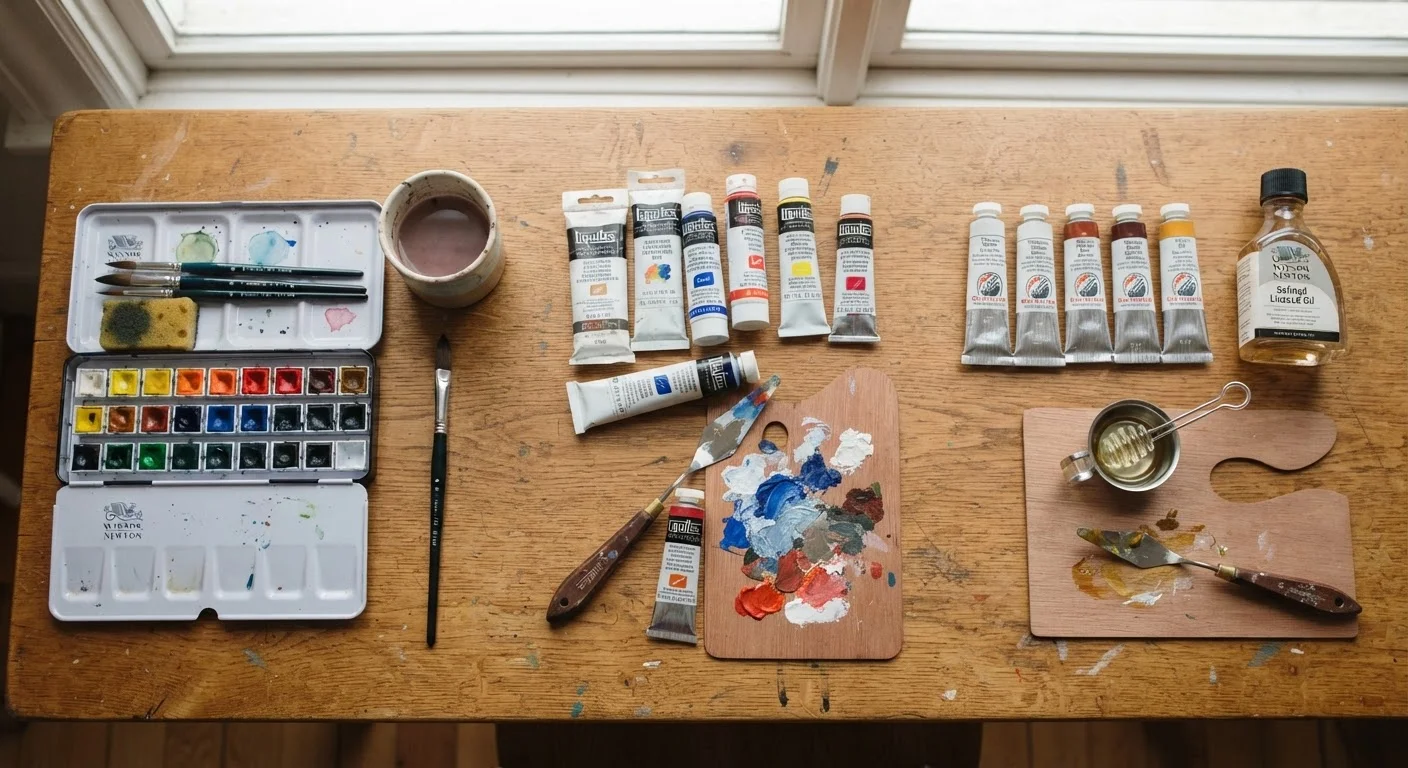
Key Takeaways
Our Verdict
No single paint medium is universally superior - each one rewards a different kind of maker. Watercolor suits those drawn to fluid, luminous work on paper; acrylic fits painters who want flexibility and quick results; and oil is the medium of choice for those willing to invest time in deep, layered surfaces. The best medium is simply the one that keeps you coming back to the easel.
| Best for | Recommended |
|---|---|
| Beginners wanting an accessible, low-mess starting point | Acrylic |
| Artists drawn to delicate, luminous, or illustrative work | Watercolor |
| Painters seeking rich color depth and extended blending time | Oil |
| Those with limited space, time, or budget | Watercolor or Acrylic |
Why the Choice of Medium Actually Matters
Picking up a brush for the first time - or returning to painting after years away - often starts with a deceptively simple question: which paint should I use? The answer shapes everything. It determines how long you'll wait between layers, whether you need to open a window, how much your supplies will cost, and even what kinds of marks you're capable of making. Understanding these differences up front saves frustration and helps you build skills in a direction that genuinely fits your life.
The three mediums most painters encounter first are watercolor, acrylic, and oil. Each has a distinct history, a distinct chemistry, and a distinct personality. None is objectively better - but one is very likely better for you.
Watercolor: Transparency, Spontaneity, and the Art of Letting Go
Watercolor is pigment suspended in a water-soluble binder, traditionally gum arabic. It's the oldest of the three mediums in widespread use and remains the foundation of botanical illustration, plein air sketching, and delicate portraiture. Its defining quality is transparency - light passes through the paint and reflects off the white paper beneath, creating a luminosity that opaque mediums can't replicate.
That transparency is also what makes watercolor feel unforgiving to newcomers. Covering a mistake usually means working around it creatively rather than painting over it. Wet paint blooms and spreads in ways that can be beautiful or disastrous depending on your intentions. Learning to work with water's behavior, rather than against it, is the central challenge.
Start With Your Space in Mind
Before choosing a medium based on style or ambition, take stock of where you'll actually paint. Watercolor and acrylic require only water for cleanup and work well in small or shared spaces. Oil painting with traditional solvents genuinely needs good airflow and careful waste disposal. Your environment is a practical constraint worth respecting from the start.
On the practical side, watercolor is the most portable and least expensive medium to start with. A basic pan set, a few brushes, and quality watercolor paper represent a modest investment. Cleanup is simply water, and the supplies travel easily - a genuine advantage for anyone who paints outdoors or in shared living spaces.
Acrylic: The Versatile Workhorse of Modern Painting
Acrylic paint arrived in the mid-twentieth century and quickly became the dominant studio medium for working artists, partly because it bridges the gap between watercolor and oil. Thinned with water, acrylics can mimic watercolor's transparency. Applied thickly with a palette knife, they produce bold, sculptural texture similar to oil impasto. The range of effects is genuinely wide.
The most frequently cited advantage of acrylic is drying time - most layers dry within minutes to an hour, compared to days or weeks for oil. This lets painters work quickly, building up layers and making corrections without long waits. The trade-off is that this same fast drying time can frustrate painters who want to blend colors gradually on the canvas. Acrylic dries slightly darker than it appears when wet, which takes some adjustment.
| Watercolor | Acrylic | Oil | |
|---|---|---|---|
| Drying Time | Minutes (rewettable) | Minutes to 1 hour | Days to weeks |
| Cleanup | Water only | Water only | Solvents required |
| Blending Ease | Moderate (wet-on-wet) | Challenging (dries fast) | Excellent (long open time) |
| Beginner Friendliness | Moderate - less forgiving | High - very forgiving | Moderate - solvent learning curve |
| Portability | Very high | Moderate | Low |
| Relative Cost to Start | Low | Low to moderate | Moderate to high |
| Surface Options | Primarily paper | Very wide range | Canvas, wood, primed surfaces |
| Reworkability | Limited once dry | Limited once dry | High while wet |
Cleanup is water-based, no solvents required, and acrylics adhere to an unusually wide range of surfaces - canvas, wood, paper, fabric, and more. For someone setting up a painting practice in an apartment or shared studio, that practical flexibility is hard to overstate.
Oil Paint: Depth, Tradition, and the Long Game
Oil paint has been the prestige medium of Western fine art for roughly six centuries, from the Flemish masters through the Impressionists and into contemporary studios. Pigment is suspended in a drying oil - linseed is most common - which gives oil paint its characteristic richness, buttery texture, and extended working time. A painter can return to a canvas hours or even the next day and still blend colors seamlessly, allowing for subtle gradations in skin tone, sky, and shadow that are genuinely difficult to achieve in faster-drying mediums.
That extended working time comes with real demands. Most oil paintings require days to weeks of drying time between layers, and months before a finished work is fully cured. Traditional oil painting also involves solvents like mineral spirits or turpentine for thinning paint and cleaning brushes - both of which require proper ventilation and responsible disposal. Water-mixable oil paints have emerged as a cleaner alternative, though they behave somewhat differently from traditional oils.
The investment in quality oil paints and supplies tends to be higher than watercolor or acrylic, though professional-grade oil paint, used economically, can last a long time. For painters committed to building a deep, layered practice - portrait work, still life, landscape - the medium's rewards are difficult to match.
Choosing the Right Medium for Where You Are
Tradition and prestige shouldn't drive this decision - your actual life should. If you're working in a small space without good ventilation, oil paint's solvent requirements may be a genuine barrier rather than a minor inconvenience. If you find yourself always sketching on the go, watercolor's portability makes it a natural fit. If you're someone who gets frustrated leaving a project unfinished, acrylic's quick drying time may suit your temperament better than oil's slow pace.
Budget matters too. Watercolor and acrylic offer good student-grade options that allow real learning without major expense. Oil paint's higher material cost can be offset somewhat by the fact that paintings take longer to produce - but it's still a larger initial commitment.
Many working artists use all three mediums at different times, choosing based on the project rather than loyalty to a single approach. Starting with one, understanding it thoroughly, and expanding from there is a sound and well-tested path.