

Key Takeaways
Concert Rider
A concert rider is a legal attachment to a performance contract that outlines the specific requirements an artist needs before they will agree to perform. It covers everything from technical sound and lighting specifications to hospitality requests like food and hotel accommodations. Venues must fulfill these conditions as part of their agreement with the artist. Failing to meet rider requirements can - in some cases - give an artist legal grounds to cancel a show.
Riders are typically divided into two categories: the technical rider (stage, sound, and lighting specs) and the hospitality rider (dressing rooms, catering, and accommodations). Both carry contractual weight.
More Than M&Ms: The Real Purpose of a Rider
The popular image of rock star excess - brown M&Ms banned from the dressing room, white roses precisely counted, only a certain brand of sparkling water allowed - has turned the concert rider into cultural shorthand for celebrity entitlement. But strip away the tabloid framing, and what you find is a document that reveals the extraordinary logistical complexity hiding behind every live performance.
A rider exists because putting on a concert is not a spontaneous act. It is a coordinated production involving trucks full of equipment, dozens of crew members, thousands of audience members, and a single artist whose voice and physical well-being are the entire point. The rider is how everyone involved agrees, in writing, on exactly what that production requires.
“The rider is the first test of whether a venue is going to be a good partner. If they read it carefully and come back with thoughtful questions, you know the show is probably going to go well.”
— A veteran tour manager, speaking generally about industry practice, Touring industry professional with experience across major venue formats
When an artist's management sends a rider to a venue, they are essentially saying: here is what our show needs to function safely and professionally. The venue's job is to confirm they can deliver it - or open a conversation about what adjustments are possible.
The Technical Rider: Where the Real Stakes Live
If hospitality riders get the headlines, technical riders do the actual work. This section of the document specifies everything related to sound, lighting, staging, and power supply. It may include detailed diagrams of how the stage should be configured, the exact models of mixing consoles and speaker systems required, and the number and placement of monitor speakers an artist needs to hear themselves perform.
For large touring productions, the technical rider can run to dozens of pages. It may require a specific wattage of electrical power, a particular type of stage flooring, or structural rigging points in the ceiling to hang lighting rigs. These are not luxuries - they are the engineering specifications of a traveling production that has to be rebuilt identically in a different city every night.
200+
Days per year major artists spend on tour
Industry estimates suggest top-tier touring acts may spend over 200 days annually on the road, making consistent rider compliance a daily operational concern.
40-100+
Pages in a major production's technical rider
Production riders for large-scale arena tours can span dozens to over a hundred pages, according to accounts from professional tour managers and production companies.
2
Core rider types every contract includes
Virtually every professional performance contract includes both a technical rider and a hospitality rider, each addressing distinct operational requirements of the live show.
Smaller venues often struggle with technical riders from mid-level touring acts, simply because their infrastructure was built decades ago and wasn't designed for modern production demands. This is one reason why many historic theaters have undergone significant renovations - staying competitive in the touring market means meeting current technical standards.
The Hospitality Rider: Comfort, Safety, and the Art of the Walkthrough
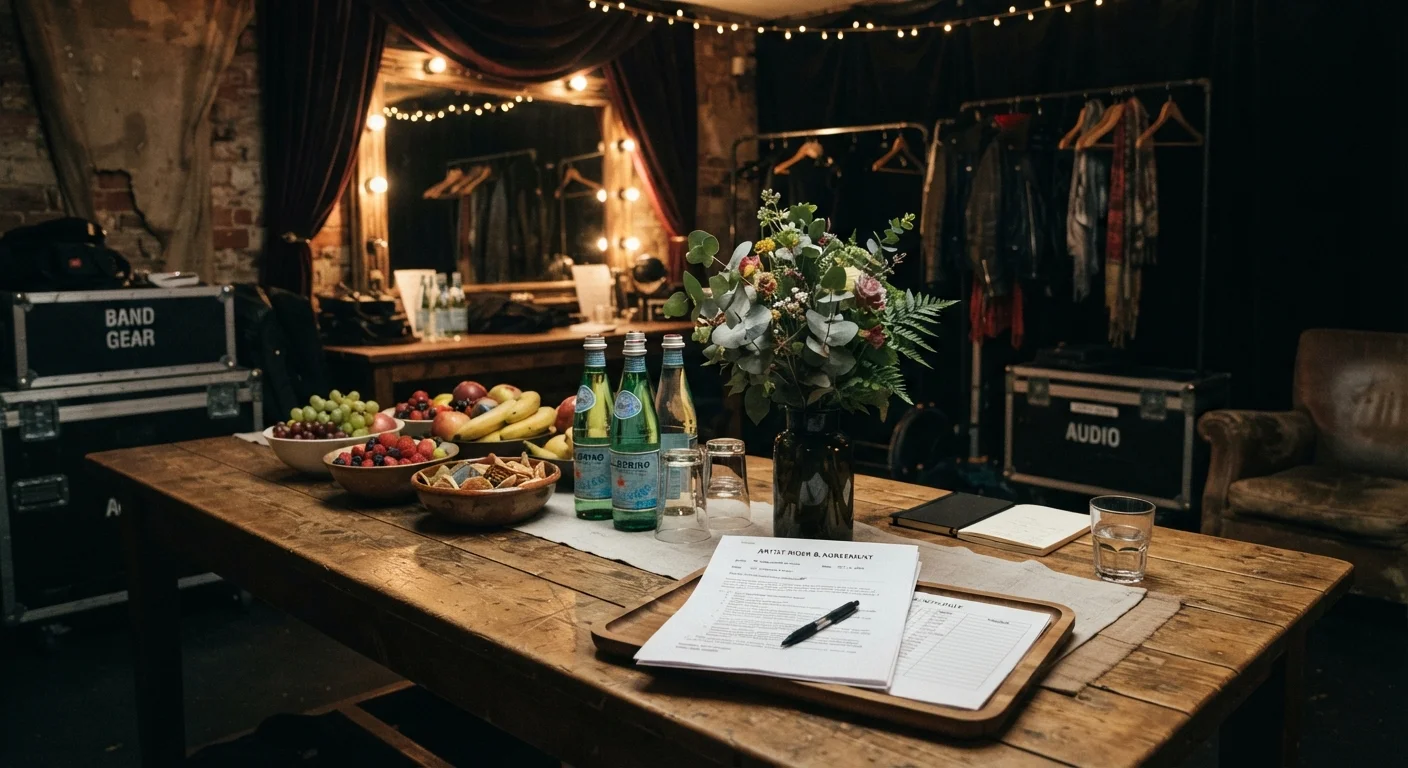
The hospitality rider covers the human side of touring: dressing rooms, catering, hotel accommodations, and ground transportation. On a long tour, these details matter enormously. Artists and their crews may spend 200 or more days a year away from home, living entirely within the ecosystem the rider creates.
Dietary needs, allergy specifications, and temperature-controlled environments for sensitive instruments are common entries. Security arrangements and guest list protocols also frequently appear in this section. The infamous Van Halen clause requiring a bowl of M&Ms with all brown ones removed - confirmed by guitarist David Lee Roth in his own memoir - was reportedly a canary-in-the-coal-mine test: if the band found brown M&Ms, they knew the venue might have overlooked more critical technical requirements too.
For Aspiring Touring Artists: Start Simple
Even if you are just beginning to book shows, having a basic rider signals professionalism. A one-page document listing your technical inputs, any dietary needs, and minimum hospitality expectations sets a standard and protects you. As your production grows, so can the document.
The walkthrough, conducted by the tour manager before doors open, is the moment when the rider becomes real. Every item is checked against the contract. Compliance is documented. Deficiencies are flagged and resolved. It is less glamorous than the performance itself, but it is what makes the performance possible.
What Riders Tell Us About the Live Music Industry
Reading a concert rider is, in a sense, reading a portrait of an artist's working life. The document reflects their creative priorities, their physical needs, and the scale of the enterprise they have built around themselves. A rider requesting two grand pianos tuned to a specific pitch tells you something different about an artist than one requiring a half-pipe ramp and a pyrotechnics crew.
Riders also illuminate the power dynamics of the live music industry. A globally recognized headliner commands a rider that venues simply must meet if they want the booking. A newer act may have little leverage to enforce even basic requests. The rider is, ultimately, a negotiating document - and the ability to make demands and have them honored is one of the clearest measures of an artist's standing in the industry.
Understanding what goes into a concert rider changes how we experience live performance. The next time a show feels seamless - the sound perfectly balanced, the lights hitting exactly right, the energy building from the first note - some of that is artistry. Some of it is paperwork.