

Key Takeaways
What Makes Hip-Hop an Art Form
When hip-hop emerged from the South Bronx in the mid-1970s, it was not simply a new genre of music - it was a new way of organizing culture. DJs, MCs, b-boys, and graffiti writers each contributed a distinct discipline, and together they built something larger than any single element. Fifty years on, hip-hop stands as one of the most commercially dominant and intellectually complex art forms in American cultural history.
Understanding it fully requires looking past the charts. The craft lives in the interplay between the beat beneath a track, the words riding over it, and the images that surround the entire package. These three pillars - production, lyricism, and visual identity - are not decorative additions to hip-hop. They are its architectural bones.
“Hip-hop is the last true folk art. It speaks directly from communities that have historically been excluded from mainstream cultural institutions, and it does so in a language entirely its own.”
— Tricia Rose, Cultural critic and author of 'Black Noise: Rap Music and Black Culture in Contemporary America'
The Architecture of the Beat
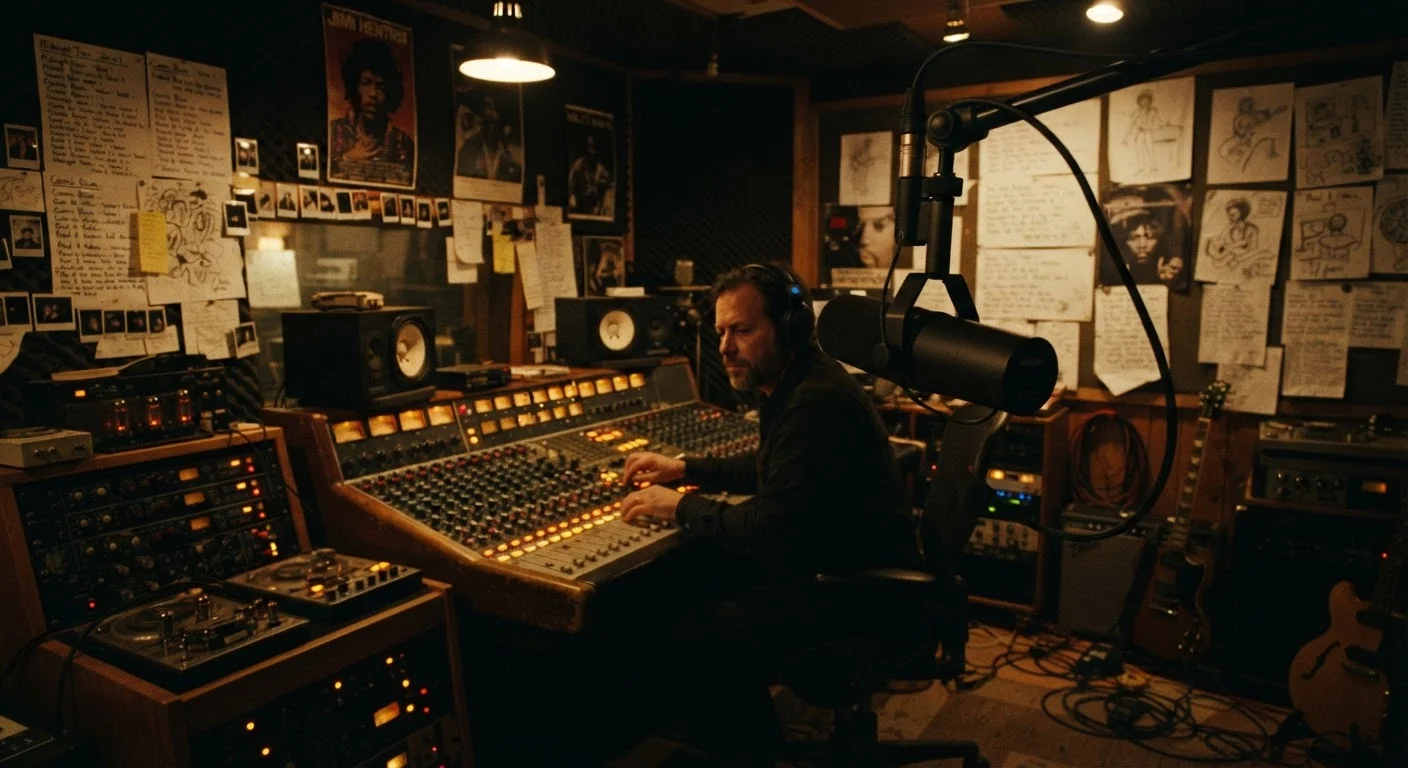
A hip-hop beat is rarely a simple backdrop. Producers work as composers, constructing sonic environments that carry emotional weight before a single word is spoken. The foundational technique - sampling, or lifting short passages from existing recordings and recontextualizing them - transformed music production into a form of cultural dialogue. A soul loop from the 1960s placed beneath a contemporary vocal line creates an implicit conversation between eras.
Beyond sampling, producers layer drum machines, synthesizers, and live instruments to build rhythm architectures of considerable sophistication. The kick drum placement, the space between hi-hat strikes, and the tension of a bass line all communicate mood the way light and shadow function in visual art. Pioneers like DJ Premier, J Dilla, and Madlib elevated beat-making into a recognized compositional practice, influencing musicians across genres far outside hip-hop's original boundaries.
50+
Years of hip-hop's documented cultural history
DJ Kool Herc's 1973 Bronx block party is widely cited as hip-hop's founding moment, placing the genre's origin over five decades ago.
$26B+
Global recorded music revenue from hip-hop and R&B
According to IFPI reports, hip-hop and R&B consistently rank as the most streamed genre category globally across recent years.
5
Original elements of hip-hop culture
Scholars and practitioners traditionally identify DJing, MCing, breakdancing, graffiti writing, and knowledge as the five foundational elements.
Lyricism as Literary Craft
The MC's role - Master of Ceremonies, or, in later usage, microphone controller - evolved from crowd-energizing chants into one of the most demanding verbal art forms in contemporary culture. Hip-hop lyricism employs a dense toolkit: internal rhyme, multisyllabic rhyme schemes, metaphor, extended allegory, wordplay, and code-switching between registers of language. The best verses operate simultaneously as street-level testimony and literary construction.
Critics and scholars have drawn sustained comparisons between rap and established poetic traditions. The call-and-response structure echoes West African oral storytelling; the use of persona and unreliable narrators mirrors the dramatic monologue tradition in English poetry. Artists like Rakim, Nas, Lauryn Hill, and Kendrick Lamar have produced bodies of work that reward close reading with the same attentiveness one might bring to published verse.
When analyzing a hip-hop verse, read it on the page first before listening. This isolates the literary structure - rhyme scheme, metaphor, syntax - before the rhythmic performance absorbs your attention.
Separating the text from the beat reveals how much craft exists purely at the level of language, a dimension that can be obscured when rhythm and delivery are dominant.
Pay attention to what a producer leaves out. The empty space in a hip-hop beat - the silence between notes - carries as much meaning as the sounds themselves.
J Dilla's late work, in particular, is celebrated by producers for its deliberately off-kilter spacing, which creates a feeling of human imperfection that rigid quantization cannot replicate.
What distinguishes rap lyricism from written poetry is its inseparability from rhythm. Syllables must land against the beat, which means writers are solving a musical puzzle as they craft meaning - a constraint that, paradoxically, sharpens the art rather than limiting it.
Visual Identity: More Than Album Covers
Hip-hop's visual dimension stretches well beyond the recording booth. Album artwork has historically served as a manifesto - think of the stark, confrontational cover imagery of early gangsta rap, or the Afrofuturist compositions that accompanied artists like OutKast and Erykah Badu. These images communicate aesthetic and political intent before the listener presses play.
Fashion is equally expressive. From Adidas tracksuits and gold chains in the 1980s to the high-fashion collaborations of the 2010s, hip-hop artists have used clothing as cultural signaling - a way of asserting identity, community affiliation, and economic aspiration simultaneously. Graffiti and street art, the genre's original visual language, evolved into gallery-ready movements. Artists like Jean-Michel Basquiat, though not a rapper himself, occupied the same cultural space and drew from the same reservoir of experience.
Music videos consolidated all of these visual threads. Directors working in hip-hop - Hype Williams being among the most recognizable - developed a distinct cinematic vocabulary that influenced mainstream advertising, film, and fashion photography.
How the Three Pillars Work Together
The most enduring hip-hop works are those in which production, lyricism, and visual identity feel like a unified statement rather than separate components assembled around a single track. Consider how an album's sonic palette shapes its lyrical themes, which in turn inform its artwork, its music video aesthetic, and its touring production design. Each element reinforces the others.
This integration reflects a broader truth about hip-hop's origins: it was never compartmentalized. In the parks and community centers where the culture developed, the DJ, the dancer, and the writer were often present in the same space at the same time, each discipline in conversation with the others. That collaborative instinct - the idea that the whole is richer than any single part - remains one of the most vital and transferable lessons the genre offers to anyone thinking seriously about artistic creation.
Hip-hop's half-century of development constitutes one of the great case studies in how an art form evolves, absorbs, and reshapes everything it touches. Approaching it as architecture - with structure, intention, and craft at every level - opens a far richer understanding than the surface often suggests.