

Key Takeaways
Enables complex, credible character development over time
Multi-season arcs allow writers to show gradual, earned transformation that a single episode or reset structure simply cannot achieve.
Supports deeper thematic and narrative layering
Callbacks, planted details, and long-form symbolism can reward attentive viewers in ways that elevate the experience well beyond typical episodic fare.
Drives strong emotional audience investment
Continuous narrative creates genuine attachment to characters, raising the emotional stakes of each plot development.
Well-suited to binge-watching and streaming platforms
Serialized cliffhangers and momentum align naturally with on-demand viewing habits, encouraging extended engagement sessions.
Cancellation leaves audiences without narrative resolution
Unlike episodic shows where each story concludes independently, a cancelled serial can strand viewers mid-arc with no satisfying ending.
High barrier to entry for new viewers
Joining a complex serial mid-run often feels impossible without prior episodes, limiting the potential audience considerably.
Demands consistent production-level narrative coordination
Maintaining continuity across large writers' rooms and multiple seasons is difficult; inconsistencies are noticed quickly by invested audiences.
Risk of mythology outpacing satisfying resolution
Shows that build elaborate ongoing mysteries sometimes struggle to deliver endings proportionate to the complexity they've constructed.
Our Verdict
Serialized television rewards patience and investment with richer emotional payoffs and more complex narratives, but it places real demands on audiences and production teams alike. Episodic television prioritizes accessibility and longevity, making it a durable format that has anchored the medium for decades. The healthiest television landscape arguably needs both.
Viewers who want to lose themselves in a fully realized world with evolving characters will gravitate toward serials, while those who prefer flexibility - watching in any order, skipping weeks without penalty - will find episodic television a more forgiving companion.
Two Philosophies, One Screen
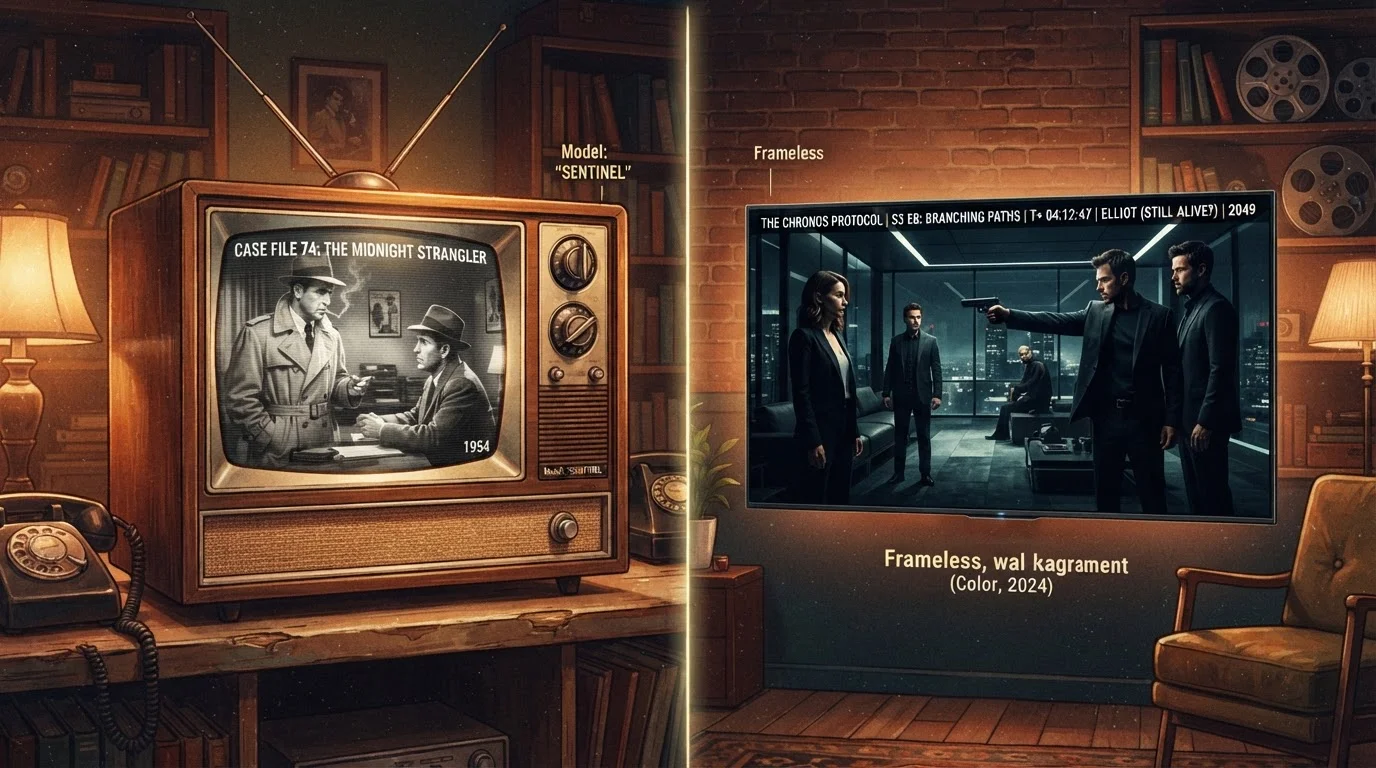
For most of television's history, the dominant format was episodic: stories that reset at the end of every hour. Columbo solved the case. The Cartwright family survived another week on the Ponderosa. Viewers could tune in on any given Tuesday and follow along without having watched a single prior episode. That was partly practical - no DVRs, no streaming libraries - but it also reflected a deliberate philosophy about what television was for.
Serialized storytelling - where each episode advances a continuous, season-long or series-long narrative - existed on the margins for decades. Soap operas practiced it daily. Prime-time drama flirted with it in the 1980s. But it wasn't until shows like The Sopranos, The Wire, and later Lost that serialized drama was treated as a prestige storytelling mode rather than a scheduling liability. The Peak TV era accelerated the shift dramatically, as streaming platforms built entire business models around binge-watching serialized content.
Today both formats coexist - and frequently blur together - but understanding what each one does structurally helps explain why some shows feel immediate and others feel like commitments.
What Serialized TV Does Well
Enables complex, credible character development over time
Multi-season arcs allow writers to show gradual, earned transformation that a single episode or reset structure simply cannot achieve.
Supports deeper thematic and narrative layering
Callbacks, planted details, and long-form symbolism can reward attentive viewers in ways that elevate the experience well beyond typical episodic fare.
Drives strong emotional audience investment
Continuous narrative creates genuine attachment to characters, raising the emotional stakes of each plot development.
Well-suited to binge-watching and streaming platforms
Serialized cliffhangers and momentum align naturally with on-demand viewing habits, encouraging extended engagement sessions.
The central advantage of serialized television is architectural. When writers know they have ten, thirteen, or sixty episodes to develop a character, they can build change slowly and credibly. Walter White's transformation in Breaking Bad worked because viewers watched it accumulate over years. A single episode could never carry that weight. Serialized structure also allows for the kind of thematic density - layered callbacks, planted details that pay off three seasons later - that makes certain shows feel like literature in motion.
There's also an emotional stickiness to serialized storytelling. Audiences who invest in a continuing narrative tend to feel genuine attachment to characters, making stakes feel real rather than procedural. That attachment is exactly what streaming platforms leverage to keep subscribers from canceling.
Where Serialized TV Tends to Struggle
Cancellation leaves audiences without narrative resolution
Unlike episodic shows where each story concludes independently, a cancelled serial can strand viewers mid-arc with no satisfying ending.
High barrier to entry for new viewers
Joining a complex serial mid-run often feels impossible without prior episodes, limiting the potential audience considerably.
Demands consistent production-level narrative coordination
Maintaining continuity across large writers' rooms and multiple seasons is difficult; inconsistencies are noticed quickly by invested audiences.
Risk of mythology outpacing satisfying resolution
Shows that build elaborate ongoing mysteries sometimes struggle to deliver endings proportionate to the complexity they've constructed.
The same investment that makes serialized TV compelling also makes it fragile. A show cancelled before its intended conclusion leaves its audience without resolution - a frustration that episodic TV rarely produces. The mythology-heavy drama Lost became a cultural case study in the risks of serialized promise: years of committed viewership followed by a finale that divided audiences deeply.
Serialized pacing also creates a gatekeeping problem. A viewer who misses the first season of a complex serial may feel unable to enter the story at all. That's a real accessibility barrier, and it shrinks the potential audience compared to a procedural drama anyone can pick up mid-run.
500+
Original scripted series produced in a single year (U.S.)
FX Networks research tracked U.S. scripted originals exceeding 500 in a single year during the late 2010s Peak TV period, the majority of which were serialized.
~60%
U.S. adults who say they binge-watch TV regularly
A 2023 Nielsen report indicated that a majority of American adults engage in binge-watching behavior, a habit serialized formats are structurally designed to encourage.
Production complexity is another hidden cost. Maintaining narrative consistency across dozens of episodes, writers' rooms, and multiple seasons requires extraordinary coordination. When it breaks down - contradictory character motivations, forgotten plot threads - attentive audiences notice immediately. For a deeper look at how these structural choices evolved over the medium's history, the landmark moments in television history that redefined the form offer useful context.
The Enduring Logic of Episodic TV
It's tempting to frame episodic television as a relic, but that misreads what the format actually offers. Procedural dramas - crime, medical, legal - remain among the most-watched programs on broadcast television precisely because they're frictionless. A viewer doesn't need to remember last week's subplot to enjoy tonight's story. That accessibility is a feature, not a limitation.
Episodic structure also extends a show's viable lifespan. Without a serialized endgame to reach, a well-constructed procedural can run for fifteen seasons and still deliver satisfying individual stories. The tradeoff is that character development tends to be shallower - the detective's personal life might advance slightly, but the emotional baseline largely resets. Longevity and depth are, in this sense, in genuine tension.
The Hybrid Middle Ground
Many contemporary shows deliberately blend both structures - offering self-contained episode plots within an ongoing seasonal arc. Anthology series like Fargo or True Detective reset their casts and stories each season while maintaining serialized pacing within each run. This hybrid approach tries to capture the depth of serial storytelling while lowering the long-term commitment barrier for viewers, though it introduces its own creative challenges around tonal consistency and audience expectations.